
Last Updated on September 28, 2026 by Jennifer Hanson
Walking through the jungle of chit-chat and buddy-making can feel like a giant task for lots of kids, especially those facing their own set of hurdles. Yet, there’s a beacon of hope known as **Individualized Education Program (IEP) goals for social skills**. This superhero tool lets young ones unlock the mysteries of gab, exchanging tales, and making pals the right way.
In this guide, IEP Goals For Social Skills is explained with clear steps and tips.
By setting clear, measurable goals, you can ensure your child receives the support they need to thrive socially. Whether it’s improving eye contact, initiating conversations, or understanding social cues, well-crafted IEP goals can make a significant difference in your child’s daily life. Let’s explore how to create effective social skills goals that foster meaningful progress.
Key Takeaways
- Importance of Goals: Setting clear, measurable IEP goals for social skills is crucial for enhancing a child’s ability to engage, communicate, and build relationships.
- Key Areas: Focus areas for social skills goals include communication skills, emotional regulation, problem-solving, peer interaction, social awareness, and self-advocacy.
- SMART Criteria: Effective IEP goals should be Specific, Measurable, Achievable, Relevant, and Time-bound, ensuring clear targets and efficient progress tracking.
- Implementation Strategies: Teachers can use modeling, social stories, role-playing, peer mentoring, positive reinforcement, and visual supports to help students achieve their social skills goals.
- Monitoring Progress: Regular assessments, data collection, feedback sessions, parent involvement, and collaborative approaches are essential for continuous improvement and adjustment of social skills goals in IEPs.
Essential IEP Goals for Social Skills
Well-defined IEP goals for social skills are crucial for fostering social connections. These objectives guide the development of students’ abilities in social contexts.
Understanding the Basics
IEP goals for social skills focus on improving specific interpersonal skills. These skills include eye contact, conversation initiation, and social cue recognition. For instance, if a child struggles with maintaining eye contact during conversations, an IEP goal might set a target for the child to make eye contact for a certain duration during specific interactions. The goals should always be measurable, attainable, and tailored to individual needs.
- Communication Skills: Develop a child’s ability to express themselves and understand others. Goals can include responding to questions within three seconds, initiating conversations with peers, and using appropriate gestures.
- Emotional Regulation: Help manage emotions in social scenarios. Objectives might include identifying personal emotions before reacting or using coping strategies in stressful situations.
- Problem-Solving Skills: Enable effective handling of conflicts. Goals may involve resolving disputes with peers amicably or using problem-solving steps independently.
- Peer Interaction: Foster positive interactions with classmates. Examples include participating in group activities without additional prompts or inviting a peer to join in play.
- Social Awareness: Enhance understanding of social norms and cues. Objectives could be recognizing when to join group conversations appropriately or identifying non-verbal cues like facial expressions correctly.
- Self-Advocacy: Encourage students to express their needs. Goals might include asking for help when needed, or communicating discomfort assertively.
By targeting these areas, students can achieve significant progress in their social abilities, ensuring they receive comprehensive support through their IEP.
Creating effective IEP goals for social skills is crucial for the holistic development of students with special needs. These goals should be specific, measurable, achievable, relevant, and time-bound (SMART) to ensure they address key areas such as initiating conversations, understanding nonverbal cues, and sharing and taking turns (Ori Learning). Incorporating social skills into an IEP helps students improve their interactions, build friendships, and effectively participate in group settings (A Day in our Shoes).
Crafting Effective Social Skills Goals
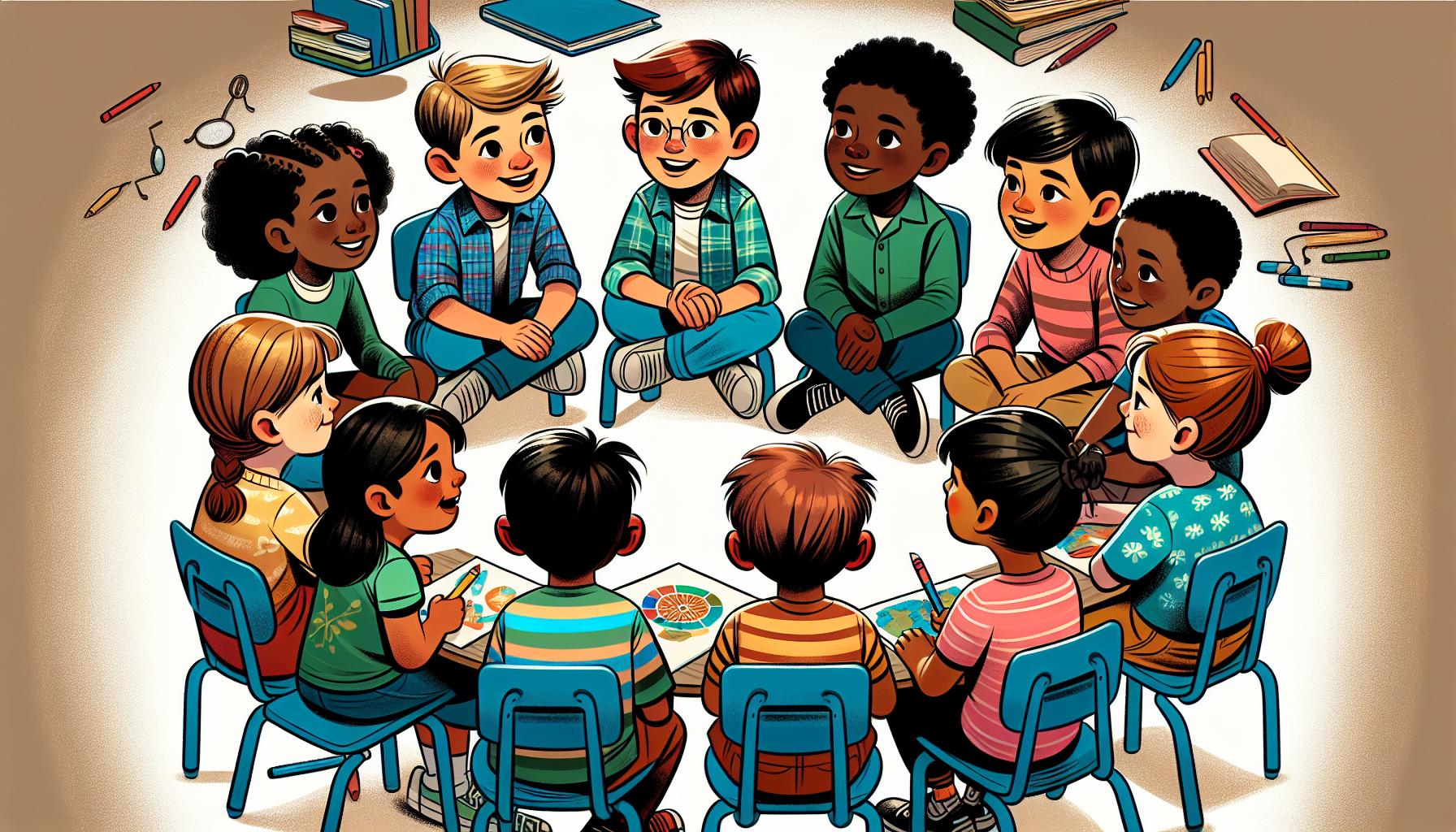
Effective social skills goals in an IEP require precision and clarity. Properly crafted objectives aid in significant developmental progress.
The Role of SMART Criteria
SMART criteria ensure goals are Specific, Measurable, Achievable, Relevant, and Time-bound. By using SMART principles, you create clear targets, allowing for efficient tracking and adaptation. Specific goals identify exact skills; measurable goals provide quantifiable benchmarks; achievable goals consider the student’s capabilities; relevant goals align with broader educational aims; time-bound goals set clear deadlines.
- Communication Skills:
- “By the end of the semester, the student will initiate conversations with peers during group activities, at least 3 times per week.”
- Emotional Regulation:
- “Within the next three months, the student will identify and express emotions using appropriate language in 4 out of 5 observed situations.”
- Problem-Solving:
- “By the end of the school year, the student will demonstrate problem-solving strategies to resolve conflicts with peers in 3 out of 4 scenarios.”
- Peer Interaction:
- “In the next quarter, the student will engage in cooperative play with classmates during recess for at least 10 minutes, 3 days a week.”
- Social Awareness:
- “Within six months, the student will recognize and respond to social cues appropriately in 4 out of 5 classroom settings.”
- Self-Advocacy:
- “By the end of the current IEP period, the student will request help from a teacher or peer in 80% of situations where assistance is needed.”
These measurable goals offer a clear framework for monitoring progress and adjusting strategies to better support social skills development.
Implementing Social Skills Goals
Once you’ve set SMART goals for an IEP, it’s critical to implement effective strategies to achieve these objectives.
Strategies for Teachers and Educators
Teachers and educators play a vital role in helping students meet their social skills goals. Use specific strategies to foster social development:
- Model Social Behavior: Exhibit positive social interactions. For instance, greet students by name to encourage them to do the same.
- Social Stories: Create narratives that describe social situations and appropriate responses. These help students understand social cues.
- Role-Playing: Engage students in role-playing activities. Simulate real-life scenarios like making new friends or resolving conflicts.
- Peer Mentoring: Pair students with peers who excel in social skills. This mentorship can provide relatable examples for appropriate interactions.
- Positive Reinforcement: Implement reward systems to reinforce appropriate social behavior. Use verbal praise or a points system for achievements.
- Visual Supports: Use visual aids like charts and cue cards to illustrate social rules. Visual supports can be particularly helpful for younger students.
Monitoring and Adjusting Goals
Continually monitor and adjust social skills goals to ensure ongoing progress:
- Regular Assessments: Conduct regular evaluations of students’ social interactions. Use checklists and observations to assess goal achievement.
- Data Collection: Collect data on students’ performance. Track metrics like frequency of appropriate responses and peer interactions.
- Feedback Sessions: Hold regular meetings with students to discuss their progress. Provide constructive feedback to guide improvements.
- Parent Involvement: Involve parents in the monitoring process. Share progress reports and suggest activities to reinforce skills at home.
- Flexible Goals: Adjust goals based on students’ progress or changing needs. If a student masters a skill, set a new, more challenging goal.
- Collaborative Approach: Work with other educators, therapists, and support staff. Share insights to create a comprehensive support system.
Implementing these strategies and monitoring progress ensures that social skills goals are effectively integrated into students’ educational experiences.
Conclusion
Creating effective IEP goals for social skills is crucial for the development of students with special needs. By focusing on specific areas like communication and emotional regulation and employing strategies such as role-playing and peer mentoring, you can help students enhance their social interactions. Regular assessments and a collaborative approach ensure these goals remain relevant and achievable. With the right tools and support, students can integrate social skills into their daily lives, paving the way for their overall success.
Frequently Asked Questions
What are the key components of a well-defined IEP goal for social skills?
A well-defined IEP goal for social skills should be Specific, Measurable, Achievable, Relevant, and Time-bound (SMART). It focuses on enhancing skills like communication, emotional regulation, problem-solving, peer interaction, social awareness, and self-advocacy.
What are specific examples of SMART goals for social skills?
Examples of SMART goals include: “By the end of the semester, the student will initiate a conversation with peers at least three times per week,” or “The student will identify and express their emotions using a feelings chart in 80% of instances within four months.
How can teachers implement strategies to achieve these IEP goals?
Teachers can implement strategies such as modeling social behavior, using social stories, role-playing, peer mentoring, positive reinforcement, and providing visual supports to help students achieve their social skills IEP goals.
What role do parents play in supporting social skills IEP goals?
Parents play a crucial role by providing regular feedback, participating in goal-setting, practicing skills at home, attending assessment sessions, and maintaining open communication with educators to support their child’s progress.
How often should social skills IEP goals be monitored and adjusted?
Social skills IEP goals should be monitored regularly through assessments, data collection, and feedback sessions. Adjustments should be made as necessary to reflect the child’s progress and any new challenges that arise.
How can peer mentoring help in developing social skills?
Peer mentoring can provide students with real-life opportunities to practice social interactions in a supportive environment. It enhances peer relationships, provides role models, and promotes learning through observation and imitation.
What are the benefits of using social stories in teaching social skills?
Social stories help students understand and navigate social situations by providing clear, step-by-step examples of appropriate behaviors and potential scenarios. This can increase their social awareness and confidence.
Why is flexibility important in setting social skills IEP goals?
Flexibility allows for the IEP goals to be adjusted in response to the student’s evolving needs and progress. It ensures that the goals remain relevant and achievable, leading to more effective and personalized education outcomes.
What collaborative approaches can enhance the effectiveness of social skills IEP goals?
A collaborative approach involves regular communication and teamwork among educators, support staff, and parents. This can include co-planning sessions, shared resources, and consistent strategies across home and school environments, ensuring comprehensive support for the student.