
Last Updated on September 1, 2026 by Jennifer Hanson
Navigating special education supports can feel overwhelming, especially when legal terms and school procedures pile up. What Is a 504 Plan in Florida? In short, it’s a civil-rights based plan that helps students with disabilities access public education by removing barriers in the classroom. In this guide we’ll explain how a 504 Plan differs from an Individualized Education Program (IEP), who qualifies in Florida, how to request and develop a plan, typical accommodations, and practical examples you can use when advocating for a child. Our aim is to give parents and educators clear, actionable information so decisions are confident and well-documented.
In this guide, What Is a 504 Plan in Florida A Practical Guide for Parents and Educators 2026 is explained with clear steps and tips.
Key Takeaways — What Is a 504 Plan in Florida A Practical Guide for Parents and Educators 2026
- A 504 Plan in Florida ensures students with disabilities receive equal access to public education by providing necessary accommodations in the classroom.
- Unlike an IEP, a 504 Plan focuses on removing barriers to learning rather than providing specialized instruction.
- Students qualify for a 504 Plan if they have a physical or mental impairment that substantially limits major life activities such as learning or concentrating.
- Requesting a 504 Plan involves submitting a written referral with documentation and collaborating with a school team to develop a clear, actionable plan.
- Common accommodations include extended test time, preferential seating, medical supports, and assistive technologies tailored to the student’s needs.
- Keeping detailed records and setting review dates helps ensure effective implementation and allows parents to advocate confidently for their child’s rights under Section 504.
What Is a 504 Plan and How It Differs From an IEP
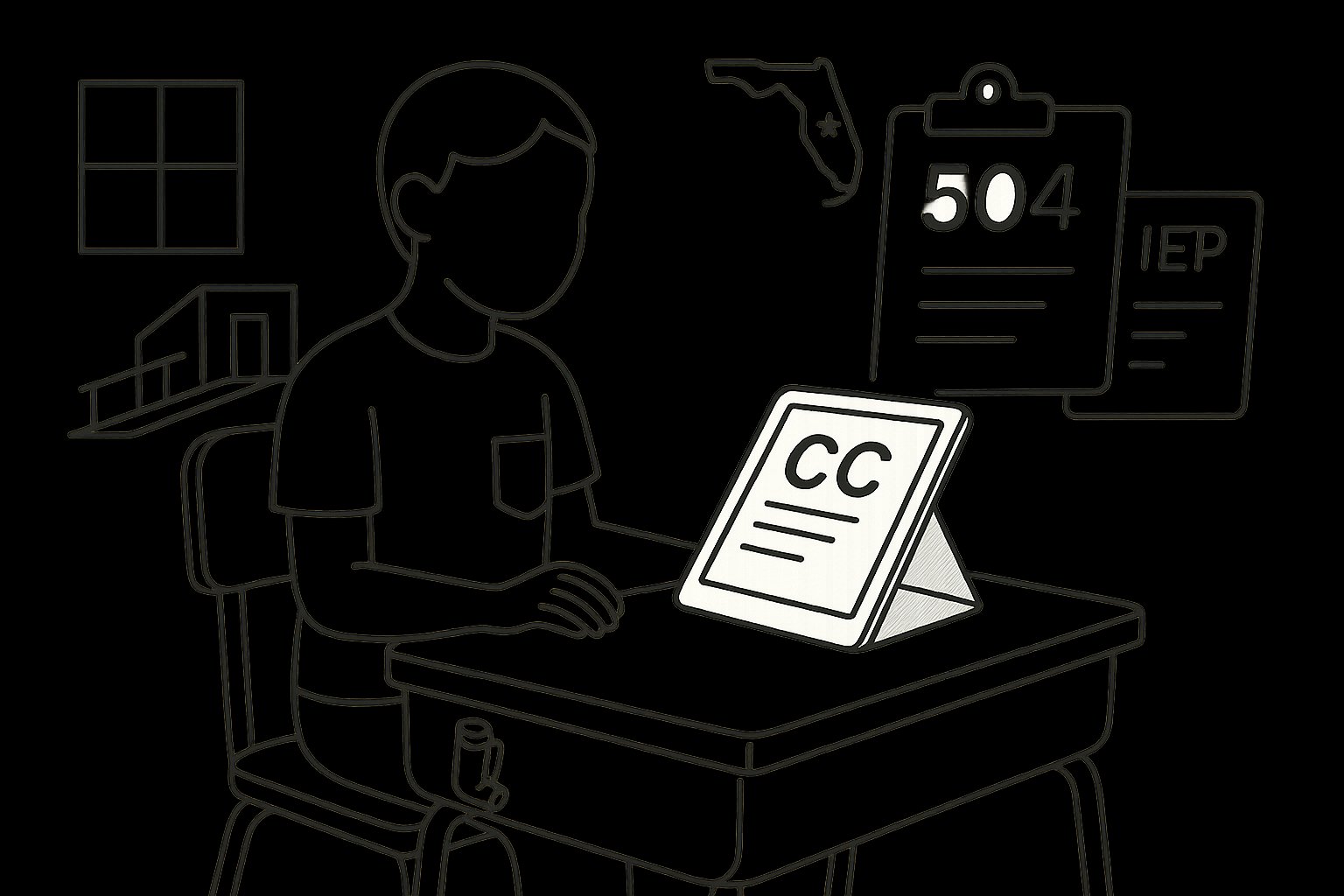
A 504 Plan is named for Section 504 of the Rehabilitation Act of 1973, a federal civil-rights law that prohibits discrimination on the basis of disability. In Florida public schools, a 504 Plan documents accommodations and services a student needs to participate in school on equal footing with peers. It’s not an educational program of specialized instruction: rather, it modifies the environment, curriculum presentation, or procedures so the student can access the general education curriculum.
How does that differ from an IEP? The Individuals with Disabilities Education Act (IDEA) provides IEPs for students who qualify for special education because their disability affects educational performance and requires specially designed instruction. Key distinctions:
- Purpose: 504 = equal access: IEP = specialized instruction and services.
- Eligibility standard: 504 covers any disability that substantially limits a major life activity (learning, concentrating, walking, etc.). IDEA’s eligibility categories are narrower and focus on educational impact.
- Documentation: IEPs are more detailed and include measurable goals, progress reporting, and specific services.
- Procedural safeguards: Both provide protections, but IDEA has more exhaustive procedural rules and due process rights.
In practice, students with chronic health conditions (severe asthma, diabetes), ADHD, or temporary disabilities may qualify for either pathway depending on the degree to which the condition affects academic performance. We recommend approaching the school with documentation and an open mind: sometimes a 504 is the right fit, sometimes an IEP is necessary.
Who Qualifies for a 504 Plan in Florida
Eligibility under Section 504 requires two basic elements: (1) the student has a physical or mental impairment, and (2) that impairment substantially limits one or more major life activities. “Major life activities” include learning, reading, concentrating, thinking, walking, seeing, and caring for oneself, language that embraces many conditions beyond traditional learning disabilities.
Florida school districts follow federal guidance but also maintain local procedures. Examples of students who commonly qualify for 504 Plans in Florida include:
- Students with diabetes who require blood sugar monitoring and insulin at school.
- Students with severe allergies who need access to EpiPens and allergy management plans.
- Students with ADHD who need extended time or seating accommodations.
- Students with temporary impairments after an injury that limits mobility or stamina.
Eligibility is a case-by-case determination. A diagnosis alone doesn’t guarantee a 504 Plan: the school will consider how the condition limits the student’s ability to access education.
Evaluation Process and Documentation Needed
To determine eligibility, the school typically initiates an evaluation after a referral from a parent, teacher, or medical professional. Evaluation methods vary but often include: review of medical records, teacher observations, behavior checklists, academic records, and sometimes educational or psychological testing.
Documentation that strengthens a request:
- Recent medical reports or letters from treating physicians explaining diagnosis and functional limitations.
- Teacher notes showing observed classroom difficulties.
- Records of past interventions and outcomes (e.g., tutoring, classroom strategies).
- Behavior logs or attendance records if relevant.
Florida districts must provide reasonable timelines for evaluations. If we’re working with a family, we advise keeping copies of all correspondence, recording dates of meetings, and following up in writing. If a district refuses evaluation or a 504 Plan, parents have the right to file a grievance under Section 504 or pursue an administrative complaint with the U.S. Department of Education’s Office for Civil Rights.
How To Request and Develop a 504 Plan in Florida Schools
Requesting a 504 Plan is straightforward but requires persistence. Start by making a written request to the school’s 504 coordinator or principal describing the child’s disability and the barriers observed at school. Be specific about incidents, dates, and how the child’s learning is affected. Attach any medical documentation you have.
Once a referral is made, the school convenes a 504 team, typically including the parent, teacher(s), the 504 coordinator, and sometimes the student. The team reviews evidence and decides if an evaluation is needed. If the team finds the student eligible, they develop a written 504 Plan that lays out accommodations, responsible staff, and implementation timelines.
Best practices when developing a plan:
- Be collaborative but firm: propose reasonable accommodations based on the child’s needs and documentation.
- Focus on function: describe what the child needs to do the task, not just the diagnosis. For example, “needs a quiet testing environment because concentration breaks down after 15 minutes,” rather than “has ADHD.”
- Include monitoring and review dates: set a date to review the plan’s effectiveness (usually annually, but sooner if needed).
- Assign responsibilities: name who will administer medication, monitor behavior, or provide extended time.
We often see vague plans that fail at implementation. To avoid that, make accommodations concrete (e.g., “student will receive 50% extended time on class quizzes, administered in resource room with minimal distractions, by the classroom teacher or designee”). Keep communication channels open: if accommodations aren’t working, request an interim meeting and bring documentation of missed needs.
Common Accommodations and Real-World Examples
504 Plans can be surprisingly flexible, because they’re tailored to remove obstacles rather than provide new instruction. Common categories of accommodations include environment, presentation, response, and scheduling.
Typical examples:
- Seating near the teacher or away from distractions.
- Preferential seating for visual or hearing impairments.
- Breaks during class for students with stamina or attention issues.
- Use of assistive technology (text-to-speech, speech-to-text).
- Modified assignment formats (oral presentation instead of written report).
- Medical accommodations (trained staff for insulin administration, accessible storage for medications).
Real-world vignettes:
- A middle schooler with Type 1 diabetes had a 504 Plan that included permission to test blood sugar as needed, a staff-trained plan for insulin administration, and access to a refrigerator for supplies. That plan reduced absences and prevented class disruptions caused by uncontrolled blood sugar.
- An elementary student with severe allergies had a 504 Plan that established nut-free zones, protocols for field trips, and staff training, measures that allowed safe participation in lunch and recess.
- A high school student with ADHD received extended time on exams, a quiet room for testing, and weekly check-ins with a counselor to break large projects into manageable tasks.
Accommodations for Testing and Classroom Access
Testing and classroom access are frequent sources of dispute. For testing, accommodations often include extended time (typically 50%–100% depending on need), small-group or one-on-one administration, breaks without penalty, and the use of assistive devices. For classroom access, accommodations may specify preferential seating, note-taking support, reduced assignments load, flexible deadlines, or modified grading practices for participation affected by disability.
When proposing testing accommodations, attach evidence that standard testing conditions impede performance, teacher observations, past test scores showing discrepancy, or professional evaluations. Schools are required to provide accommodations that are reasonable and directly tied to the student’s documented limitations.
Conclusion
A 504 Plan in Florida is a practical, legally grounded tool to ensure students with disabilities access their education. We encourage parents and educators to document needs clearly, collaborate on specific, actionable accommodations, and insist on measurable implementation steps. If disputes arise, ask for a formal meeting, keep written records, and consider filing a grievance under Section 504 or seeking legal guidance. For families working in healthcare or other professional fields who value precise documentation, treating the 504 process with the same rigor as a contract review, clear terms, assigned responsibilities, and review dates, will often produce better outcomes.
Frequently Asked Questions About 504 Plans in Florida
What is a 504 Plan in Florida, and how does it help students?
A 504 Plan in Florida is a civil-rights based plan under Section 504 of the Rehabilitation Act that removes barriers for students with disabilities, ensuring they have equal access to public education through accommodations in the classroom.
How does a 504 Plan differ from an Individualized Education Program (IEP)?
A 504 Plan ensures equal access by providing accommodations, while an IEP offers specialized instruction and detailed services for students whose disabilities impact educational performance under IDEA criteria.
Who qualifies for a 504 Plan in Florida schools?
Students with physical or mental impairments that substantially limit major life activities like learning or concentrating may qualify, including those with chronic health issues, ADHD, or temporary disabilities, based on case-by-case evaluation.
How can parents request a 504 Plan for their child in Florida?
Parents should submit a written request to the school’s 504 coordinator describing the child’s disability and educational barriers, attaching relevant medical documentation. The school then evaluates and, if eligible, develops a 504 Plan with accommodations.
What types of accommodations are commonly included in a 504 Plan?
Accommodations often cover environment (like preferential seating), presentation (use of assistive technology), response (extended test time), and medical needs (medication administration) tailored to remove obstacles to learning.
Can a student with ADHD receive a 504 Plan in Florida, and what accommodations might be included?
Yes, students with ADHD may qualify for a 504 Plan, which might include extended time on exams, a quiet testing environment, breaks, and structured check-ins to manage assignments and improve concentration.