
Last Updated on October 16, 2026 by Jennifer Hanson
Anxiety disorders are among the most common mental health challenges students face today, and they can quietly derail attendance, participation, and learning. When anxiety substantially limits a student’s ability to access the classroom, Section 504 of the Rehabilitation Act can provide legal protections and practical supports through a 504 plan. In this guide we’ll explain how Section 504 applies to anxiety, who qualifies, the kinds of accommodations schools commonly provide, and a practical step‑by‑step process for requesting and implementing a plan. Our aim: give parents and professionals clear, actionable information to protect educational access.
In this guide, What Is A 504 Plan For Anxiety A Practical Guide For Parents And Professionals In 2026 is explained with clear steps and tips.
Key Takeaways — What Is A 504 Plan For Anxiety A Practical Guide For Parents And Professionals In 2026
- A 504 plan provides legal protections and tailored accommodations for students whose anxiety substantially limits their ability to participate in school.
- Eligibility for a 504 plan requires documentation of an anxiety disorder and evidence that it significantly impacts major life activities in educational settings.
- Common accommodations include extended test time, flexible attendance policies, preferential seating, and access to quiet spaces to help manage anxiety symptoms.
- The 504 plan process involves requesting an evaluation, gathering documentation, participating in eligibility meetings, developing a written plan, and monitoring its implementation.
- Parents and educators should maintain detailed records and work collaboratively to ensure accommodations are effective and to address any issues through grievance procedures if necessary.
How Section 504 Applies To Anxiety In School Settings
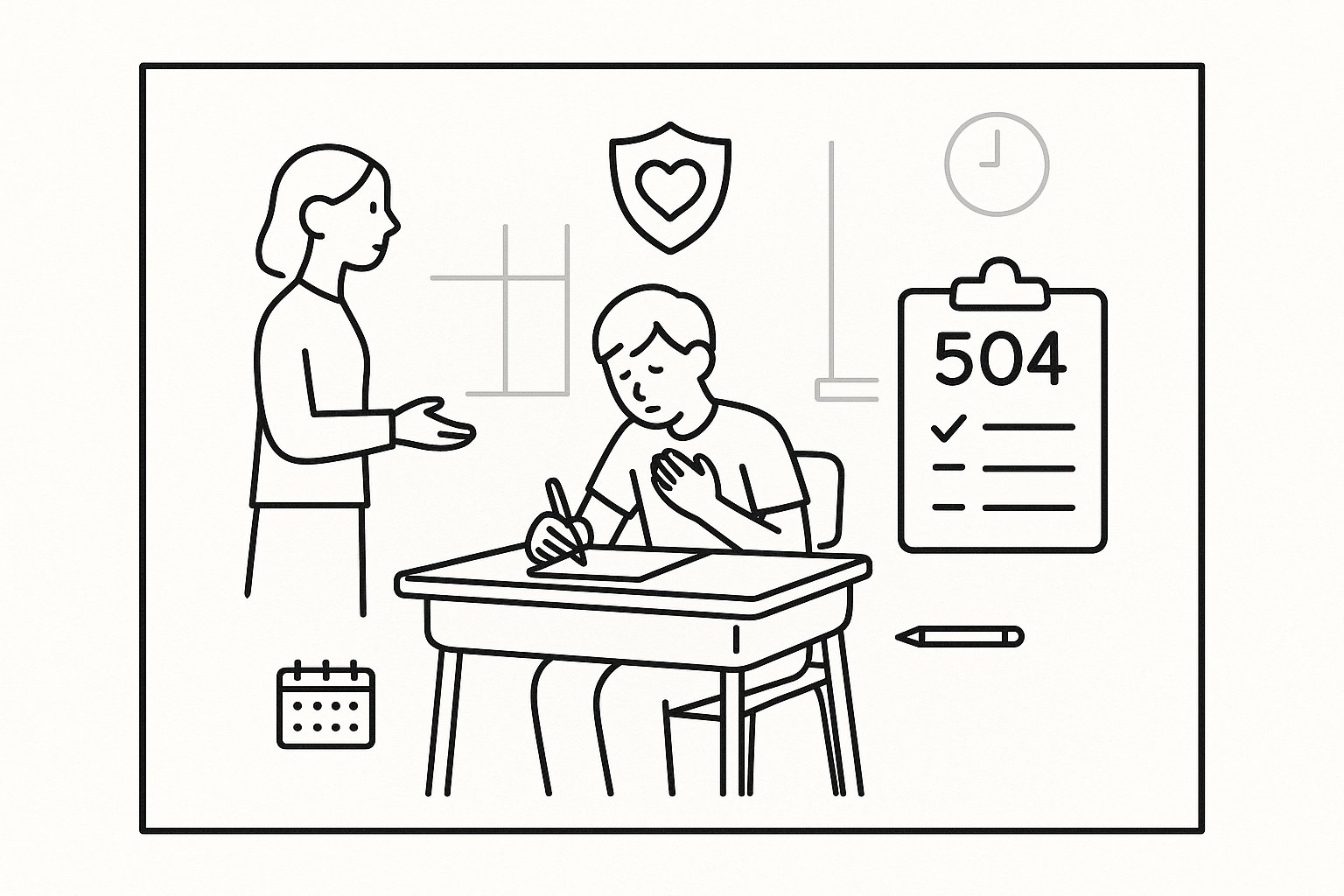
Section 504 is a federal civil‑rights law that prohibits disability‑based discrimination in programs that receive federal funds. In the school context, that means students with disabilities must have equal access to education. Anxiety can qualify as a disability under Section 504 when it “substantially limits” one or more major life activities, for example, learning, concentrating, interacting with others, or attending school.
We should be clear about two practical points. First, a diagnosis alone (e.g., generalized anxiety disorder, panic disorder, social anxiety) doesn’t automatically create eligibility. The school must determine that the anxiety meaningfully limits the student’s functioning in an educational setting. Second, Section 504 is broader than IDEA (the law governing IEPs) in some ways: students who don’t meet IDEA’s strict criteria for special education may still be eligible for 504 protections and reasonable accommodations.
From a legal perspective, schools are required to evaluate students when there is reason to believe a disability exists and to provide reasonable accommodations that eliminate barriers to learning. Remedies for failure to comply can include corrective plans, compensatory services, and, in some cases, legal remedies sought through OCR (Office for Civil Rights) complaints or litigation. For families and school professionals, that means tracking evaluations, keeping records of communication, and knowing the local 504 coordinator is often the first step toward resolution.
Who Qualifies: Eligibility Criteria And Documentation Needed
Eligibility hinges on two elements: (1) documentation that an anxiety disorder exists and (2) evidence that it substantially limits a major life activity in school. We recommend gathering both clinical and educational records to build a clear picture.
Useful documentation includes:
- A current diagnostic letter or evaluation from a licensed clinician (psychologist, psychiatrist, therapist) describing symptoms, functional impact, and recommended accommodations.
- School records showing attendance problems, disciplinary referrals, declines in academic performance, or teacher observations about participation and concentration.
- Standardized testing results or classroom assessments that show academic impact when applicable.
- Notes from parent‑teacher meetings, emails, or other communications documenting episodes (panic attacks at school, repeated absences for anxiety) and prior supports tried.
Schools sometimes conduct their own evaluations (e.g., school psychologist observations). We should be prepared to share private medical records but can also request that the school obtain specific information. If the school declines to evaluate or denies eligibility, families have procedural rights: request reconsideration, file an internal grievance, or appeal to the school district’s 504 coordinator. If necessary, filing a complaint with your state education agency or the U.S. Department of Education’s Office for Civil Rights is an available path.
Typical Accommodations And Modifications For Students With Anxiety
Accommodations for anxiety aim to remove barriers without lowering academic standards. They’re individualized, what helps one student won’t necessarily help another, but there are common, effective options we see repeatedly.
Academic and testing accommodations:
- Extended time on tests and assignments to reduce time‑pressure stress.
- Alternative formats for responses (oral presentations instead of written tests, for example).
- Reduced‑distraction testing environments or separate testing rooms.
Attendance and schedule supports:
- Excused absences for anxiety‑related medical appointments.
- Flexible start times or gradual re‑entry plans after prolonged absences.
- Partial day attendance or telework/hybrid arrangements when appropriate and feasible.
Classroom and behavioral supports:
- Preferential seating and proximity to a trusted adult.
- Scheduled breaks, access to a quiet space or sensory tools.
- Advance notice of changes in routine or upcoming presentations.
- Use of a ‘safe person’ or check‑in/check‑out system with a counselor.
Communication and crisis planning:
- Written accommodations accessible to teachers and staff.
- A crisis or de‑escalation plan describing what to do during a panic attack.
- Teacher training and regular check‑ins to ensure consistency.
We should emphasize documentation: accommodations must be written in the 504 plan, and implementation fidelity should be monitored. If an accommodation isn’t working, the team should reconvene and adapt rather than give up.
Requesting, Developing, And Implementing A 504 Plan: Step‑By‑Step
Navigating the 504 process is easier when we approach it as a clear sequence of steps and document each action.
- Request an evaluation. Start in writing, email or a letter to the student’s teacher, school counselor, or 504 coordinator asking for a Section 504 evaluation because of anxiety that affects school functioning. Keep copies.
- Gather documentation. Provide clinician letters, attendance records, teacher observations, and examples of how anxiety limits school participation. Proactive sharing speeds the evaluation.
- School evaluation and meeting. The school will assemble a team (often including the parent, teachers, counselor, school psychologist, and the 504 coordinator). The team reviews documentation, may conduct assessments, and decides eligibility. Schools typically have guidelines on timelines: ask for them.
- Develop the written 504 plan. If eligible, the team drafts a plan that names specific accommodations, responsible staff, timelines, and methods for monitoring progress. We recommend clear, measurable language (e.g., “Student will receive up to 50% extended time on all in‑class and standardized tests: testing will occur in a reduced‑distraction environment.”).
- Carry out and monitor. Implementation is the school’s responsibility: parents should receive a copy. We advise setting a review timeline (30–90 days) to assess effectiveness and make adjustments.
- If problems arise: use the grievance process. If the school fails to carry out the plan, first use informal remedies, meet with the 504 coordinator. If unresolved, file an internal complaint, request mediation, or file with OCR. Legal counsel may be appropriate when procedural rights are violated or remedies are needed.
Throughout, maintain a folder with all evaluations, meeting notes, emails, and the signed 504 plan. That record is often decisive if disputes occur.
Conclusion: Protecting Educational Access For Students With Anxiety
A well‑crafted 504 plan turns legal protections into everyday supports that let students with anxiety participate and learn on an equal footing. We encourage families and educators to treat the process as collaborative: document concerns, recommend specific accommodations based on functional impact, and revisit the plan when needed. When schools resist or misapply the law, parents have complaint and appeal options, and attorneys with experience in education law can help navigate those paths. If you need tailored advice or suspect procedural violations, consider contacting your district’s 504 coordinator or a qualified education attorney to protect your child’s rights and keep their education on track.
Frequently Asked Questions About 504 Plans for Anxiety
What is a 504 plan for anxiety in schools?
A 504 plan is a legal document under Section 504 of the Rehabilitation Act that provides accommodations to students whose anxiety substantially limits major life activities like learning or attending school, ensuring equal educational access.
Who qualifies for a 504 plan due to anxiety?
Students qualify if they have documented anxiety that substantially limits their ability to learn, attend, or participate in school activities. A diagnosis plus evidence of functional impact and supporting school records are needed for eligibility.
What types of accommodations might a 504 plan include for anxiety?
Common accommodations include extended test time, flexible attendance policies, access to quiet spaces, scheduled breaks, preferential seating, and crisis plans to manage anxiety symptoms at school.
How do I request a 504 plan for my child with anxiety?
Start by submitting a written request to the school’s teacher, counselor, or 504 coordinator, asking for an evaluation due to anxiety affecting school functioning. Be sure to provide clinical documentation and keep records of all communications.
Can a student have a 504 plan for anxiety even if they don’t qualify for special education?
Yes, Section 504 protections are broader than special education laws (IDEA), so students who don’t meet IDEA criteria can still receive reasonable accommodations under a 504 plan for anxiety.
What should parents do if the school doesn’t implement the 504 plan properly?
Parents should document issues, meet with the 504 coordinator to resolve problems, and if needed, file an internal grievance or a complaint with the Office for Civil Rights to enforce the student’s rights.