
Last Updated on July 8, 2026 by Jennifer Hanson
When people ask “What are philosophy of special education examples?” they’re often trying to translate big ideas into classroom routines, assessments, and family interactions. We’ll cut through the jargon and show two practical, contrasting philosophies, full inclusion and a functional skills/transition-focused approach, so you can see how beliefs turn into daily decisions. Whether you’re a teacher, parent, related-service provider, or a healthcare professional advising families, these examples will help you clarify your own stance and write a usable philosophy statement.
In this guide, Philosophies Of Special Education 2 Real-World Examples And How They Shape Practice 2026 Guide is explained with clear steps and tips.
Key Takeaways — Philosophies Of Special Education 2 Real-World Examples And How They Shape Practice 2026 Guide
- A philosophy of special education defines core beliefs that shape curriculum, assessment, and support decisions for students with disabilities.
- The inclusion philosophy prioritizes placing students with disabilities in general education settings with tailored supports to foster social integration and academic access.
- A functional skills and transition-focused philosophy emphasizes independence and post-school outcomes by teaching practical life and vocational skills, often through community-based instruction.
- Clear special education philosophies help align IEP goals, justify placement decisions, reduce conflicts, and improve collaboration among educators, families, and healthcare professionals.
- Blending inclusion with functional skill development ensures students benefit academically while preparing for adulthood and community participation.
- Writing a concise philosophy statement with core values, instructional impact, and support measures improves team consistency and student success.
What A Philosophy Of Special Education Is And Why It Matters
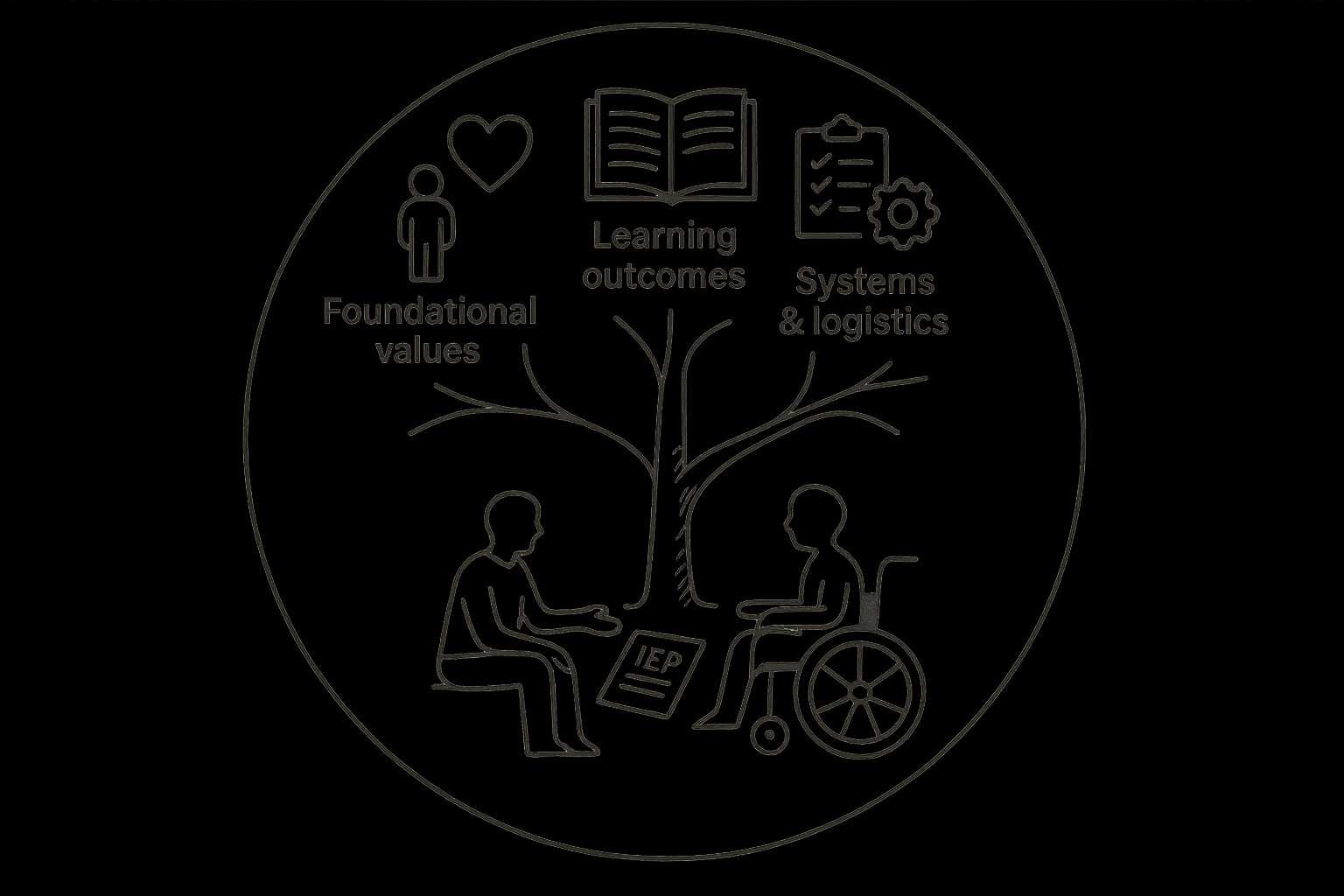
A philosophy of special education is a concise statement of beliefs about who students with disabilities are, what they need, and how schools should support them. It’s not an abstract manifesto: it’s a decision-making lens that guides curriculum choices, team roles, assessment priorities, and even how we schedule the school day. When someone asks “What are philosophy of special education examples?” they’re looking for concrete models that show how different beliefs produce different outcomes. We think of philosophy in three practical layers:
- Foundational values: beliefs about dignity, rights, and potential (e.g., every student can learn).
- Instructional priorities: what counts as a meaningful outcome (academic access, independence, social participation).
- Systems and logistics: how resources are allocated, co-teaching, pull-out services, transition planning.
Why it matters: an explicit philosophy reduces conflict and increases consistency. Teams without a shared philosophy often debate every small decision: Should Johnny be in general education math? Who’s responsible for daily living skills? With a clear philosophy, those debates shift from personal preference to shared criteria: access vs. mastery, inclusion vs. targeted intervention, short-term achievement vs. long-term independence.
Practical uses: we can use a philosophy to write Individualized Education Program (IEP) goals that align with larger aims, to justify placement decisions to school boards or families, and to design professional development that matches the approach. For clinicians and healthcare professionals advising families, knowing a school’s philosophy helps connect medical and educational goals so plans are realistic and coordinated.
Below we examine two widely used, real-world philosophies, what they look like day to day, what supports they require, and the typical outcomes teams aim for.
Example 1 — Inclusion Philosophy In Practice: Classroom Routines, Supports, And Outcomes
An inclusion philosophy starts with the premise that students with disabilities belong in general education settings alongside their peers, with supports provided in that environment. That belief reshapes classroom routines, assessment, and staffing.
Classroom routines: In an inclusion model, the class schedule centers on shared instruction. Teachers plan universal design for learning (UDL) approaches, multiple ways of presenting material, varied response options, and scaffolded tasks. Routines emphasize peer interaction: partner work, mixed-ability groups, and cooperative learning structures. For example, a middle-school science class might use tiered labs where roles are adjusted so students with different motor or cognitive needs contribute meaningfully.
Supports and staffing: Inclusion typically relies on a mix of co-teaching, paraprofessional support, and push-in services from specialists (speech, OT, PT). Co-teaching models (one teach, one assist: parallel teaching: station teaching) are common because they keep students in the same curriculum while allowing differentiation. Assistive technology, text-to-speech, adaptive keyboards, visual schedules, reduces barriers without pulling students out.
Assessment and goals: Assessment emphasizes access to the general curriculum. Teams write IEP goals that mirror grade-level standards, with accommodations and scaffolded objectives. Progress monitoring focuses on both academic outcomes and access indicators (e.g., time on task, participation in group work).
Family and social outcomes: Inclusion prioritizes social integration. We see better peer relationships, higher expectations from teachers, and often improved self-esteem when inclusion is well-implemented. But inclusion alone isn’t a magic fix: it requires staff training, planning time, and an honest approach to measuring whether students are benefiting academically.
Typical trade-offs: Inclusion can strain resources if schools expect general education teachers to do all differentiation without supports. Conversely, when done right, it reduces segregation and prepares students for real-world environments where accommodations and collaborative problem-solving are essential.
Example 2 — Functional Skills And Transition-Focused Philosophy: Assessment, Goals, And Family Collaboration
A functional skills and transition-focused philosophy places independence, safety, and post-school outcomes at the center. Instead of prioritizing grade-level academics for every student, we focus on skills that increase quality of life and employability, communication, daily living, community access, and vocational preparation.
Assessment: Teams begin with a person-centered assessment that charts strengths, preferences, and barriers across environments: home, school, work, and community. Tools include functional behavior assessments, work samples, community-based assessments, and transition inventories. The key question is: which skills will most improve this student’s autonomy over the next 3–5 years?
Goals and instruction: Goals are practical and measurable, learn to navigate public transit, perform a set of job tasks, manage medication routines, or increase independent self-care. Instruction often occurs in natural environments (community-based instruction, simulated job sites) and uses task analysis, chaining, and systematic prompting. We use assistive tech for independence (scheduling apps, reminder systems, adaptive utensils).
Family collaboration: Families are central partners because many functional skills generalize at home and in the community. We co-create transition plans that reflect family priorities, some families prioritize independent living: others emphasize supported employment or continued postsecondary programs. Regular, realistic conversations about adult services, guardianship options, and funding pathways are necessary.
Outcomes and accountability: Success is measured by post-school metrics, employment, enrollment in postsecondary programs, independent living status, and meaningful community participation. This philosophy aligns closely with vocational rehabilitation services and health professionals who support long-term wellbeing. It also demands cross-system coordination: schools, vocational rehab, Medicaid waiver programs, and community providers must share goals and timelines.
Limitations and balancing: A purely functional approach risks under-serving academic potential for students who could access grade-level material. We recommend hybrid plans, maintain access to academics where appropriate, while devoting explicit time to transition skills so students leave school prepared for adult life.
Conclusion: Using These Examples To Clarify Your Beliefs And Write A Practical Statement
When someone asks “What are philosophy of special education examples?” these two models show how beliefs produce different priorities and procedures. To write a practical philosophy statement, we suggest three steps: 1) state your core values (access, independence, dignity), 2) describe how those values affect instruction and assessment (inclusion practices, or specific transition goals), and 3) list the supports you’ll use and how you’ll measure success. Keep the statement short, one paragraph for values, one for classroom practice, one for family and outcome measures, and revisit it annually. Clear philosophies make IEP teams more efficient, families more confident, and most important, help students receive coherent, purposeful support as they move through school and into adult life.
Frequently Asked Questions about Philosophy of Special Education
What is a philosophy of special education and why is it important?
A philosophy of special education is a clear statement of beliefs about students with disabilities, guiding curriculum, assessment, and support. It promotes consistency, reduces conflicts, and helps align educational goals and practices for better student outcomes.
What are examples of special education philosophies in practice?
Two common examples are the inclusion philosophy, which integrates students with disabilities into general education with support, and the functional skills/transition-focused philosophy, which emphasizes independent living and post-school outcomes through practical skill development.
How does an inclusion philosophy affect classroom routines and assessments?
Inclusion promotes universal design for learning, cooperative peer interactions, and co-teaching. Assessments focus on access to grade-level standards with accommodations, ensuring students engage meaningfully with general education content.
What supports are typically used in a functional skills and transition-focused philosophy?
Supports include person-centered assessments, family collaboration, instruction in natural settings, assistive technology, and coordinated services with vocational rehab and community providers, all aimed at fostering independence and employment readiness.
How can educators write an effective special education philosophy statement?
An effective statement includes core values like dignity and access, how these guide instruction and assessment, and the supports used plus success measures. Keeping it concise and revisiting annually aids clear communication and team efficiency.