
Last Updated on April 20, 2026 by Jennifer Hanson
We often hear acronyms in special education meetings and feel like we need a decoder ring. One of the most important, and misunderstood, documents is the Functional Behavioral Assessment (FBA). An FBA is not a one-size-fits-all label: it’s a systematic process that helps us understand why a student engages in challenging behavior and how to support them effectively. In this guide we’ll explain what an FBA is, when it’s appropriate under the law, who can request one, how schools conduct them, and how the findings become a usable Behavior Intervention Plan (BIP). Our goal: give parents and educators clear, practical steps so we can advocate for better outcomes together.
In this guide, What Is An FBA In Special Education A Practical Guide For Parents And Educators 2026 is explained with clear steps and tips.
Key Takeaways — What Is An FBA In Special Education A Practical Guide For Parents And Educators 2026
- A Functional Behavioral Assessment (FBA) is a systematic process used to identify the reasons behind a student’s challenging behavior and guide effective support strategies.
- An FBA is legally required when a student’s behavior impedes learning and is related to their disability, often leading to a Behavior Intervention Plan (BIP).
- Parents, teachers, and school personnel can request an FBA, and it’s critical for students with disabilities such as autism or emotional disturbances.
- An FBA involves data collection methods like direct observation and interviews to form a hypothesis about behavior functions, which informs tailored interventions.
- The resulting Behavior Intervention Plan (BIP) uses preventive, teaching, and consequence strategies with measurable goals to improve student outcomes.
- Engaging families and consistent data monitoring are essential to ensure the FBA effectively supports the student and guides necessary adjustments.
What An FBA Is And Why It Matters For Students With Disabilities
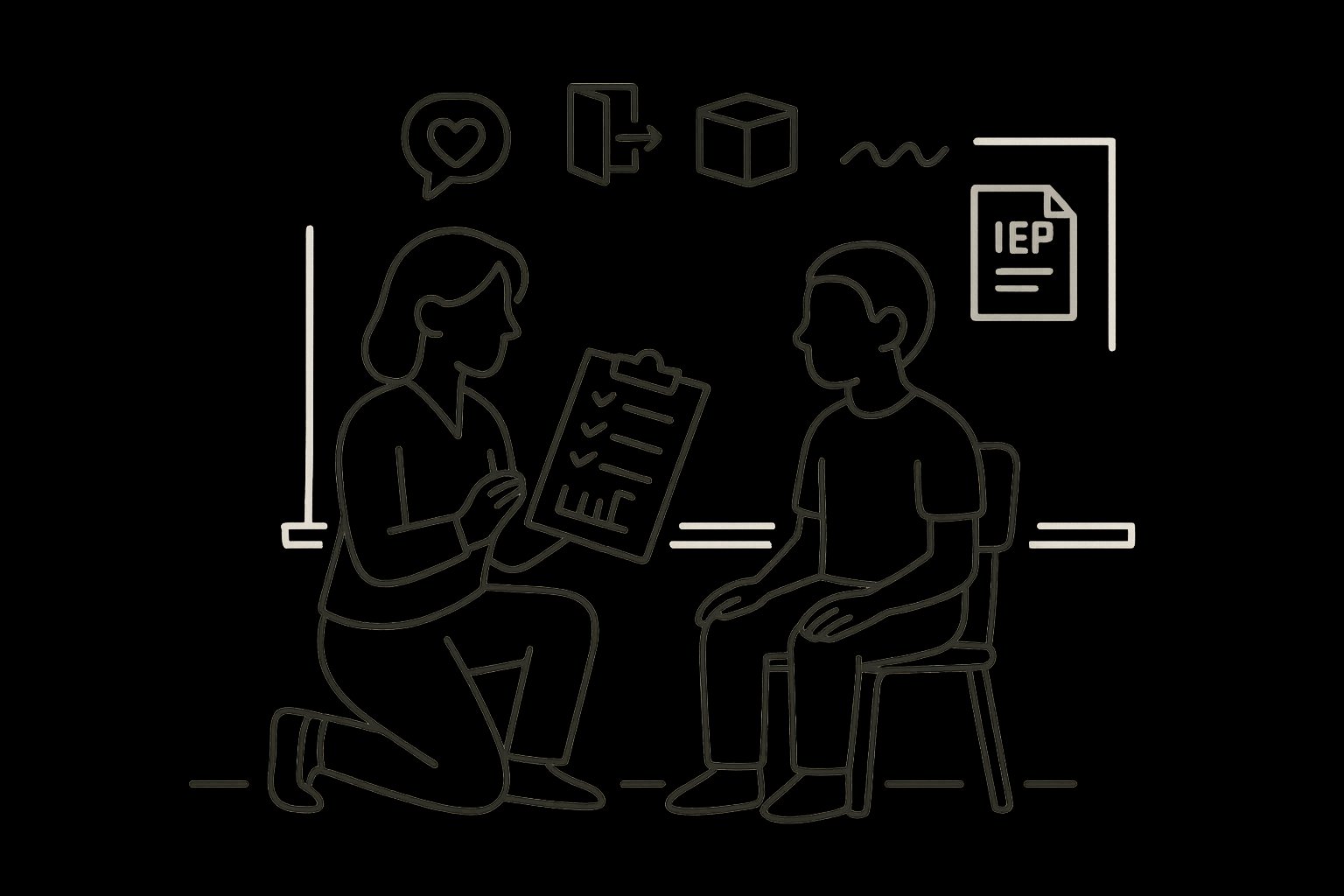
A Functional Behavioral Assessment (FBA) is a structured process used to identify the reasons behind a student’s challenging behavior and the environmental factors that maintain it. Rather than assigning blame, an FBA asks: What function does this behavior serve for the student? Common functions include obtaining attention, escaping a task, accessing tangibles, or sensory stimulation. When we correctly identify the function, interventions become purposeful and more likely to work.
Why it matters: students with disabilities often display behaviors that are communication of unmet needs, academic, social, or sensory. Without an FBA, teams may rely on consequences that don’t address root causes and can unintentionally reinforce the behavior. An FBA also supports individualized instruction: data-driven insights shape accommodations, teaching strategies, and supports in the student’s IEP (Individualized Education Program).
From a practical perspective, an FBA guides what supports belong in a Behavior Intervention Plan (BIP), informs placement decisions, and documents the school’s efforts to provide a free appropriate public education (FAPE). For families, an FBA offers clarity, turning frustrating episodes into actionable plans. For educators, it’s a roadmap that aligns classroom routines, curricula modifications, and positive supports with the student’s real needs.
When An FBA Is Appropriate: Legal Basis, Eligibility, And Who Can Request One
Legally, schools must consider conducting an FBA when a student’s behavior impedes their learning or that of others, especially if the behavior is linked to the student’s disability. Under the Individuals with Disabilities Education Act (IDEA), if a student is suspended or removed for disciplinary reasons and the behavior is related to their disability, the school must conduct an evaluation that may include an FBA. Many state regulations and local policies further specify circumstances that trigger an FBA.
Who can request an FBA? Parents, teachers, or other school personnel can request one. We recommend making requests in writing and keeping a record, this helps ensure the team addresses the concern promptly. If the student already has an IEP and behaviors are recurring or escalating, the IEP team should discuss an FBA during a meeting. If the team refuses, parents have procedural safeguards: they can request mediation, file a due process complaint, or pursue a state complaint. That’s where legal counsel, familiar with special education law, can help translate rights into results.
Eligibility: An FBA is appropriate for any student whose behavior suggests an unmet need, but it’s especially critical for students with autism spectrum disorder, emotional disturbance, intellectual disabilities, and other conditions where behavior serves as communication. Importantly, an FBA is not punishment: it’s assessment and problem-solving tailored to the individual.
How An FBA Is Conducted And Turned Into An Effective BIP
An FBA combines interviews, direct observation, and record review to build a hypothesis about why a behavior occurs. The multidisciplinary team typically includes the parent, general and special educators, a school psychologist or behavior specialist, and sometimes related service providers. We start by defining the target behavior in concrete, observable terms, what exactly the student does, how often, and under what conditions.
Next, the team collects data across settings and times to identify patterns. The goal is a concise hypothesis: when X happens (antecedent), the student does Y (behavior) to achieve Z (function). For example: during independent seatwork (antecedent), the student leaves their desk repeatedly (behavior) to escape difficult tasks (function).
Turning the FBA into a Behavior Intervention Plan (BIP) means translating that hypothesis into proactive, teachable strategies. A strong BIP includes:
- Preventive strategies: changes to the environment or instruction to reduce triggers (e.g., breaking tasks into smaller steps, providing visual supports).
- Teaching strategies: direct instruction of alternative skills (e.g., how to request a break, self-regulation techniques).
- Consequence strategies: consistent, non-punitive responses that don’t reinforce the challenging behavior (e.g., prompt replacement behaviors, differential reinforcement).
- Data collection and progress monitoring: clear metrics, frequency, and responsible team members.
A workable BIP also defines short-term measurable goals and a timeline for reviewing effectiveness. We should expect iterative adjustments, if data show no improvement, the team revisits the hypothesis and refines interventions.
Common Data Collection Methods Used In An FBA
Effective FBAs rely on high-quality data. Common methods include:
- Direct observation (ABC recording): Observers note Antecedent, Behavior, and Consequence sequences to reveal triggers and maintaining events. We use event recording or interval recording depending on behavior frequency.
- Scatterplot analysis: This maps when behaviors occur across the school day, helping us spot temporal patterns (e.g., lunchtime, transitions).
- Functional analysis (brief experimental procedures): Conducted by trained professionals, these controlled tests manipulate antecedents and consequences to confirm function. They’re powerful but require expertise and safeguards.
- Interviews and rating scales: Structured interviews with parents and staff (e.g., the Motivation Assessment Scale) provide perception-based data that supplement observations.
- Permanent product review: Reviewing work samples, disciplinary records, or communication logs can reveal antecedent events or triggers not seen in observations.
We should emphasize reliability: multiple observers and consistent operational definitions reduce bias. Data collection plans should specify who collects data, how often, and where it’s stored. Good data makes the difference between a BIP that’s guesswork and one that genuinely supports the student.
Conclusion
An FBA is a practical, legally supported tool for understanding and changing challenging behavior. When we use careful data collection, involve families, and translate hypotheses into teachable replacement skills, students gain access to instruction and safer school experiences. If you’re navigating an IEP meeting or feel an FBA is warranted but not being offered, document your concerns and ask the team to initiate one. For parents who want additional support, consulting with an advocate or attorney experienced in special education can help ensure the school meets its obligations and that the FBA leads to meaningful, measurable supports.
Frequently Asked Questions About FBA in Special Education
What is an FBA in special education?
An FBA, or Functional Behavioral Assessment, is a structured process used to identify the reasons behind a student’s challenging behavior and the environmental factors maintaining it, helping to develop effective, individualized supports.
When is an FBA appropriate for a student?
An FBA is appropriate when a student’s behavior interferes with their learning or that of others, especially if linked to their disability. Schools must consider an FBA under IDEA if disciplinary actions relate to the student’s disability.
Who can request an FBA for a student?
Parents, teachers, or other school personnel can request an FBA, preferably in writing. If a student has an IEP with escalating behaviors, the IEP team should discuss and potentially initiate an FBA.
How is an FBA conducted in schools?
An FBA uses interviews, direct observations, and record reviews by a multidisciplinary team to identify behavior patterns and hypothesize the behavior’s function, guiding the creation of a tailored Behavior Intervention Plan (BIP).
What does an effective Behavior Intervention Plan (BIP) include after an FBA?
A strong BIP includes preventive strategies to reduce triggers, teaching alternative skills, consistent non-punitive responses, and data collection for monitoring progress to support meaningful behavior change.
Why is collecting high-quality data important in an FBA?
High-quality data from observations, interviews, and analyses ensure the behavior’s causes are accurately identified, making interventions effective rather than guesswork, improving outcomes for students with challenging behaviors.