
Last Updated on April 20, 2026 by Jennifer Hanson
When we talk about inclusive, effective Individualized Education Programs (IEPs), academic targets get a lot of attention, but social-emotional goals are equally essential. Social-emotional skills shape a student’s ability to learn, form relationships, and participate safely in school. In this guide we’ll explain what IEP social-emotional goals are, how to assess needs before writing them, and how to craft clear, measurable objectives you can track and carry out. Our aim is practical: actionable examples, real assessment strategies, and monitoring tips you can use right away.
In this guide, What Are IEP Social-Emotional Goals A Practical Guide To Writing Tracking And Implementing Them In 2026 is explained with clear steps and tips.
Key Takeaways — What Are IEP Social-Emotional Goals A Practical Guide To Writing Tracking And Implementing Them In 2026
- IEP social-emotional goals target essential skills like emotional regulation and interpersonal abilities to support academic success and safe school participation.
- Assessing social-emotional needs involves thorough observation, standardized tools, and input from teachers and families to create accurate, measurable goals.
- Effective social-emotional goals use clear behavior, conditions, criteria, and timelines to ensure progress is trackable and meaningful.
- Progress monitoring should be routine and data-driven, allowing timely adjustments and supporting goal achievement.
- Embedding social-emotional goals into daily school routines and involving families enhances consistency and reinforces learning outcomes.
- Prioritizing social-emotional goals in IEPs helps address comprehensive educational needs, improving overall student well-being and academic performance.
What Social-Emotional Goals Cover And Why They Matter In An IEP
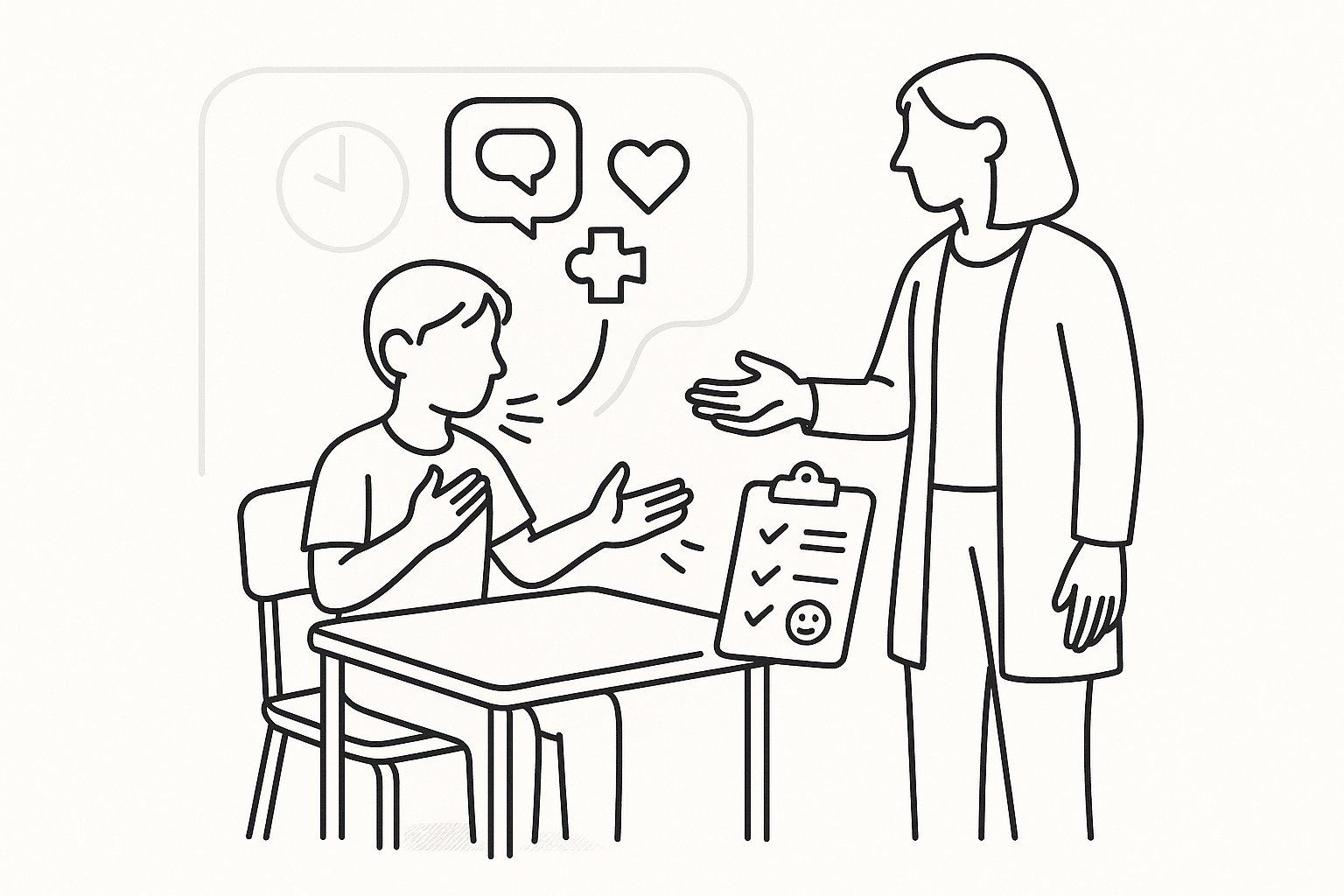
Social-emotional goals in an IEP target the emotional regulation, interpersonal skills, self-awareness, and decision-making abilities a student needs to access learning and stay safe at school. In practical terms, these goals address things like following classroom routines, managing frustration, initiating peer interactions, and responding appropriately to feedback. They’re not “soft” extras, we know from decades of research that social-emotional competence correlates with better academic outcomes, fewer behavior disruptions, and improved long-term well-being.
Why include social-emotional goals in an IEP? First, legal and procedural reasons: an IEP must address all areas of the child’s educational needs that result from their disability. If emotional or social challenges impede academic progress or participation, those areas belong in the IEP. Second, functional reasons: without targeted supports for social-emotional learning (SEL), academic interventions can be undermined. A student who can’t self-regulate or join group activities may miss instruction even when the curriculum is appropriate.
Social-emotional goals can be preventive and instructional. Preventive goals reduce triggers and help the student avoid crisis. Instructional goals teach the student specific skills (e.g., identifying feelings, using a calm-down routine, or asking for help). They can be individualized to age and context, for a kindergartner, a goal might focus on taking turns with peers: for a high-schooler, it might center on managing stress during clinical rotations or workplace experiences.
We should also recognize intersectionality: social-emotional needs overlap with communication, sensory, and executive functioning domains. Effective IEPs coordinate across services, speech-language pathologists, school psychologists, behavior specialists, and teachers, ensuring goals are realistic, supported, and monitored. Finally, we must involve families. Goals that reflect home routines and cultural values are more likely to be reinforced consistently, which improves outcomes.
How To Assess Social-Emotional Needs Before Writing Goals
A reliable assessment gives us the evidence base for meaningful IEP social-emotional goals. We start with multiple data sources: observations, standardized measures, teacher and family reports, and direct assessment when appropriate. Here’s a practical assessment workflow we recommend.
- Review records and input. Gather prior evaluations, teacher notes, incident reports, and parent input. Patterns emerge when we look across settings and time. Ask targeted questions like: When is the student most dysregulated? What routines help? What academic tasks trigger frustration?
- Conduct structured observations. Observe the student in natural contexts, classroom instruction, unstructured recess, small-group work. Use a simple checklist that tracks frequency of target behaviors (e.g., number of prompts required, outbursts, requested breaks) and the antecedents. Observation yields context-specific data we can turn into measurable baselines.
- Use standardized measures selectively. Tools such as the Social Skills Improvement System (SSIS), BASC-3 (Behavior Assessment System for Children), or the Vineland Adaptive Behavior Scales provide normed data to compare functional levels with peers. They’re useful for eligibility decisions and for quantifying severity, but shouldn’t replace ongoing observational data.
- Interview stakeholders. We interview teachers, related services providers, and family members. A short, structured interview or questionnaire produces qualitative detail often missing from checklists: the student’s preferred calming strategies, peer relationships, and motivators.
- Trial interventions and collect baseline data. Before finalizing a goal, we sometimes pilot a simple strategy (e.g., visual schedule, break card) and measure whether baseline behaviors change. That helps ensure goals are realistic and informed by what actually works.
- Consider context and rights. When behavior intersects with disability-related needs, we ensure the assessment respects the student’s procedural protections. For students whose behavior may place them at risk of exclusion, we document supports so the IEP team provides appropriate FAPE (a core legal requirement).
By triangulating across these sources, we create a clear baseline and identify specific, measurable targets for the IEP social-emotional goals.
How To Write Clear, Measurable Social-Emotional IEP Goals (With Examples)
Writing measurable IEP social-emotional goals means translating assessment findings into concrete behavior and success criteria. We follow a simple formula: target behavior + condition + measurable criteria + timeframe. Below are principles and ready-to-use examples.
Principles for measurable goals
- Be specific about observable behavior. Replace vague terms like “improve behavior” with “use a calm-down strategy.”
- Define the condition. Where and when should the behavior occur? During independent work, lunch, or group projects?
- Set objective criteria. Use frequency, duration, percentage, or prompts needed.
- Attach a realistic timeframe. Typical IEP goals use annual timelines with interim monitoring.
- Include supports and accommodations. Specify prompts, visual aids, or adult coaching that will be used.
Goal formula example
- Condition: During 20-minute independent math tasks
- Behavior: the student will use a taught coping strategy (deep breathing + 3-minute break)
- Criteria: with no more than one adult prompt in 4 out of 5 observed opportunities
- Timeframe: within 36 weeks
Full goal: “By the end of the IEP year, during 20-minute independent math tasks, [student] will use a taught coping strategy (deep breathing followed by a 3-minute break) with no more than one adult prompt in 4 out of 5 observed opportunities across three consecutive data collection periods.”
Examples across ages and needs
- Early elementary (turn-taking): “Within 36 weeks, when playing structured games with peers, [student] will wait for his/her turn without verbal protest in 8 of 10 observed opportunities as measured by teacher observation.”
- Upper elementary (peer initiation): “By the end of the year, during unstructured recess, [student] will initiate interactions with peers using a scripted opening (e.g., ‘Want to play tag?’) in 3 out of 5 observed opportunities on three separate days.”
- Middle/high school (stress management): “Within 36 weeks, during timed assessments, [student] will use a pre-taught coping plan (break card, 3 breaths, 1-minute walk) to reduce task avoidance, decreasing teacher prompts from daily to no more than once per week across four consecutive data points.”
Progress-monitoring and documentation
We recommend brief, regular data collection: quick daily tallies, weekly graphs, and monthly reviews at IEP team meetings. Use simple tools, a behavior log, a percentage chart, or an app that timestamps occurrences. Align progress monitoring with report timelines so decisions (instructional changes, increased supports, or goal revision) are evidence-driven.
Embedding goals into routines
Goals succeed when they’re embedded in the school day. Train classroom staff on the intervention, add visuals to the environment, and coach peers when peer-mediated strategies are used. Finally, involve families: share the goal language and strategies so everyone uses consistent prompts and reinforcement.
Conclusion
IEP social-emotional goals are practical tools, when they’re based on solid assessment, written with measurable criteria, and supported by daily routines, they change access to education. We encourage teams to keep goals specific, track progress frequently, and coordinate across school and home. If you’re unsure where to start, begin with a focused assessment and one clear, measurable goal: small wins build momentum for bigger gains.
Frequently Asked Questions About IEP Social Emotional Goals
What are IEP social emotional goals?
IEP social emotional goals focus on a student’s emotional regulation, interpersonal skills, self-awareness, and decision-making to support learning, relationships, and safe participation in school environments.
Why are social emotional goals important in an IEP?
They are crucial because social-emotional skills impact academic success, behavior, and well-being, and addressing these areas ensures all educational needs related to a disability are met.
How do educators assess a student’s social emotional needs before writing IEP goals?
Assessment includes reviewing records and reports, structured observations, standardized measures, interviews with stakeholders, trial interventions, and considering the student’s context and rights.
How can I write measurable social emotional IEP goals?
Use a formula combining target behavior, condition, measurable criteria, and timeframe, such as specifying observable actions, context, success measures, and a realistic timeline for achievement.
What are examples of social emotional goals for different age groups?
Examples include early elementary students learning to take turns, upper elementary students initiating peer interactions, and middle/high school students managing stress during assessments.
How can families support social emotional IEP goals at home?
By understanding the goal language, reinforcing strategies consistently, and coordinating with school staff to maintain consistent prompts and support routines across settings.