
Last Updated on April 20, 2026 by Jennifer Hanson
Families and educators routinely ask: what exactly counts as a modification in special education, and when should one be used instead of an accommodation? We’ll walk through clear definitions, legal triggers, common classroom examples, and the IEP team process so you can recognize when a student needs a different curriculum expectation, not just extra help. Though we write from a legal-aware perspective, this guide is practical: it’s for parents who want better outcomes, teachers who need implementable strategies, and providers who participate in IEP planning.
In this guide, Special Education Modifications Explained A Practical Guide For Parents Educators And Providers 2026 is explained with clear steps and tips.
Key Takeaways — Special Education Modifications Explained A Practical Guide For Parents Educators And Providers 2026
- Special education modifications change what a student is expected to learn, altering the curriculum or performance level to match their unique needs.
- Modifications are used when accommodations alone can’t help a student meet grade-level expectations and require clear documentation in the IEP to guide implementation.
- The IEP team collaboratively decides on modifications based on data, trials of accommodations, and measurable goals to ensure educational benefit.
- Common modifications include simplified curriculum, reduced assignments, alternative assessments, and modified grading criteria tailored to the student’s abilities.
- Effective implementation requires staff training, frequent progress monitoring, clear communication with families, and regular IEP review to adjust modifications as needed.
What Special Education Modifications Are And Why They Matter
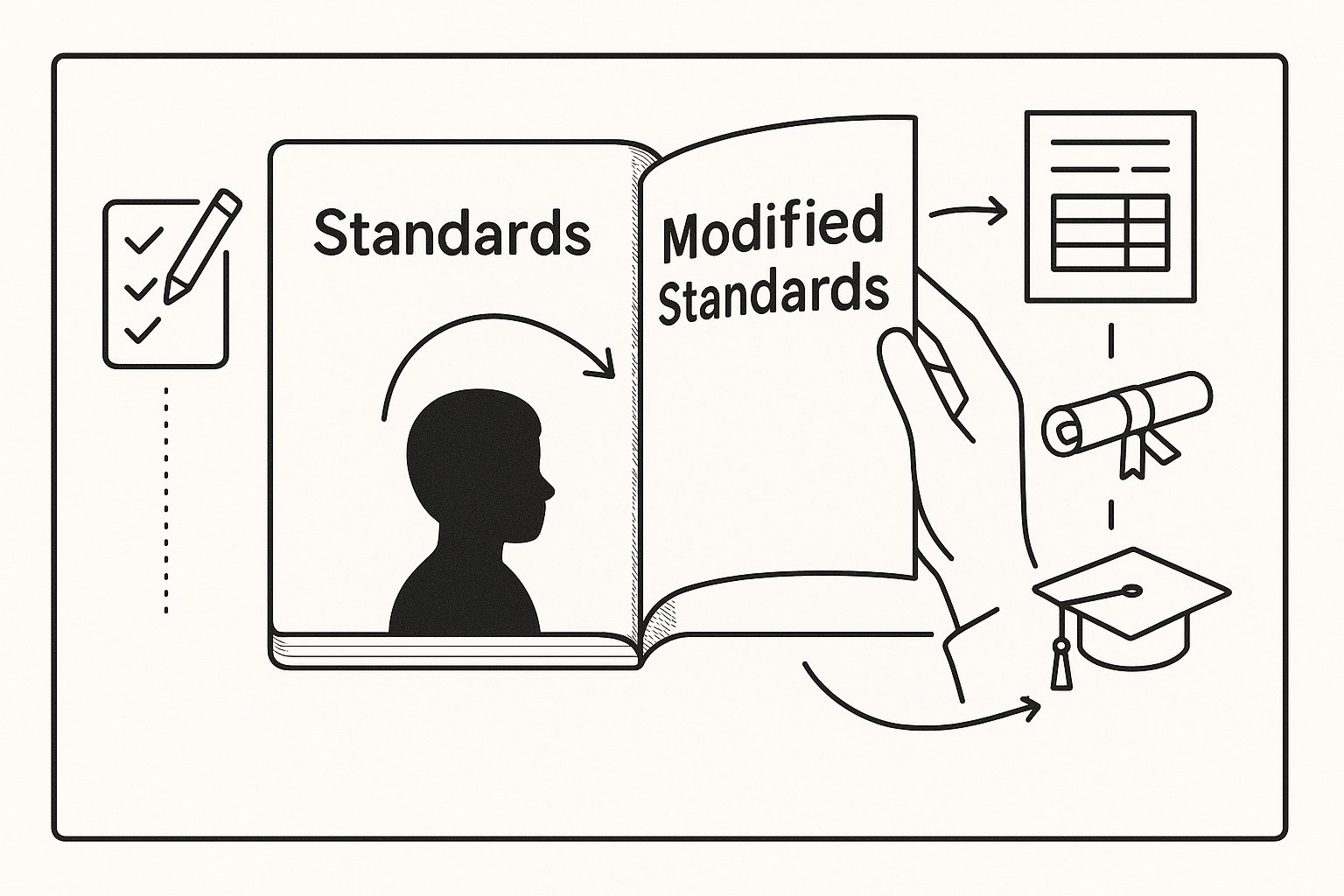
Modifications are changes to what a student is expected to learn or demonstrate. Unlike supports that change how a student accesses curriculum, modifications alter the content, complexity, or performance level itself. For example, reducing the number of math problems on a test is an accommodation: changing the grade-level math standards a student is taught (or assessed on) is a modification.
Why they matter: modifications directly affect a student’s educational trajectory, transcript, and post-school options. When we lower or alter academic expectations for a student with an identified disability, we create a personalized path to meaningful engagement and success. But modifications also carry consequences, they can influence graduation requirements, eligibility for certain diplomas, and later college or employment preparation. That’s why accurate identification, clear documentation, and ongoing review are essential.
Practically speaking, modifications are used when a student’s disability prevents them from achieving grade-level expectations even with accommodations and specialized instruction. They’re not a first-line response: they’re a targeted tool for students who need altered standards to make real progress.
Legal Basis, Eligibility, And When Modifications Are Required
The Individuals with Disabilities Education Act (IDEA) provides the federal framework that requires schools to provide a Free Appropriate Public Education (FAPE) in the Least Restrictive Environment. Under IDEA, IEP teams determine a student’s goals, specially designed instruction, and whether modifications are part of the student’s program.
Eligibility for modifications isn’t a separate legal category: it follows from a student’s identified disability and documented needs. If a student cannot access or benefit from grade-level curriculum with accommodations and supports, the IEP team must consider modifications. We recommend documenting the team’s rationale: which accommodations were tried, measurable gaps in progress, and why modifications are expected to produce educational benefit.
State rules vary on how modifications affect grading, transcripts, and diplomas. For instance, some states will list modified coursework on a transcript: others may limit access to a standard diploma if multiple graduation requirements are modified. Families should ask their district these specific questions and request written explanations in meetings.
How Modifications Differ From Accommodations
Accommodations remove barriers without changing academic expectations, examples include extended time, preferential seating, or text-to-speech. Modifications change the delivery or content: simplified assignments, alternate grading scales, or teaching at a different grade level. A quick rule: if the student is being held to a different standard or skill set, it’s a modification.
Common Types Of Modifications In The Classroom And Curriculum
Modifications can take many forms depending on the student’s needs. Here are common examples we see in IEPs:
- Curriculum Modification: Teaching math at a lower grade level, or using life-skills reading materials instead of grade-level literature. This might include simplified texts or a focus on functional numeracy rather than algebraic reasoning.
- Assignment Reduction: Assigning fewer problems, shorter essays, or alternate projects that measure similar conceptual understanding at a different level.
- Alternative Assessments: Using portfolios, oral reports, or competency checklists instead of traditional tests. These provide evidence of learning without requiring grade-level test performance.
- Modified Grading Criteria: Grading based on individualized goals, effort, or mastery of adapted objectives rather than comparison with peers.
- Functional/Applied Modifications: Emphasizing daily living skills, vocational tasks, or social communication goals in place of some academic expectations.
We emphasize specificity in IEP language. “Modified curriculum” without details leaves too much room for inconsistent implementation. Effective IEPs list which standards are modified, how progress will be measured, and how modifications affect grades and diplomas.
How Modifications Are Determined: The IEP Team Process
Determining modifications is a team effort. IDEA requires the IEP team, which includes parents, general and special educators, the child (when appropriate), and a district representative, to make individualized decisions.
Step-by-step, the process typically looks like this:
- Present Levels & Data: The team reviews current performance data, standardized testing, classroom work samples, and observations to understand gaps.
- Trial of Accommodations/Specialized Instruction: Teams document what supports were used and whether progress resulted. We advise keeping short-cycle data (weekly or monthly) to show trends.
- Consideration of Modifications: If progress remains insufficient, the team discusses specific modifications, their rationale, and expected measurable outcomes.
- Writing Clear IEP Language: The IEP should specify the modification, frequency, responsible staff, and how progress will be measured. We recommend adding examples of assignments or assessments that will be modified.
- Consent and Implementation: Parents must be informed and involved. While districts can propose modifications, parental agreement and documented consent are important for trust and legal clarity.
Throughout this process, we encourage families to ask for examples, trial periods, and progress reports tied to the modified expectations. If there’s disagreement, IDEA provides procedural safeguards and dispute resolution options, including mediation, due process, or state complaint.
Implementing, Monitoring, And Adjusting Modifications Effectively
Implementation is where good plans succeed or fail. To make modifications effective, districts and teams should follow these practices:
- Create an Implementation Checklist: List daily routines, responsible staff, and materials required for each modification. Small logistics matter.
- Train Staff: General educators often carry most of the implementation load. Provide brief, practical coaching on how to adapt assignments, grade modified work, and record progress.
- Use Frequent, Measurable Progress Monitoring: Short, objective measures (weekly probes, work-sample reviews) show whether the modified goal is producing growth.
- Communicate with Families: Regular updates reduce misunderstandings. Share samples of modified work and explain what success looks like.
- Review and Adjust: Schedule IEP reviews or data meetings more frequently when modifications are new. If a student masters the modified objectives, the team may consider fading modifications or moving toward grade-level expectations with supports.
We also recommend documenting transition planning. For older students, modifications should connect to post-secondary goals: will the student be prepared for employment, vocational programs, or supported higher education? A modification that helps classroom success but leaves a student unprepared for life after school may need rethinking.
Keeping detailed notes and data helps if legal questions arise. Given the high-stakes consequences some modifications can have (transcripts, diplomas), we advise families to request written explanations of how modifications affect long-term outcomes.
Conclusion: Making Modifications Work For The Student
Modifications are a powerful tool when used thoughtfully: they match instruction to a student’s unique learning profile while preserving dignity and access. We encourage teams to be data-driven, specific in IEP writing, and transparent with families about academic and post-school implications. When we do that, modifications become not a last resort but a pathway, one that helps students learn meaningfully and prepares them for the next step in life.
Special Education Modifications: Frequently Asked Questions
What are special education modifications and why are they important?
Special education modifications are changes to what a student is expected to learn or demonstrate, altering content or performance levels. They create personalized paths for students with disabilities, enabling meaningful progress but can affect transcripts and diploma eligibility.
How do modifications differ from accommodations in special education?
Accommodations change how a student accesses curriculum without altering expectations, like extended time. Modifications change the grade-level content or performance standards, such as teaching simplified material or using alternate grading criteria.
When should an IEP team decide to use modifications?
Modifications are considered when a student’s disability prevents them from meeting grade-level expectations despite using accommodations and specialized instruction. The IEP team must review data and document why modifications are needed to support progress.
What are common examples of special education modifications in the classroom?
Examples include teaching curriculum at a lower grade level, reducing assignments, using alternative assessments like oral reports, applying modified grading criteria, and focusing on functional or vocational skills instead of academics.
Can special education modifications affect a student’s graduation requirements or diploma?
Yes, modifications can impact graduation standards and eligibility for standard diplomas. State rules vary, so families should ask school districts for written explanations about how modifications influence transcripts and diplomas.
How can families and educators ensure modifications are implemented effectively?
Effective implementation involves clear IEP language, staff training, frequent progress monitoring, regular family communication, and scheduled reviews to adjust modifications as needed, ensuring they support meaningful student growth.