
Last Updated on October 16, 2026 by Jennifer Hanson
When a child with autism struggles at school, parents and educators often ask: what protections and supports are available? A 504 plan is one of the most important tools we can use to level the playing field. In this guide we’ll explain what a 504 plan for autism is, who qualifies under Section 504, how it differs from an IEP, common accommodations, and practical steps for requesting and reviewing a plan. Our goal is to give families and school staff clear, actionable information so they can secure the right supports for learning and participation.
In this guide, What Is A 504 Plan For Autism A Practical Guide For Parents And Educators In 2026 is explained with clear steps and tips.
Key Takeaways — What Is A 504 Plan For Autism A Practical Guide For Parents And Educators In 2026
- A 504 plan for autism ensures students with disabilities receive necessary accommodations to access general education and participate fully in school activities.
- Eligibility for a 504 plan depends on whether autism substantially limits major life activities like learning or communication, without necessarily requiring special education services.
- 504 plans focus on accommodations such as sensory supports, communication aids, and testing modifications, differing from IEPs which provide specialized instruction and services.
- Parents and educators should prepare thorough documentation and collaborate during 504 meetings to develop clear, specific, and feasible accommodations.
- Schools are legally obligated to implement 504 plans, and families have procedural rights to appeal or seek remedies if accommodations are not provided.
- Regular review and monitoring of the 504 plan ensure that accommodations remain effective and responsive to the student’s evolving needs.
What A 504 Plan Covers And Why It Matters For Students With Autism
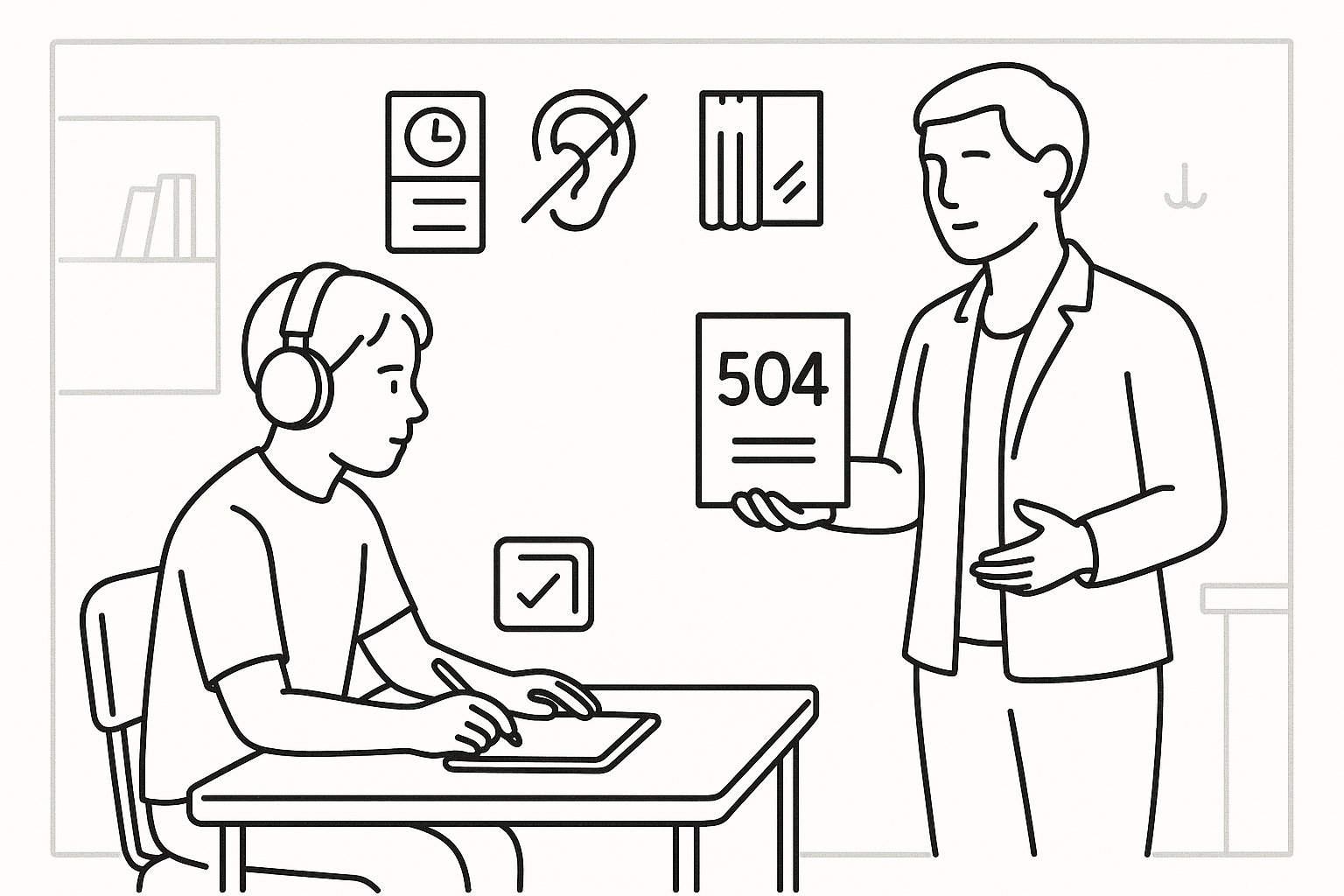
A 504 plan is created under Section 504 of the Rehabilitation Act of 1973 to ensure students with disabilities have equal access to education. Unlike special education statutes that fund specialized instruction, Section 504 focuses on removing barriers and providing accommodations so a student with a diagnosed disability, such as autism, can participate in the general education curriculum and school activities.
For students with autism, a 504 plan can address sensory sensitivities, communication differences, executive functioning challenges, behavioral supports, and health-related needs. Common areas covered include classroom seating, reduced sensory stimuli, schedule modifications, permission to use assistive technology, and test accommodations. The plan matters because it creates a documented, school-wide obligation: teachers, administration, and support staff must follow the accommodations. That reduces misunderstandings and helps prevent disciplinary actions that result from disability-related behaviors.
Importantly, a 504 plan is a civil-rights protection. If a school fails to provide agreed accommodations, families have procedural rights to appeal within the district, file complaints with the Office for Civil Rights (OCR), or pursue due process in some cases. While we’re not giving legal advice here, it’s useful to know that remedies exist when a school doesn’t meet its Section 504 obligations.
Who Is Eligible Under Section 504 For Autism-Related Needs
Eligibility under Section 504 turns on whether a student has a physical or mental impairment that substantially limits one or more major life activities, learning, communicating, concentrating, or interacting with others. Autism spectrum disorder often meets this definition because it can affect communication, social interaction, sensory processing, and executive function.
We typically see eligibility established through a combination of sources: medical or psychological diagnoses, school-based evaluations, teacher observations, and parent reports. The school’s 504 team (which usually includes parents, teachers, and an administrator) reviews this evidence to determine whether the student needs accommodations to access education.
A key point: eligibility doesn’t require that the student need special education. If the student’s primary need is reasonable accommodations, like preferential seating or extra time on tests, a 504 plan may be the appropriate vehicle. Conversely, if the student requires specialized instruction, an IEP (Individualized Education Program) under IDEA may be the better fit. The team must consider both statutes and choose the option that best serves the student’s educational needs.
How A 504 Plan Differs From An IEP (And When Each Is Better)
Both 504 plans and IEPs aim to help students with disabilities, but they differ in source, scope, and process.
- Legal basis and focus: An IEP is created under the Individuals with Disabilities Education Act (IDEA) and is for students who need specialized instruction. A 504 plan stems from civil-rights law and focuses on equal access through accommodations.
- Services versus accommodations: IEPs can include specialized instruction, related services (speech, occupational therapy), and measurable annual goals. 504 plans typically list accommodations, modifications, and supports without mandated instructional services or formal goals.
- Procedural safeguards: IDEA provides detailed procedural protections, formal evaluations, individualized goals, and structured parent notices. Section 504 has protections too, including non-discrimination and the right to due process, but procedures can be less prescriptive and vary by district.
When to choose which: If the student’s autism results in learning delays that require targeted instruction (for example, explicit social communication interventions or intensive reading support), an IEP is often the right choice. If the student learns grade-level material but needs accommodations to demonstrate learning or to function comfortably in school, a 504 plan may be sufficient. We recommend evaluating what the student actually needs in the classroom, not just the label, when deciding between the two.
Common Accommodations And Supports For Students With Autism
Accommodations for students with autism are tailored to the student’s profile but typically target sensory regulation, communication, organization, and behavior. Here are frequently used supports:
- Sensory supports: noise-reducing headphones, access to a quiet room, predictable classroom layout
- Communication supports: visual schedules, picture exchange systems, simplified language, extra wait time
- Organizational supports: assignment checklists, chunked tasks, color-coded materials
- Testing and grading: extended time, separate testing location, alternative demonstration of knowledge
- Behavioral supports: positive behavior interventions, pre-teaching of routines, scheduled breaks
Accommodations should be specific, measurable, and feasible for school staff to carry out. We advise listing who is responsible for each accommodation, when it applies (every day, transitions, tests), and how progress or compliance will be reviewed. That level of detail helps avoid inconsistent implementation and gives parents clear expectations.
Classroom And Testing Accommodations: Specific Examples And Implementation
Here are concrete examples we often recommend in 504 plans and tips for putting them into practice:
- Preferential seating: seat the student near the teacher and away from high-traffic areas. Include a note in the plan that the teacher will re-seat only after a documented reason.
- Sensory breaks: allow a 5–10 minute break twice daily to use a sensory room or walk with an aide. Define how the student requests the break (e.g., nonverbal signal or card).
- Extended time on timed tasks: grant time-and-a-half or double time for quizzes and exams. Specify whether this applies to class quizzes, standardized tests, or both.
- Visual supports: post daily schedule cards and provide a personal schedule at the student’s desk. Train substitutes to use the same visuals.
- Alternative test formats: allow oral responses or scribing when fine motor challenges or anxiety interfere with written work.
Implementation tips: build a simple one-page accommodations summary for substitute teachers, schedule short staff training at the start of the year, and include regular check-ins (monthly or quarter) to confirm the accommodations are used. Documentation helps if disputes arise later, keep copies of the plan, notes from meetings, and examples of when accommodations were or weren’t provided.
How To Request, Develop, And Review A 504 Plan — Step‑By‑Step
Requesting a 504 plan follows a straightforward process, but preparation improves outcomes. Here’s a practical step-by-step approach:
- Request evaluation in writing: submit a concise written request to the school’s 504 coordinator or principal describing the student’s disability and why accommodations are needed. Keep a copy.
- Gather documentation: include medical or psychological evaluations, teacher observations, work samples, and notes about behaviors and academic performance.
- Convene the 504 team: the school schedules a meeting with parents, teachers, and an administrator. We suggest bringing a concise summary of priorities and preferred accommodations.
- Develop the plan: propose specific accommodations, define who implements them, and set a review timeline. Ask for a written plan that everyone signs.
- Implementation and monitoring: the school implements accommodations. We recommend clear checkpoints, often every 6–12 weeks, to review effectiveness and make adjustments.
- Annual review or revisions: 504 plans should be reviewed at least annually or sooner if the student’s needs change.
If the school denies evaluation or a 504 plan, families can request reconsideration, file a complaint with their district’s 504 coordinator, or contact the U.S. Department of Education’s Office for Civil Rights. When disputes involve legal questions, especially around discrimination or procedural violations, we’ve found it helpful to consult an attorney experienced in education law to understand options and next steps.
Practical Tips For Parents, Educators, And Advocates During 504 Meetings
504 meetings can feel stressful, but a few practical habits help the team stay focused on the student’s needs.
- Come prepared: bring documentation, a prioritized list of accommodations, and examples of classroom challenges. Keep comments brief and factual.
- Be collaborative but firm: approach the meeting as partners in the student’s success, but insist on specificity, vague promises lead to inconsistent implementation.
- Ask implementation questions: who will train substitutes, how will teachers document use of accommodations, and what is the plan for data collection?
- Request written notes and a timeline: confirm who signs the plan and when reviews occur. If needed, request that the plan be written during the meeting so everyone agrees on language.
- Use a data mindset: bring or request baseline data (grades, behavior logs) and agree on measures to track progress. Objective data reduces conflict down the line.
We also recommend keeping communication channels open: brief weekly or biweekly emails from parents or teachers can resolve small issues before they compound. If a problem persists, escalate to the district 504 coordinator or seek mediation. For families needing legal guidance, firms with education-law experience, especially those familiar with disability and healthcare intersections, can be a resource in resolving complex disputes.
Frequently Asked Questions About 504 Plans for Autism
What is a 504 plan for autism and why is it important?
A 504 plan for autism, based on Section 504 of the Rehabilitation Act, ensures students with autism receive accommodations that remove barriers to learning and participation. It provides equal access to education by addressing sensory, communication, and behavioral needs without specialized instruction.
Who qualifies for a 504 plan under Section 504 due to autism?
Students with autism qualify if their autism substantially limits major life activities like learning, communicating, or social interaction. Eligibility is determined through medical diagnoses, evaluations, and observations to decide if accommodations are needed for equal educational access.
How does a 504 plan differ from an Individualized Education Program (IEP)?
A 504 plan provides accommodations to ensure access to general education, while an IEP, under IDEA, offers specialized instruction and related services. IEPs have formal procedural safeguards and goals; 504 plans focus mainly on accommodations without mandated instruction.
What are common accommodations provided in a 504 plan for students with autism?
Common accommodations include preferential seating, sensory supports like noise-reducing headphones, visual schedules, extended test time, and behavioral supports such as scheduled breaks and positive interventions customized to the student’s needs.
How do parents request and develop a 504 plan for their child with autism?
Parents request a 504 evaluation in writing to the school, submit documentation, and participate in a 504 team meeting to discuss needed accommodations. The team creates a plan, assigns responsibilities, and sets review timelines to ensure effective implementation.
Can a 504 plan protect my child’s rights if the school doesn’t provide agreed accommodations?
Yes, a 504 plan is a civil rights protection. If the school fails to provide accommodations, families can appeal within the district, file complaints with the Office for Civil Rights, or pursue due process to enforce compliance.