
Last Updated on October 16, 2026 by Jennifer Hanson
Depression can affect a student’s ability to learn, attend school regularly, and participate fully in classroom activities. A 504 plan is one legal tool that helps level the playing field by providing accommodations under Section 504 of the Rehabilitation Act. In this guide we’ll explain what a 504 plan for depression is, who qualifies, how schools develop and carry out plans, what accommodations commonly look like, and how to request or appeal a plan. Our aim is practical: to help students, parents, and employers understand rights and realistic steps to secure supports.
In this guide, What Is a 504 Plan for Depression A Practical Guide For Students Parents And Employers 2026 is explained with clear steps and tips.
Key Takeaways — What Is a 504 Plan for Depression A Practical Guide For Students Parents And Employers 2026
- A 504 plan provides legal accommodations for students whose depression substantially limits major life activities like learning and attending school.
- Qualification for a 504 plan depends on functional impact, supported by documentation such as medical records and school performance evidence.
- Schools develop 504 plans through a team evaluation focusing on reasonable accommodations to ensure equal access, recorded in clear, written documents.
- Common accommodations include flexible attendance, extended deadlines, modified assignments, and access to supportive environments or staff.
- Requesting a 504 plan requires a written request with detailed examples and documentation, while appeals follow district grievance procedures or federal complaints if necessary.
- 504 plans help reduce school barriers but should be combined with therapeutic treatments for optimal support and success.
Who Qualifies: When Depression Meets The Definition Of A Disability Under Section 504
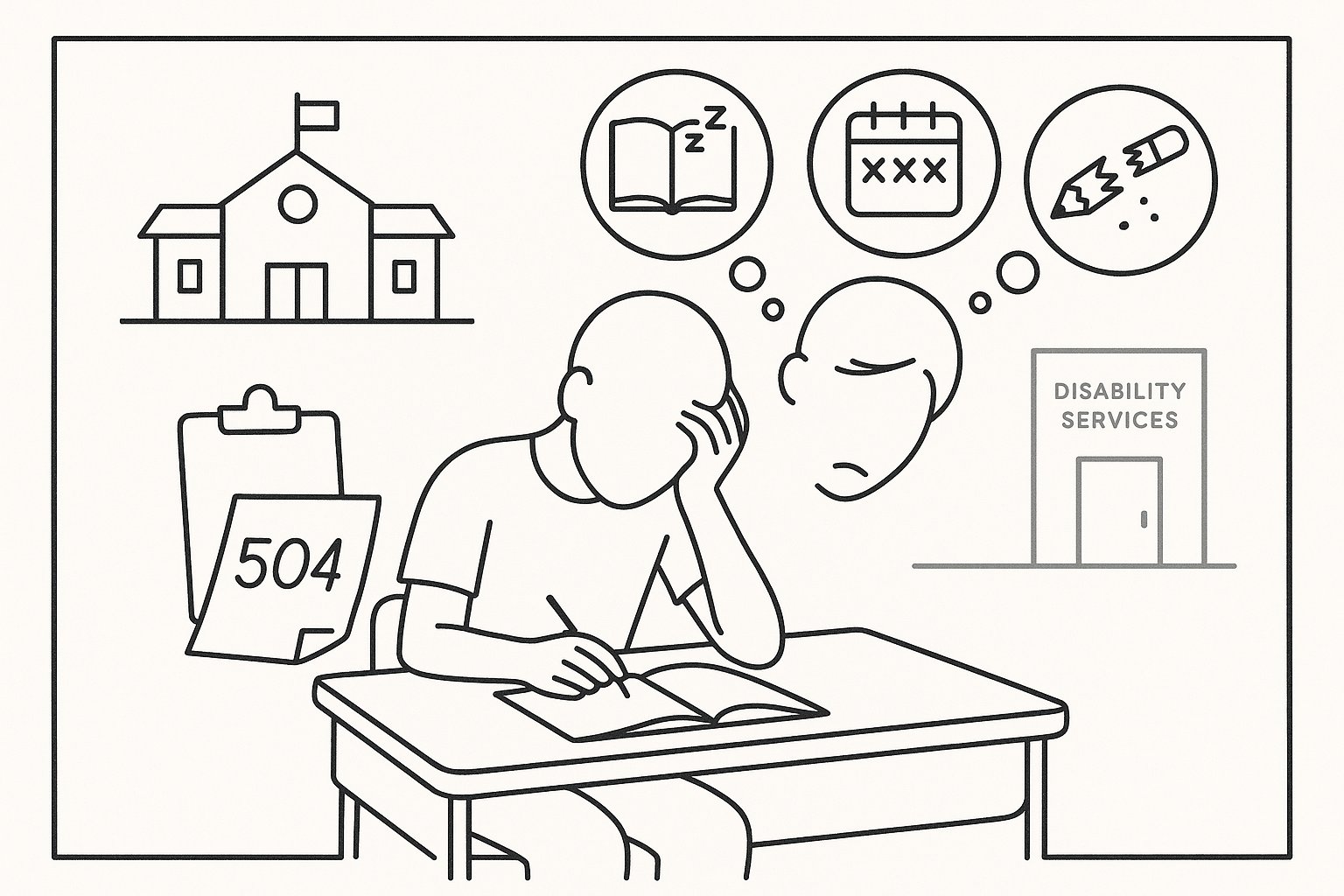
Section 504 protects people with disabilities from discrimination if they have a physical or mental impairment that substantially limits one or more major life activities. For students with depression that means we look at whether the condition substantially limits activities such as learning, concentrating, sleeping, interacting with others, or attending school.
Qualification isn’t based solely on diagnosis. Schools consider functional impact. For example, a student with recurrent major depressive episodes who misses weeks of class, cannot complete assignments even though supports, or experiences severe concentration and memory impairments is more likely to meet the standard than a student with mild, well-controlled symptoms. Documentation helps: evaluations from mental health professionals, patterns of absenteeism, school nurse or counselor notes, and work samples showing decline all shed light on how depression affects school performance.
We should also note the difference between a 504 plan and an IEP under IDEA. An IEP provides specialized instruction for students who qualify with specific educational needs: a 504 plan provides reasonable accommodations to ensure equal access. A student with depression may qualify for a 504 plan when the primary need is accommodation (flexible deadlines, modified attendance policies) rather than specialized instruction. Sometimes students qualify for both, but that requires meeting the separate legal tests for IDEA.
Finally, federal protections extend beyond K–12 public schools: Section 504 covers public postsecondary institutions and any program receiving federal funds. That means college students with depression can get academic adjustments and auxiliary aids through a 504 coordinator or disability services office.
How A 504 Plan Is Developed And Implemented In School
A 504 plan begins with a referral. Parents, teachers, counselors, or the student can request an evaluation. Once the school agrees to evaluate, or is required to, the team gathers relevant information: medical or psychological records, academic data, teacher observations, attendance history, and input from the student and family. We emphasize that the goal of the evaluation is functional: how does depression affect the student’s access to learning?
The school convenes a 504 team. Unlike IDEA IEP teams, 504 teams vary by district but typically include a school administrator, the student’s teachers, a school nurse or counselor, and the parent or guardian. The team reviews the evidence to decide whether the student has a qualifying disability and, if so, what accommodations are reasonable and necessary to provide equal access.
Implementation requires clear, written documentation. A 504 plan should specify the accommodations, who is responsible, how they will be delivered, and how progress or effectiveness will be monitored. For example: “Student may turn in up to three late assignments per grading period without penalty: teacher will provide written extensions as needed.” We recommend including triggers for reevaluation (e.g., significant symptom change or academic decline) and a review schedule, usually annually.
Communication is critical. We encourage regular check-ins between the family and school staff, especially after the plan is first implemented. If an accommodation interferes with instruction or isn’t working, the team should reconvene and modify the plan. Schools must provide accommodations without cost to the family, but parents should be proactive: deliver updated medical information and keep documentation of missed or denied supports.
Common Accommodations And Modifications For Students With Depression
Accommodations for depression are individualized but often fall into attendance, academic, testing, and classroom supports:
- Attendance flexibility: excused absences for mental health treatment, extended deadlines, or shortened school day when medically necessary.
- Assignment and testing modifications: extended time on exams, alternative assignments, reduced assignments load, or breaks during long tests.
- Environmental changes: permission to leave class briefly to visit the counselor, seating adjustments to reduce distractions, or access to a quiet space when overwhelmed.
- Behavioral and organizational supports: daily check-ins with a trusted staff member, checklists for classwork, written instructions, or preferential scheduling to avoid stressful periods.
- Communication and crisis planning: a proactive safety or crisis plan, parent notification protocols, and coordination with outside mental health providers when consent is given.
We should be realistic: accommodations remove barriers but don’t treat the underlying illness. Many students benefit from combined supports, school-based accommodations plus evidence-based therapy and medication management when appropriate. Employers and higher-education institutions can use analogous adjustments to support employees or adult learners with depression.
How To Request, Document, Or Appeal A 504 Plan For Depression
Requesting a 504 plan starts with writing a clear, dated request to the school’s principal or 504 coordinator. We recommend including specific examples of how depression affects school functioning, missed days, declines in grades, concentration issues, and attaching any medical or mental health documentation you have. Keep copies of everything.
Documentation tips:
- Obtain a statement from the treating clinician describing diagnosis, symptoms, functional limitations, and recommended accommodations. The clinician doesn’t have to use legal language: clear functional descriptions are most persuasive.
- Collect school-based evidence: attendance records, report cards, samples of incomplete or late work, and notes from teachers or counselors.
- Maintain a log of communications with the school, including dates and summaries of phone calls or meetings.
If the school denies evaluation or refuses to carry out a 504 plan, we advise following the district’s internal grievance procedures first. Most districts have a written process for complaints about Section 504. File a written complaint, request a meeting, and ask for a written explanation of the decision.
Parents and students have multiple appeal options if internal resolution fails:
- State-level complaint to the state education agency (procedures vary by state).
- Office for Civil Rights (OCR) complaint with the U.S. Department of Education for discrimination claims under Section 504.
- Due process hearing or civil litigation in federal court in more complex cases (for example, widespread denial of accommodations or retaliation). Legal representation can help clarify remedies and deadlines.
At Chelle Law we often counsel professionals on employment contracts and administrative appeals: similarly, parents may want legal guidance when schools repeatedly fail to provide required accommodations. A lawyer experienced in education or disability law can help parse local procedures, prepare formal complaints, or represent families in hearings. But many 504 disputes resolve through documentation, persistence, and clear communication without litigation.
Practical steps while disputes are pending: request interim protections (temporary accommodations while the school reviews the request), bring a support person to meetings, and follow up in writing after every conversation. That paper trail matters.
Conclusion
A 504 plan can be a straightforward, powerful way to reduce school barriers for students with depression when the condition substantially limits major life activities. We encourage families and students to document functional impacts, request evaluations in writing, and insist on clear, written plans with monitoring. Employers and postsecondary institutions should take similar steps to provide reasonable adjustments. When disputes arise, use the district’s grievance process, consider state or federal complaints, and consult counsel if necessary. With the right accommodations and coordination between school and health providers, we can help students stay engaged and succeed even though depression.
Frequently Asked Questions About 504 Plans for Depression
What is a 504 plan for depression and how does it help students?
A 504 plan is a legal tool under Section 504 of the Rehabilitation Act that provides accommodations to students with depression. It ensures they receive equal access to education by addressing functional impairments like difficulties attending school, concentrating, or completing assignments.
Who qualifies for a 504 plan due to depression?
Students qualify if their depression substantially limits major life activities such as learning, concentrating, or attending school. Qualification is based on functional impact, supported by documentation like medical evaluations, attendance records, and school counselor notes.
How is a 504 plan for depression developed and implemented in schools?
The process starts with a referral and evaluation of how depression affects learning. A school team reviews evidence to determine eligibility and creates a written plan detailing accommodations, responsible parties, and monitoring procedures, with ongoing communication among family and staff.
What are some common accommodations for students with depression under a 504 plan?
Common accommodations include flexible attendance policies, extended deadlines, extra time on tests, breaks during exams, permission to visit counselors, seating adjustments, daily check-ins, and crisis planning to support the student’s educational access.
How can parents request or appeal a 504 plan for their child with depression?
Parents should submit a clear, dated written request with examples and documentation to the school. If denied, they can follow district grievance procedures, file complaints with state education agencies or the U.S. Department of Education, and seek legal advice if needed.