
Last Updated on October 16, 2026 by Jennifer Hanson
When a child’s learning needs go beyond the classroom’s standard supports, families and schools often look for outside expertise. A special education consultant is one of the most practical, flexible options available, they bridge educational, medical, and legal knowledge to shape effective plans. In this guide we explain who these consultants are, what they do, when to bring one in, and how to choose the right person for your child or school. Our goal is to give you clear, usable information so you can act with confidence.
In this guide, What Is a Special Education Consultant A Clear Guide For Families And Schools 2026 is explained with clear steps and tips.
Key Takeaways — What Is a Special Education Consultant A Clear Guide For Families And Schools 2026
- A special education consultant combines expertise in education, psychology, and law to create effective learning plans tailored to students’ unique needs.
- Families and schools hire special education consultants when existing supports are insufficient, evaluations are unclear, or during critical transitions to ensure appropriate services.
- Consultants provide services such as independent evaluations, IEP and 504 plan support, advocacy, intervention planning, and professional development.
- Choosing the right consultant requires checking professional credentials, relevant experience, communication skills, and clear deliverables to ensure quality support.
- Hiring a consultant is recommended when a child’s progress is limited despite interventions, there are disputes over services, or when facing complex educational decisions.
- Engagement with a consultant typically involves assessment, creating a detailed plan, attending meetings, and ongoing follow-up to monitor and adjust interventions effectively.
What a Special Education Consultant Actually Does
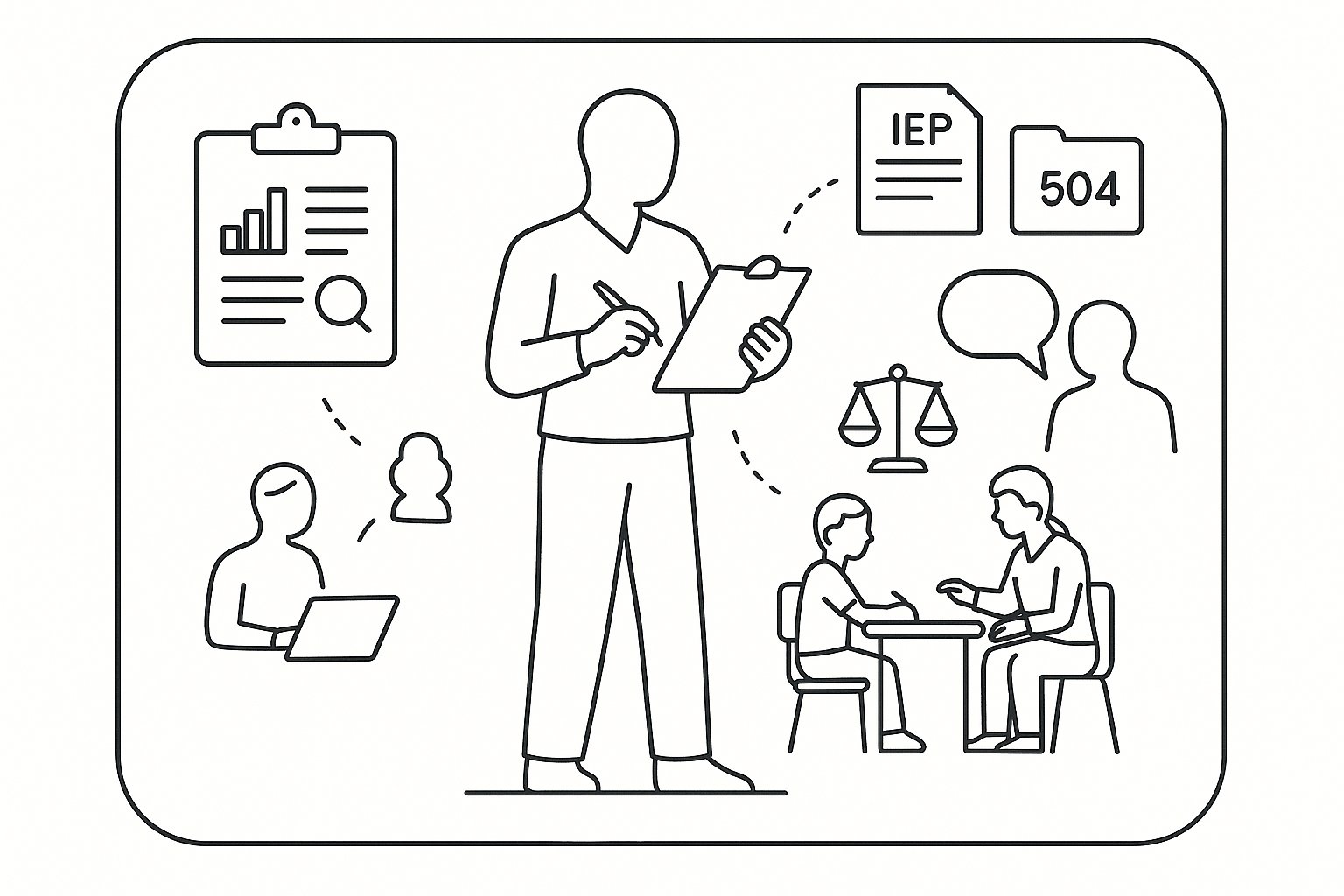
A special education consultant combines expertise in learning disabilities, instructional strategies, assessment interpretation, and often special education law. We think of them as problem-solvers who translate complex evaluations into practical steps. Common day-to-day activities include reviewing psychoeducational or neuropsychological reports, observing students in classrooms, recommending accommodations and modifications, and drafting or advising on Individualized Education Programs (IEPs) and 504 plans.
They also act as communicators, explaining technical test results to parents and explaining parent concerns to school teams. Some consultants focus heavily on intervention (creating behavior plans, designing sensory diets, or coaching teachers on differentiated instruction). Others specialize in navigation and advocacy: they attend IEP meetings, draft correspondence to school districts, and suggest legally grounded strategies when disputes arise. Importantly, a consultant’s approach will vary: some serve as neutral educational experts: others are hired as advocates to push for specific services or placements.
Who Hires Special Education Consultants And Why
Families often hire consultants when they feel the school’s supports aren’t meeting their child’s needs, when evaluations are unclear, or when they want independent recommendations before an IEP meeting. We see parents bring consultants in for initial assessments, disagreements over eligibility or placement, or to develop strategies for challenging transitions, like moving from elementary to middle school.
School districts also hire consultants. Districts may need an expert to supplement internal staff for complex evaluations, to train teachers on evidence-based practices, or to support implementation of new special education programs. Private schools, charter networks, and early intervention programs hire consultants to design services that comply with law while meeting unique student needs.
Attorneys, medical providers, and therapists sometimes bring consultants on board during disputes or to clarify how a medical diagnosis impacts educational needs. In short: anyone who needs clearer, technically grounded recommendations about a student’s educational program can benefit from a consultant’s input.
Key Qualifications, Credentials, And Skills To Look For
Not all consultants are created equal. We recommend looking for a combination of formal credentials, practical experience, and communication skills.
- Credentials: Common backgrounds include licensed school psychologists, special education teachers with advanced degrees (M.Ed., Ed.S., or Ph.D.), speech-language pathologists, occupational therapists, or licensed clinical psychologists. Certification in special education law or mediation training is a plus for those handling disputes.
- Experience: Ask about years working in public schools, familiarity with your child’s disability area, and examples of similar cases. Experience with your district or state’s regulations is valuable because eligibility rules and procedural safeguards vary locally.
- Skills: Strong report-writing, clear verbal explanations, and the ability to translate assessment data into actionable classroom strategies are essential. We also value consultants who can model interventions, coach staff, and provide measurable implementation steps.
Red flags include vague recommendations (“more support” without specifics), reluctance to provide references, or guarantees of particular placements, no ethical consultant can promise a specific school decision.
Typical Services Offered (Evaluations, IEP Support, Advocacy, Training)
Special education consultants provide a range of services tailored to family and school needs. These typically include:
- Independent Evaluations: A second psychoeducational or classroom-based assessment to confirm or clarify school evaluations.
- IEP and 504 Plan Support: Drafting goals, suggesting accommodations, and reviewing draft IEPs for clarity and measurability.
- Advocacy: Attending IEP meetings, writing letters to districts, and recommending dispute-resolution steps.
- Intervention Planning: Designing behavior plans, academic interventions, and progress-monitoring systems.
- Professional Development: Training teachers and paraprofessionals on differentiation, Universal Design for Learning (UDL), and behavior strategies.
- Transition Planning: Preparing for school transitions, post-secondary planning, and vocational supports.
Costs and scope vary: some consultants charge hourly for specific tasks: others offer package rates for a full evaluation and meeting attendance. We advise clarifying deliverables and timelines in writing before engagement.
How A Typical Engagement Works: Assessment, Plan, And Follow-Up
A typical engagement begins with an intake conversation to define concerns and goals. Next comes assessment: the consultant reviews records, conducts observations, and may perform standardized testing or curriculum-based measures.
From those data we develop a written report with clear findings and recommended supports, specific accommodations, suggested goal language, and an implementation checklist. The consultant usually joins an IEP meeting or meets with school staff to explain recommendations and negotiate practical steps.
Follow-up can include teacher coaching, progress reviews at agreed intervals, and adjustments based on data. Good consultants build measurement into the plan, we want to know whether an approach reduces a behavior, raises reading fluency, or improves engagement. Follow-up also protects families by documenting recommended actions and progress (or lack thereof), which can be vital if further dispute resolution becomes necessary.
When To Hire One Versus Relying On School Resources
Deciding whether to hire a consultant depends on severity, complexity, and the school’s responsiveness. We usually recommend considering a consultant when:
- The child’s progress is limited even though documented interventions.
- Evaluations are inconsistent, outdated, or hard to interpret.
- The family and school team disagree about eligibility, services, or placement.
- There’s an upcoming high-stakes transition (entering middle/high school, IEP to adult services).
If the school is responsive, provides clear progress data, and implements recommended supports faithfully, you may first choose to rely on the district’s team. But if timelines stall, recommendations lack specificity, or implementation is poor, an independent consultant can break deadlocks and provide legally and educationally grounded recommendations. We often view consultants as an investment in clarity, catching a gap early can prevent prolonged regression and more adversarial processes later.
How To Choose The Right Consultant And Questions To Ask
Choosing the right consultant is part-fit, part-credentials. Use these practical questions when vetting candidates:
- What are your professional credentials and state licensure? Can you provide references from families and schools?
- How many cases like ours have you handled? Can you share outcomes without violating confidentiality?
- Do you perform assessments yourself or review school data only? If you test, which instruments do you typically use?
- What will your written deliverable include? How soon after assessment will we receive it?
- Will you attend the IEP meeting? What is your advocacy style, collaborative, neutral expert, or directed advocate?
- How do you bill (hourly, flat fee, retainer), and what additional costs should we expect?
- How do you measure progress and follow up after initial recommendations?
We also recommend checking for professional memberships (e.g., National Association of School Psychologists, Council for Exceptional Children) and confirming insurance or liability coverage if implementation advice is given. Finally, trust your instincts: clear communication, realistic timelines, and a collaborative attitude are as important as technical skill.
If you’re working with legal counsel or anticipate a dispute, coordinate the consultant’s role with your attorney so recommendations support any legal strategy and documentation needs. Our team at Chelle Law often sees how well-documented educational planning, with clear recommendations and progress monitoring, strengthens a family’s position if legal steps become necessary.
Frequently Asked Questions about Special Education Consultants
What is a special education consultant and what do they do?
A special education consultant is an expert in learning disabilities, instructional strategies, and special education law who helps families and schools create effective plans. They review evaluations, recommend accommodations, support IEP development, and sometimes advocate in meetings or design interventions.
When should a family consider hiring a special education consultant?
Families often hire consultants when school supports aren’t meeting their child’s needs, evaluations are unclear, disagreements arise over eligibility or placement, or during challenging transitions like moving from elementary to middle school.
What qualifications should I look for in a special education consultant?
Look for consultants with professional credentials like licensed school psychologists or special education teachers with advanced degrees, relevant experience with your child’s disability and local regulations, strong communication skills, and a history of clear, actionable recommendations.
How do special education consultants assist with the IEP process?
They review and draft IEP or 504 plans, suggest measurable goals and accommodations, attend meetings to explain recommendations, and may advocate for services while ensuring plans align with legal and educational standards.
What services can schools expect from a special education consultant?
Schools may hire consultants for complex evaluations, teacher training on evidence-based practices, supporting special education program implementation, and designing compliant services that meet unique student needs.
How much does it typically cost to hire a special education consultant?
Costs vary: some consultants charge hourly rates for specific tasks, while others offer package pricing for full evaluations and meeting support. It’s important to clarify costs, deliverables, and timelines before engagement.