
Last Updated on October 16, 2026 by Jennifer Hanson
Peer tutoring is one of the most practical, evidence-backed strategies we can bring into inclusive classrooms. In this guide we explain what peer tutoring in special education looks like in 2026, why it works, and how schools can carry out it reliably. Whether you’re a teacher, paraprofessional, school leader, or family member, we’ll walk through the models, the measurable benefits for students with disabilities, a step-by-step checklist for training peer tutors, and classroom strategies for monitoring and assessment. Our aim is to give you actionable steps so peer tutoring becomes a sustainable part of instruction, not just a one-off activity.
In this guide, Peer Tutoring In Special Education A Practical Guide To Inclusive Classrooms In 2026 is explained with clear steps and tips.
Key Takeaways — Peer Tutoring In Special Education A Practical Guide To Inclusive Classrooms In 2026
- Peer tutoring in special education is a structured approach where students support classmates with disabilities to practice academic, social, or communication skills under teacher guidance.
- This strategy boosts academic gains, such as improved reading fluency and math mastery, by providing repeated, brief practice sessions embedded in the school day.
- Common peer tutoring models include Cross-Age Tutoring, Same-Age/Reciprocal Peer Tutoring, and Classwide Peer Tutoring, each suited to different instructional goals and student needs.
- Effective implementation requires intentional tutor selection, clear objectives tied to IEP goals, scripted interactions, and consistent training with feedback.
- Embedding peer tutoring into daily classroom routines with regular monitoring and data-driven adjustments ensures it remains a sustainable and impactful instructional method.
- Peer tutoring fosters social-emotional growth and skill generalization by promoting natural interactions and cooperative learning, enhancing independence for students with disabilities.
What Peer Tutoring Is And Why It Works
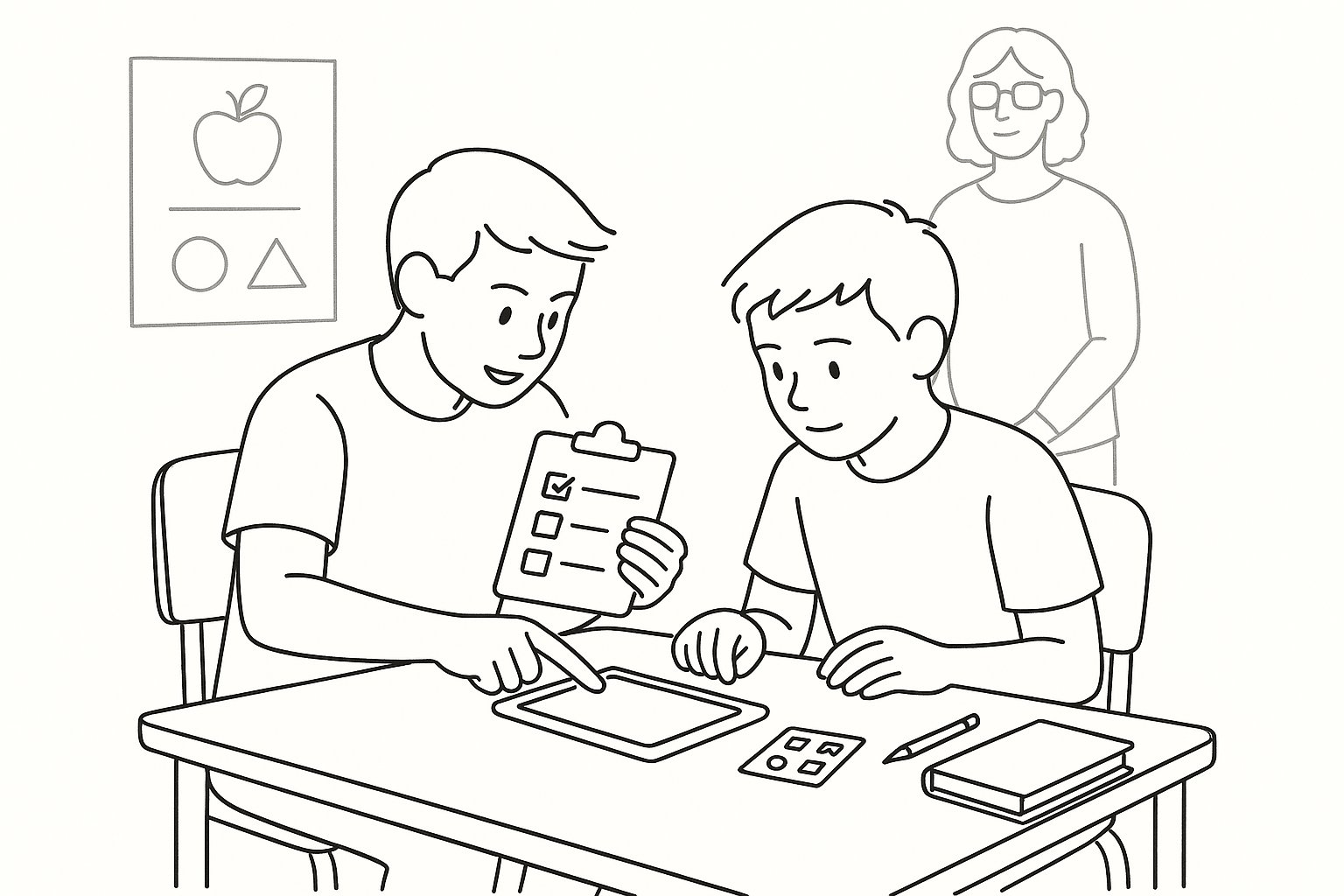
Peer tutoring is a structured instructional approach where students teach or support classmates under teacher guidance. In special education, peers, typically same-age classmates or slightly older students, work with students with disabilities to practice academic skills, social tasks, or communication strategies. Unlike informal help, effective peer tutoring has clear roles, brief scripted prompts, and measurable goals.
Why it works stems from several well-documented mechanisms. First, instruction by peers increases opportunities for practice and immediate feedback, critical elements for skill acquisition. Second, peers often present information in relatable language: when a classmate explains a concept, it can reduce anxiety and increase engagement. Third, teaching someone else reinforces the tutor’s own knowledge, so the whole classroom benefits. Finally, well-implemented peer tutoring fosters naturalistic social interactions, which support generalization of skills beyond the therapy room.
Research from the past decade shows consistent academic gains in reading, math, and writing when peer tutoring is used alongside differentiated instruction. For students with disabilities, gains are larger when sessions are brief, frequent, and embedded into the regular school day. In short: peer tutoring leverages existing classroom social structures to boost instruction intensity without requiring heavy additional resources.
Key Benefits For Students With Disabilities
Peer tutoring delivers overlapping benefits, academic, social, and functional, that make it especially valuable in special education settings. Below we break the advantages into academic gains and social-emotional growth, explaining how each supports long-term independence.
Academic Gains And Skill Generalization
When we look at academic outcomes, peer tutoring consistently supports higher engagement and more on-task behavior. Students with disabilities often need repeated, distributed practice: peer tutoring provides that practice in short bursts during the school day. Typical academic outcomes include improved decoding and fluency in reading, faster mastery of math facts, and better written expression when tutors prompt outlining and revision.
Skill generalization is another powerful benefit. Rather than learning skills only during pull-out services, students practice with peers in authentic classroom contexts. This helps them apply strategies across subjects and environments, something isolated instruction struggles to accomplish. We’ve seen schools increase IEP goal progress simply by scheduling three 15-minute peer tutoring sessions per week tied to specific objectives.
Common Peer Tutoring Models And When To Use Them
There are several peer tutoring models: choosing the right one depends on student needs, grade level, and instructional aims. Below are commonly used models and practical guidance on when to adopt each.
- Cross-Age Tutoring: Older students tutor younger ones. Use this when younger learners need skill modeling and older tutors benefit from leadership roles. Cross-age works well for literacy and mentoring programs.
- Same-Age/Reciprocal Peer Tutoring (RPT): Students of similar ages alternate roles as tutor and tutee. RPT is ideal for classroom-wide implementation because it builds capacity across the cohort and boosts both students’ mastery.
- Classwide Peer Tutoring (CWPT): Structured pairs rotate through targeted drills while the teacher monitors. CWPT scales easily for whole-class academic goals, math facts, sight words, or handwriting practice.
- Peer-Assisted Learning Strategies (PALS): A scripted approach combining reading practice with comprehension activities. PALS has a robust evidence base for improving reading outcomes in elementary and middle school settings.
- Peer-Mediated Communication Intervention: Used primarily for students with significant communication needs: peers are trained to prompt communication and model social routines.
When deciding, we match the model to instructional intensity and logistical realities. For example, CWPT or RPT suit busy classrooms aiming for broad academic gains: cross-age or peer-mediated models fit individualized social-communication goals.
Training Peer Tutors: Step-By-Step Checklist
Training is the linchpin of reliable peer tutoring. Here’s a concise checklist we recommend, use it as a coaching workflow for paraprofessionals, special educators, and classroom teachers.
- Select Tutors Intentionally: Choose students who demonstrate patience, steady attendance, and basic skill mastery. Consider social match and language backgrounds.
- Define Clear Objectives: Tie each tutoring session to an IEP goal or classroom standard. Make objectives observable (e.g., read 90 words per minute: solve 10 two-digit addition problems with 80% accuracy).
- Script and Model Interactions: Provide short scripts and role-play scenarios. Model prompting hierarchies (cue → hint → direct instruction) so tutors know when to escalate to the teacher.
- Teach Specific Strategies: Train tutors in error correction, prompting, wait-time, and positive reinforcement. For communication goals, teach simplified sign or visual supports.
- Practice with Feedback: Use rehearsal cycles, role-play, coach, repeat. Give immediate, specific feedback rather than general praise.
- Provide Materials and Visual Aids: Keep cue cards, progress trackers, and data forms in a labeled folder. Consistency reduces cognitive load for tutors and tutees.
- Establish Data Collection Routines: Teach tutors to record brief fidelity checks (e.g., minutes on task, number of prompts delivered, accuracy). Low-burden data drives decision-making.
- Schedule Check-Ins and Booster Sessions: Meet weekly at first, then biweekly. Use these meetings to troubleshoot, share wins, and adjust pairings or goals.
- Communicate with Families and IEP Teams: Share the plan and progress regularly. Aligning home supports reinforces gains.
- Recognize and Reinforce Tutors: Small incentives, certificates, leadership badges, public acknowledgment, sustain participation and signal the value of this role.
Classroom Strategies, Monitoring, And Assessment
For peer tutoring to be durable, we embed it into the classroom’s daily routines and the school’s accountability systems. Here’s how to operationalize it.
- Scheduling: Slot short sessions (10–20 minutes) multiple times per week. Embed them during independent work or station rotations to avoid pulling students out of core instruction.
- Fidelity Monitoring: Use a simple checklist teachers or coaches complete twice monthly. Key fidelity items include adherence to scripts, correct prompting hierarchy, and accurate data recording.
- Progress Monitoring: Tie peer tutoring to measurable indicators, curriculum-based measures (CBMs) for reading/math or brief behavior frequency counts for social goals. Track progress weekly or biweekly.
- Data Meetings: Review tutoring data in existing grade-level or special education team meetings. Use a run chart to visualize trends and make quick instructional pivots.
- Differentiation: Adjust task difficulty for both tutor and tutee. Sometimes tutors need enrichment tasks: sometimes tutees need more scaffolding. Rotate pairings if progress stalls.
- Generalization Checks: Assess whether skills transfer to whole-class tasks or new contexts. For example, after a period of peer math tutoring, observe the student’s performance during independent problem-solving or assessments.
- Inclusion Mindset: Normalize supports by framing peer tutoring as cooperative learning rather than remediation. Celebrate contributions from both tutors and learners during classroom routines.
- Legal and Ethical Considerations: Ensure accommodations align with IEP mandates and privacy requirements. Communicate roles clearly to families and document implementation in IEP progress notes where relevant.
When we combine these strategies, consistent scheduling, low-burden data, and team-based problem-solving, peer tutoring becomes a predictable, efficient pathway to both academic and social gains.
Frequently Asked Questions About Peer Tutoring in Special Education
What is peer tutoring in special education?
Peer tutoring is a structured approach where students teach or support classmates with disabilities under teacher guidance, using clear roles and measurable goals to improve academic, social, and communication skills.
Why does peer tutoring work effectively for students with disabilities?
Peer tutoring increases practice opportunities with immediate feedback, uses relatable language from classmates, reinforces tutors’ knowledge, and fosters natural social interactions that help generalize skills beyond direct instruction.
What are the main academic benefits of peer tutoring for students with disabilities?
It enhances engagement, promotes on-task behavior, improves reading fluency, math fact mastery, and written expression, while supporting repeated and distributed practice essential for skill acquisition.
What peer tutoring models are commonly used in special education?
Models include Cross-Age Tutoring, Same-Age/Reciprocal Peer Tutoring, Classwide Peer Tutoring, Peer-Assisted Learning Strategies, and Peer-Mediated Communication Intervention, each suited to specific student needs and goals.
How are peer tutors trained for special education settings?
Training involves selecting suitable tutors, defining clear objectives, scripting and modeling interactions, teaching prompting and reinforcement strategies, practicing with feedback, and establishing data collection routines for monitoring progress.
How can schools ensure peer tutoring is sustainable and effective?
By embedding sessions into daily routines, using fidelity and progress monitoring tools, holding data-driven team meetings, differentiating tasks, supporting generalization, and maintaining communication with families and IEP teams.