
Last Updated on October 9, 2026 by Jennifer Hanson
Special education teachers sit at the intersection of education, law, and individualized human support. In 2026, their work still centers on ensuring students with disabilities access a free appropriate public education (FAPE), but expectations have grown: data-driven instruction, digital accommodations, and tighter legal scrutiny are now part of the daily grind. In this guide we’ll explain what the role looks like day-to-day, how instruction and assessment are adapted, and what legal duties teachers must follow. Our goal is to give families, administrators, and professionals a clear, practical picture of what special education teachers actually do.
In this guide, What Special Education Teachers Really Do A Practical Guide To Their Role Responsibilities And Legal Duties In 2026 is explained with clear steps and tips.
Key Takeaways — What Special Education Teachers Really Do A Practical Guide To Their Role Responsibilities And Legal Duties In 2026
- Special education teachers design and deliver tailored instruction to meet diverse student needs while managing legal responsibilities to ensure access to free appropriate public education (FAPE).
- They use varied instructional models such as pull-out, push-in, and co-teaching combined with assistive technology and universal design to support inclusive learning environments.
- Data-driven progress monitoring and evidence-based interventions guide adjustments to teaching strategies and help meet individualized education program (IEP) goals.
- Special education teachers act as advocates and coordinators, bridging communication among families, educators, and service providers to facilitate necessary supports and accommodations.
- Compliance with IEP development, documentation, evaluations, and legal regulations like FERPA and IDEA is critical to protect student rights and support educational outcomes.
- Ongoing collaboration, professional development, and administrative support are essential to sustain teacher effectiveness and prevent burnout in this demanding role.
The Special Education Teacher’s Core Role And Daily Responsibilities
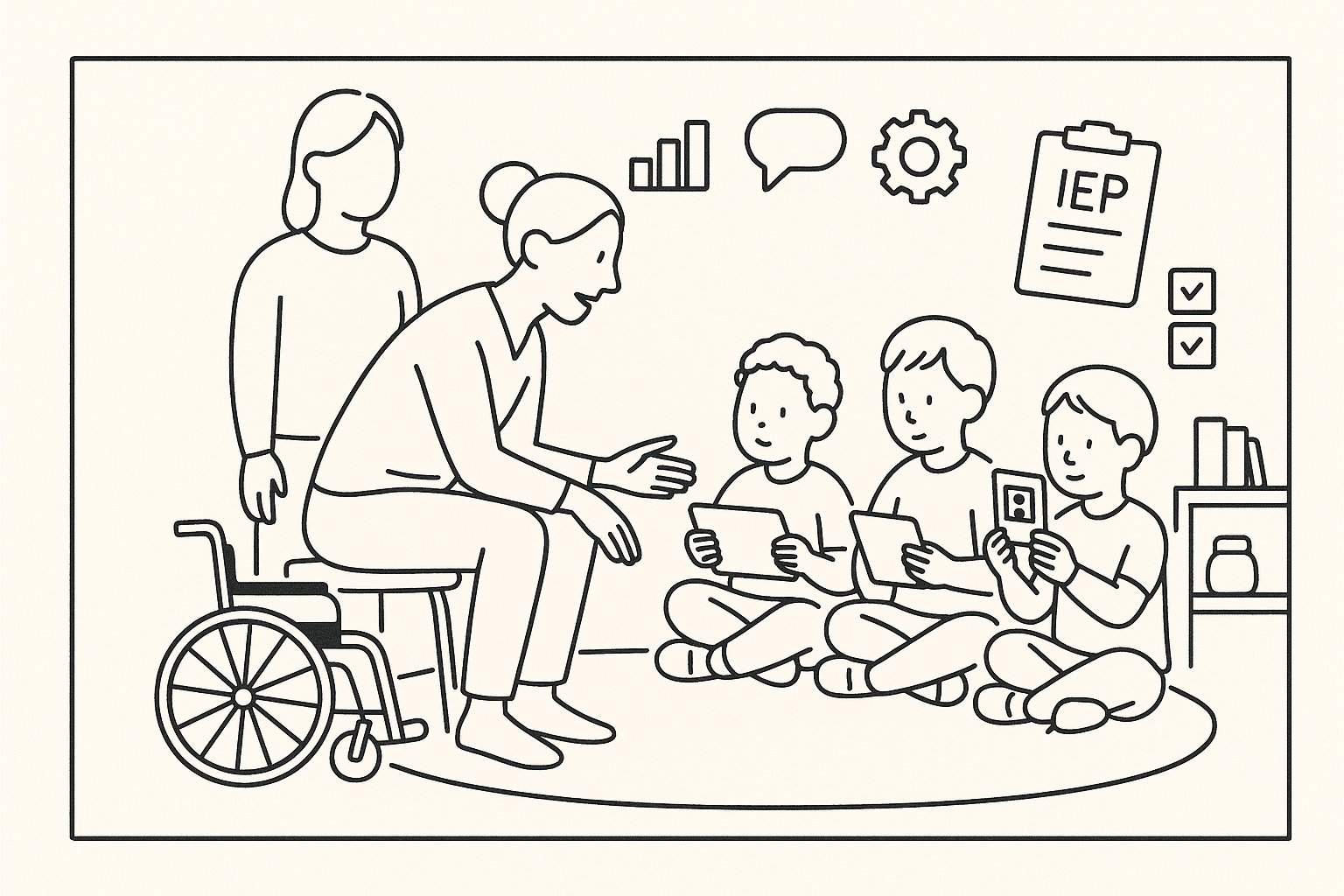
Special education teachers wear many hats. At the most basic level we design and deliver instruction tailored to students with diverse learning, physical, emotional, and developmental needs. But that description barely scratches the surface, on a typical day we are planning lessons, adapting curricula, collecting progress data, coordinating services, and advocating for student access.
Daily schedule and time use
- Morning: classroom routines, briefs with paraprofessionals, and individual check-ins with students who need support to transition into learning tasks.
- Midday: small-group instruction targeting goals from individualized plans: co-teaching blocks in general education settings to support inclusion.
- Afternoon: progress monitoring, documentation, parent or multidisciplinary team meetings, and prep for the next day.
Instructional delivery modes
We use a mix of pull-out, push-in, co-teaching, and consultative approaches. Pull-out sessions allow intensive skill work away from the general classroom, while push-in and co-teaching keep students included and supported within grade-level content. The model chosen depends on student needs, IEP goals, and school resources.
Classroom management and adaptations
Managing behavior and creating an accessible environment are central. That means visual supports, assistive technology, and scaffolded tasks. We often break tasks into smaller steps, provide multiple means of representation, and design exit tickets or checklists that let students demonstrate mastery in ways that fit their strengths.
Data collection and progress monitoring
We track progress continuously, brief curriculum-based measures, behavior logs, and mastery checks feed into decision-making. These data determine whether instruction is effective, when to revise strategies, or when to request reevaluation.
Advocacy and coordination
We’re the bridge between families, general educators, related service providers (speech, OT, PT), and administrators. That role includes translating educational jargon for parents, negotiating accommodations with teachers, and pushing for supports that a student needs to access the curriculum. In short: beyond teaching, special education teachers ensure the system adapts to the learner, not the other way around.
Instructional Approaches, Assessment, And Individualized Supports
Our instructional approach is deliberately evidence-based and student-centered. We choose methods that match the student’s profile, whether that’s structured literacy for students with dyslexia, applied behavior analysis techniques for some learners with autism, or multisensory math interventions for students with processing differences.
Universal Design and differentiated instruction
We start with Universal Design for Learning (UDL) to reduce barriers for everyone, then layer differentiated instruction for specific learners. That may mean alternative texts, audio supports, simplified language objectives, or extended time for assessments. UDL lowers the need for individual accommodations while differentiated strategies ensure standards remain reachable.
Assessment: formative, summative, and dynamic
Assessment in special education isn’t only about standardized scores. We use curriculum-based measurements (CBMs) for frequent, short checks of progress: criterion-referenced tasks to measure mastery of specific objectives: and observational data for skills like social communication. Dynamic assessment, testing, teaching, and retesting, helps us distinguish lack of instruction from a learning disability.
Assistive technology and accessibility
Assistive tech is now a routine part of our toolkit. Text-to-speech, speech-to-text, alternative input devices, and specialized software can change the learning trajectory for a student. We evaluate needs, recommend devices, and train students and staff. Technology also brings challenges, licensing, compatibility with district systems, and training, that we manage as part of implementation.
Behavior support and social-emotional learning
Behavior is communication. We design positive behavior supports that teach replacement skills rather than only punish. Functional behavior assessments (FBAs) inform behavior intervention plans (BIPs) that integrate teaching, reinforcement, and environmental changes. Concurrently, we embed social-emotional learning to build regulation, social skills, and resilience.
Family-centered practice
Instructional plans are stronger when families contribute. We work to align home strategies with school goals, provide practical suggestions caregivers can use, and maintain regular communication about progress and concerns. This partnership makes interventions more consistent and sustainable.
IEPs, Evaluations, Documentation, And Legal Compliance
Compliance is not paperwork for its own sake, it’s the legal backbone that protects student rights. We are responsible for developing, implementing, and defending Individualized Education Programs (IEPs) that are measurable, individualized, and linked to instruction.
IEP development and measurable goals
IEPs must include present levels of performance, annual goals, progress-monitoring plans, and accommodations/modifications. We draft goals that are specific, measurable, achievable, relevant, and time-bound (SMART). Importantly, goals should be tied to access to the general curriculum, not just isolated skill drills.
Special education evaluations and eligibility
Evaluations determine eligibility and services. We work with school psychologists, speech-language pathologists, and other specialists to gather comprehensive data, cognitive, academic, communication, motor, and adaptive behavior. We also ensure culturally responsive practices and consider disproportionate representation in special education.
Documentation and record-keeping
Accurate records matter: service logs, signed consent forms, prior written notices, and progress reports are necessary for legal compliance and continuity of care. We keep records organized, timely, and ready for team review.
Due process, dispute prevention, and legal duties
When disputes arise, we aim to resolve them through open communication and collaborative problem-solving. Still, special education teachers must understand procedural safeguards, timelines for assessments and placement changes, and the documentation required for hearings. Given our firm’s focus on employment and licensing law, we recognize that legal compliance also protects educators, proper procedures minimize exposure to allegations of neglect or failure to provide appropriate services.
Privacy and FERPA/IDEA obligations
We must safeguard student privacy while sharing necessary information with team members. Familiarity with FERPA and IDEA regulations guides how we store, transmit, and disclose educational records.
Collaboration, Communication, Qualifications, And Career Path
Collaboration is central: we’re part educator, part consultant, and part coordinator. Strong communication skills help us translate complex educational and legal requirements into actionable steps for families and colleagues.
Working with multidisciplinary teams
IEP teams include parents, general educators, administrators, and specialists. We help meetings, mediate differing perspectives, and ensure the student’s voice is represented. Effective collaborative practice relies on shared goals, clear role descriptions, and mutual respect.
Professional qualifications and certification
Most special education teachers hold a bachelor’s degree plus state certification in special education: many have master’s degrees or endorsements in specific areas (e.g., severe disabilities, autism). Ongoing professional development in topics like assistive technology, evidence-based interventions, and legal updates is essential to maintain effective practice and compliance.
Career trajectory and roles beyond the classroom
Special educators advance into roles such as lead teacher, instructional coach, behavior specialist, curriculum developer, or administrator. Some move into related fields, education law, policy, or program coordination, where their deep knowledge of IDEA and school practice is invaluable. Given the overlap with legal compliance, some experienced educators transition into advocacy or legal consulting roles that support families or districts.
Burnout prevention and workplace systems
The demands are high and burnout is real. Systems that support workload sharing, strong paraprofessional training, protected collaboration time, and access to school psychologists and counselors, help retain skilled teachers. We advocate for realistic caseloads and administrative policies that balance student needs with teacher sustainability.
Practical tips for families and administrators
- Families: come prepared with observations, ask for examples of progress, and request clear timelines for reevaluation or service changes.
- Administrators: invest in professional development, protect planning time, and ensure special educators participate in curriculum discussions early.
Conclusion
Special education teachers combine pedagogy, assessment, and legal knowledge to ensure students with disabilities learn and belong. We juggle individualized instruction, documentation, and collaboration while navigating complex legal obligations. When systems and families partner with well-supported special educators, students gain the access and outcomes the law intends, and that’s what drives our work every day.
Frequently Asked Questions About the Role of Special Education Teachers
What is the main role of a special education teacher?
Special education teachers design and deliver tailored instruction to students with diverse learning, physical, emotional, and developmental needs, ensuring access to a free appropriate public education (FAPE) while coordinating services and advocating for student support.
How do special education teachers adapt instruction for students with disabilities?
They use evidence-based and student-centered approaches like Universal Design for Learning (UDL), differentiated instruction, assistive technology, and behavior support strategies to meet individual IEP goals and reduce learning barriers.
What legal responsibilities do special education teachers have regarding IEPs?
Special education teachers develop, implement, and defend measurable, individualized IEPs aligned to general curriculum access, maintain accurate documentation, comply with IDEA and FERPA regulations, and participate in evaluations and due process procedures.
How do special education teachers collaborate with families and school teams?
They act as a bridge by communicating progress, translating educational language for families, coordinating with general educators and specialists, and facilitating IEP team meetings to ensure consistent and effective support for students.
What instructional delivery models do special education teachers use?
They employ a mix of pull-out sessions for intensive skill work, push-in and co-teaching in general education classrooms for inclusion, and consultative approaches, depending on student needs, IEP goals, and school resources.
Why is assistive technology important in special education teaching?
Assistive technology like text-to-speech and alternative input devices supports student access and learning, enabling personalized education; special education teachers evaluate needs, recommend devices, and provide necessary training to students and staff.