
Last Updated on April 22, 2026 by Jennifer Hanson
A 504 Plan can be the difference between a child who struggles quietly and a child who can access the same educational opportunities as their peers. In North Carolina, Section 504 of the Rehabilitation Act of 1973 requires public schools receiving federal funds to provide reasonable accommodations to students with disabilities. In this guide we’ll explain what a 504 Plan covers, who qualifies, how to request and obtain one, the difference between a 504 and an IEP, and when to consider legal or advocacy help. Our goal is practical, help you move from questions to action with confidence.
In this guide, What Is a 504 Plan in North Carolina A Practical Guide for Parents and Educators 2026 is explained with clear steps and tips.
Key Takeaways — What Is a 504 Plan in North Carolina A Practical Guide for Parents and Educators 2026
- A 504 Plan in North Carolina ensures students with disabilities receive accommodations that remove barriers to learning and provide equal educational opportunities.
- Eligibility for a 504 Plan is based on having a physical or mental impairment that substantially limits major life activities, including common conditions like ADHD and anxiety.
- Parents or school staff can initiate the 504 Plan process by submitting a written request for an evaluation to the school, which must respond and conduct an assessment accordingly.
- The 504 Plan provides specific accommodations such as extended test time, preferential seating, and medical breaks, but does not include specialized instruction like an IEP.
- Maintaining detailed documentation and communication helps families advocate effectively and ensures accommodations are implemented properly.
- If disputes arise, families should first use school appeals but can escalate to state or federal complaints or legal assistance when necessary.
What a 504 Plan Covers and Who Qualifies in North Carolina
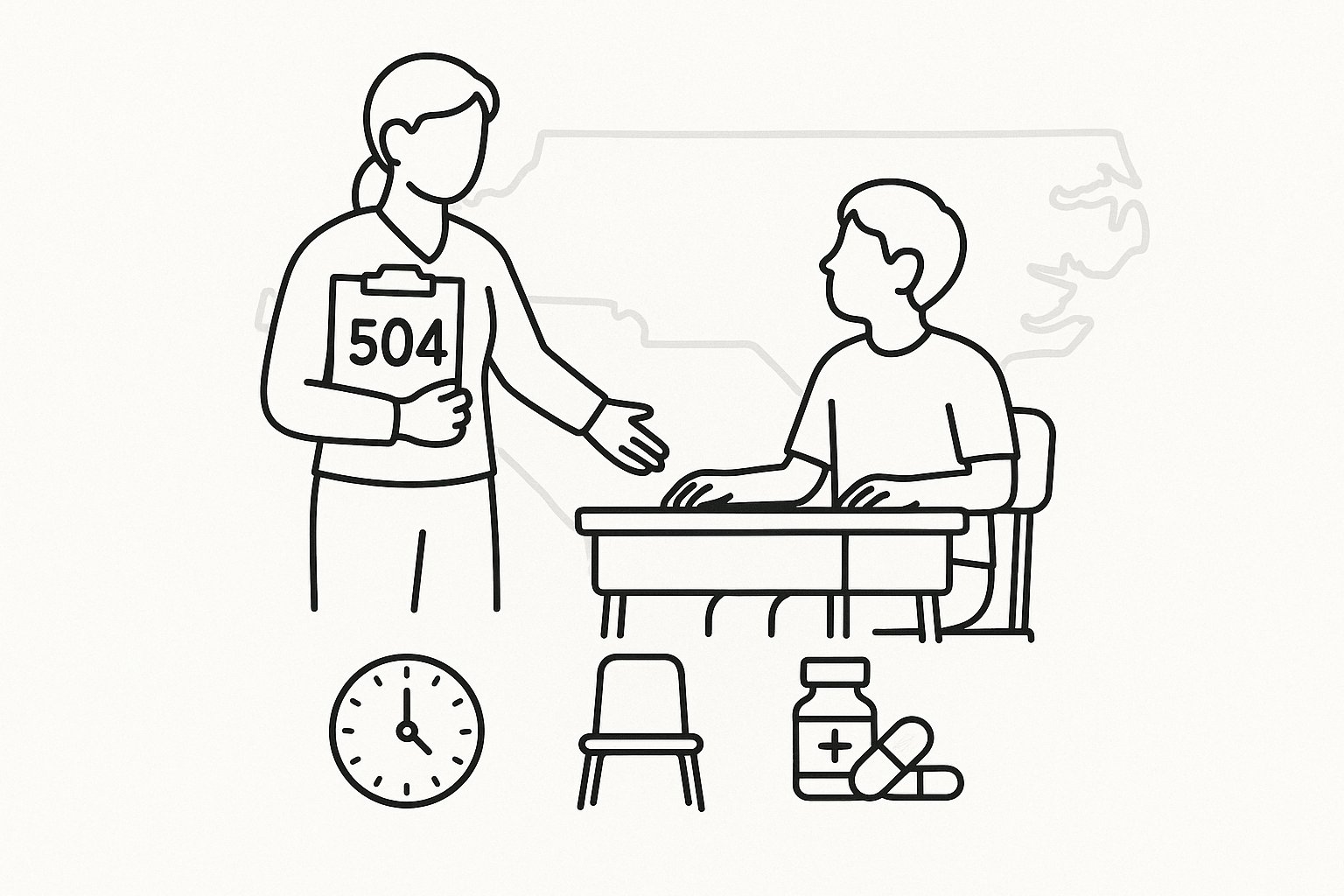
A 504 Plan is designed to remove barriers to learning for students who have a physical or mental impairment that substantially limits one or more major life activities. In practice, that means students with conditions such as ADHD, diabetes, epilepsy, chronic asthma, certain mental health diagnoses, or temporary but significant impairments can qualify if their condition affects school functioning.
What a 504 Plan covers:
- Accommodations to the learning environment (preferential seating, extended time on tests, reduced assignments load).
- Modifications to how services are delivered (testing in a different location, permission to carry medication, breaks for medical needs).
- Support for behavioral or health-related needs (behavior intervention strategies tied to medical conditions, emergency care plans).
North Carolina follows federal Section 504 rules but also aligns practices with state education guidance. Eligibility hinges on documentation showing the impairment and its impact. The key phrase is “substantially limits”, and that’s evaluated relative to the child’s age and typical functioning in school. We often see families surprised when common diagnoses like ADHD or anxiety qualify because they do create substantial limitations in attention, organization, or attendance for many students.
Who can start the process: Parents, teachers, school nurses, counselors, or other school staff can request an evaluation. Schools are required to consider requests and initiate evaluations when there is reason to believe a disability exists. If the student already receives accommodations through other plans (e.g., a 504 in another state or medical action plans), that history can strengthen the case in North Carolina.
How To Request, Evaluate, and Obtain a 504 Plan in NC (Step‑By‑Step)
Requesting and obtaining a 504 plan follows a process meant to be transparent, but it can feel technical. Below is a practical step‑by‑step we use when helping families navigate this process.
- Start with a written request. Submit a short letter or email to the school principal or 504 coordinator stating you’re requesting a Section 504 evaluation due to a suspected disability that affects school access. Keep a copy and date-stamp or request confirmation.
- School response and evaluation plan. The school should respond and either begin an evaluation or explain why it won’t. If they proceed, they’ll outline what records and assessments they’ll use, these often include medical records, teacher observations, attendance records, and standardized test scores.
- Participate in the evaluation. Provide doctors’ notes, IEP/504 history from previous schools, and a written statement about the child’s challenges. Teachers’ input and classroom work samples are important. We advise parents to keep a short, dated log of behaviors or incidents that illustrate the impairment’s impact.
- 504 team meeting and decision. The school convenes a team (parents, teachers, nurse, counselor, administrator) to review evidence and decide on eligibility. If eligible, the team drafts accommodations. If not, the school must provide written reasons and explain appeal rights.
- Carry out accommodations. Once adopted, the 504 Plan should be distributed to relevant staff and applied promptly. Track how accommodations are used and whether they’re effective.
- Re-evaluation and updates. 504 Plans aren’t permanent, schools should review them periodically or when the student’s needs change. Parents can request reviews at any time.
We recommend keeping all communications, doctor notes, and meeting summaries together. That record makes it easier to identify gaps or argue for stronger accommodations if needed.
Key Documentation, Timeline, and What to Expect at the 504 Meeting
Key documentation to bring: recent medical or psychological evaluations, a letter from the treating clinician describing limitations, teacher observations, grades/assessments showing decline tied to the condition, and any prior school plans. If the child takes medication, include documentation about how it affects school behavior or learning.
Timeline expectations: Federal law doesn’t set a strict deadline for completing evaluations, but state guidance and common practice push for a timely response, typically within 30 school days after consent to evaluate, though practical timelines vary. If you hit delays, follow up in writing and request estimated dates.
At the 504 meeting: Expect a review of records, discussion of how the impairment affects the student in school, and a collaborative drafting of accommodations. We advise bringing a concise list of specific accommodations you think will help (e.g., extended time, quiet testing area, permission to leave class for medication) and examples of success from prior environments. Ask that the meeting notes be shared and that the plan include measurable details (how much extra time, when breaks occur, who will carry out each accommodation). Clear assignments prevent misunderstandings later.
Rights, Common Accommodations, and How a 504 Differs From an IEP
Rights under Section 504: Students are entitled to free appropriate public education (FAPE) in the least restrictive environment. Schools cannot discriminate on the basis of disability and must provide reasonable accommodations. Parents have the right to participate in meetings, review records, and appeal decisions through the school district, the state education agency, or the U.S. Department of Education’s Office for Civil Rights (OCR).
Common accommodations we see work well in NC classrooms:
- Extended time on tests and assignments.
- Preferential seating (near the teacher or away from distractions).
- Frequent check-ins or a daily assignment sheet.
- Modified presentation of material (audio versions, written outlines).
- Breaks for medication or sensory regulation, and permission to carry medication.
- Adjusted attendance policies for students with chronic health issues.
How a 504 differs from an IEP: The biggest differences are eligibility standards and services offered. An IEP (under IDEA) is for students who need specialized instruction because of one of the specific disability categories listed in IDEA. IEPs include individualized instruction goals and often deliver specialized services (speech therapy, occupational therapy) through the school. A 504 Plan provides accommodations to access the general education curriculum but typically does not include specialized instruction.
Which is right? Sometimes a student could qualify for either. We recommend evaluating needs first: if the primary need is accommodations to participate in class, a 504 often suffices. If the student needs specialized instruction or related services, an IEP may be necessary. Schools should evaluate for both when evidence suggests either path could be appropriate.
When to Seek Legal or Advocacy Help and Common Dispute Options in NC
Most 504 issues are resolved through discussion and documented meetings, but there are times when advocacy or legal help becomes necessary. Consider outside help when:
- The school refuses an evaluation even though clear documentation.
- Accommodations in the plan are vague, inconsistently implemented, or withheld.
- There’s a sudden change (discipline or removal) that may be related to the student’s disability.
- Repeated failures in communication or missed timelines leave the student without needed supports.
Common dispute options in North Carolina:
- Internal appeals: Start with your school district’s grievance or appeals process. Maintain written records and request timelines.
- State-level complaints: File a complaint with the North Carolina Department of Public Instruction (NCDPI) when procedures aren’t followed.
- OCR complaints: If discrimination is suspected, a complaint to the U.S. Department of Education’s Office for Civil Rights is an option.
- Due process and hearings: For 504s, due process rights are more limited than IDEA, but certain states provide administrative appeal processes: consult NCDPI guidance.
When to consult an attorney: If the dispute involves potential discrimination, denial of FAPE, or complex procedural violations, legal counsel can clarify rights and craft persuasive requests or appeals. Given our practice at Chelle Law often focuses on employment and licensing, we partner with special education attorneys and advocates when clients need school-law representation. If you contact a lawyer, bring your complete documentation and a clear timeline of events, that helps us evaluate options more quickly.
Advocacy tips we recommend: keep communication civil but firm, request all decisions in writing, and ask for measurable accommodation language. Often, a well-documented, persistent approach wins the day without escalated proceedings.
Conclusion
A 504 Plan in North Carolina is a practical tool to level the playing field for students with disabilities. We encourage parents and educators to document needs clearly, request evaluations in writing, and push for specific, measurable accommodations. When disagreements arise, use the school’s appeal channels first and consider state or federal complaints or legal help if problems persist. With timely documentation and a clear plan, most students get the support they need to thrive.
Frequently Asked Questions About 504 Plans in North Carolina
What is a 504 Plan in North Carolina?
A 504 Plan in North Carolina ensures students with disabilities receive reasonable accommodations in public schools to access education equally, in compliance with Section 504 of the Rehabilitation Act of 1973.
Who qualifies for a 504 Plan in North Carolina?
Students with physical or mental impairments that substantially limit at least one major life activity, such as those with ADHD, diabetes, epilepsy, or chronic asthma, can qualify if their condition affects school functioning.
How do I request a 504 Plan evaluation in North Carolina?
Parents, teachers, or school staff can submit a written request to the school principal or 504 coordinator asking for a Section 504 evaluation based on a suspected disability impacting school access.
What accommodations are commonly provided through a 504 Plan?
Common accommodations include extended test time, preferential seating, modified assignment load, medication breaks, behavior support, and adjusted attendance policies to support health or learning needs.
How is a 504 Plan different from an Individualized Education Program (IEP)?
A 504 Plan provides accommodations for equal access to general education, while an IEP offers specialized instruction and services for students with disabilities under IDEA’s specific categories.
When should I consider legal or advocacy help regarding a 504 Plan in North Carolina?
Seek advocacy or legal help if the school denies evaluation despite clear evidence, withholds accommodations, changes discipline related to disability, or fails in timely communication, impacting the student’s support.