
Last Updated on October 16, 2026 by Jennifer Hanson
Inclusive classrooms depend on teachers who wear many hats. We’re not just delivering content: we’re designers, collaborators, behavior strategists, assessors, and advocates who ensure every student accesses meaningful learning. In this text we break down seven essential roles teachers play in inclusion settings and offer practical approaches we can use today. Whether you’re a general educator, special educator, parent, or administrator, this guide clarifies expectations and highlights how thoughtful practice and legal compliance intersect to support equitable outcomes.
In this guide, What Teachers Do In An Inclusion Classroom 7 Essential Roles For Successful Inclusive Learning is explained with clear steps and tips.
Key Takeaways — What Teachers Do In An Inclusion Classroom 7 Essential Roles For Successful Inclusive Learning
- Teachers in inclusion classrooms act as lead instructional designers by planning accessible, differentiated lessons that accommodate diverse learner needs.
- Effective co-teaching and clear communication with specialists and families are vital for seamless inclusion and student success.
- Managing behavior proactively with positive supports and fostering an inclusive classroom culture promotes respect and collaboration.
- Ongoing assessment and data-driven instruction help teachers monitor progress and tailor interventions to individual students.
- Implementing IEPs accurately and advocating for student rights ensures legal compliance and equitable educational opportunities in inclusion settings.
Lead Instructional Designer: Planning Accessible, Differentiated Lessons
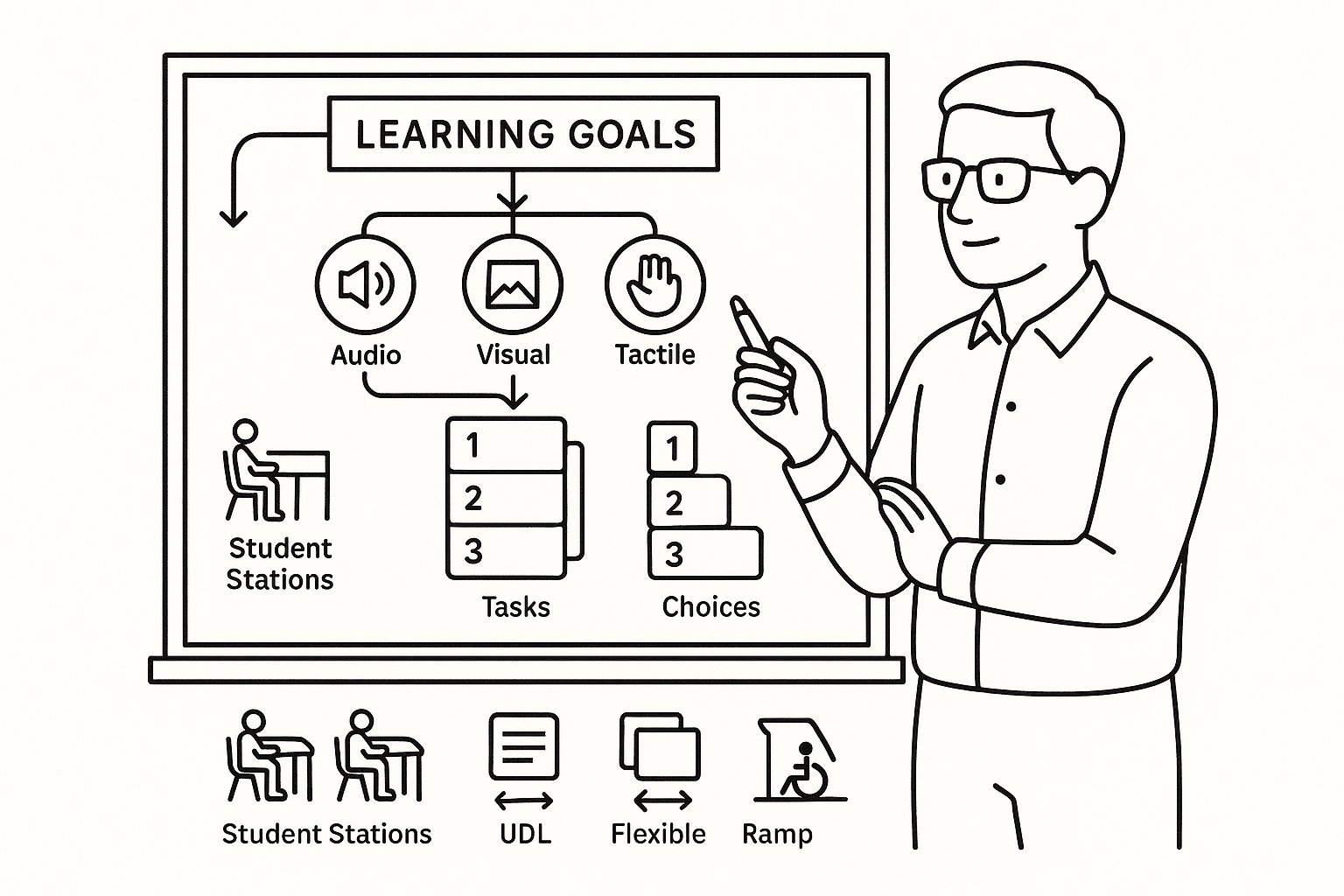
As lead instructional designers in inclusion classrooms, we craft lessons that let every learner participate and progress. That starts with backward planning, defining clear learning goals, then mapping multiple pathways for students to reach them. We use differentiated content, process, and product so that complexity and support are adjusted to match readiness, interest, and learner profile.
Designing Differentiated Lessons That Meet Diverse Needs
Differentiation is intentional, not random. We vary materials (audio, visual, tactile), adjust pacing, and create tiered tasks so students demonstrate understanding at different levels. Small-group stations, parallel assignments, and scaffolded texts are staples. Importantly, we build choice into assignments, letting students show mastery via presentations, portfolios, or performance tasks, so assessments reflect true learning, not just format fluency.
Applying Universal Design For Learning (UDL) To Reduce Barriers
Universal Design for Learning (UDL) gives us a proactive framework: multiple means of engagement, representation, and expression. We embed captions, labeled visuals, flexible seating, and alternative input methods to remove barriers before they appear. UDL reduces the need for one-off accommodations, making lessons more efficient and equitable. By designing for variability from the start, we spend less time retrofitting lessons and more time teaching.
Co‑Teacher, Specialist Liaison, And Family Communicator
Inclusion classrooms flourish when teachers collaborate. We often co-teach with special educators, speech therapists, occupational therapists, or counselors: a coordinated approach keeps instruction seamless. Effective co-teaching involves shared planning, clear role definitions (lead-teach, station-teach, parallel teach, or alternative teach), and regular reflection on student data.
We also serve as the bridge between specialists and families. That means translating therapy goals into classroom routines, communicating progress in accessible language, and inviting families into problem-solving. Frequent, strengths-based communication, short weekly updates, home strategies, or quick check-ins after school, builds trust and improves consistency across settings.
When legal or procedural questions arise about services or rights, we collaborate with school leaders and, when appropriate, legal advisors to ensure families understand options. Schools may involve external experts: if families seek independent legal guidance or contract review related to services, firms experienced in education and healthcare law can offer clarity and protect student rights.
Behavior Manager And Inclusive Classroom Culture Builder
Managing behavior in an inclusive classroom is less about control and more about creating predictable systems. We set clear expectations, teach social routines, and use positive behavior supports that reinforce desired actions. Proactive strategies, visual schedules, explicit social skills lessons, and differentiated sensory supports, prevent many escalations.
When behaviors escalate, we rely on functional behavior assessment (FBA) to understand the “why” and design function-based interventions. Our plans emphasize replacement behaviors, environmental adjustments, and consistent reinforcement. Discipline in inclusive settings should be restorative and educational: consequences must align with learning opportunities so students can practice better choices.
Culture-building is continuous. We foster peer supports, cooperative groups, and classroom norms that value diversity. Peer-mediated strategies, like buddies or cooperative structures, promote inclusion and give students authentic opportunities to contribute. Over time, a classroom culture that expects respect and collaboration becomes the single biggest predictor of inclusive success.
Assessor, Progress Monitor, And Data‑Informed Instructor
Assessment in inclusion classrooms goes beyond end-of-unit tests. We collect formative data daily, observations, exit tickets, work samples, and quick fluency checks, to shape instruction in real time. Progress monitoring tools (CBM probes, curriculum-based assessments, or digital trackers) let us spot trends, adjust interventions, and document growth.
Data-driven decision-making requires systems that are practical. We schedule brief, regular data reviews with co-teachers and specialists, use simple visual dashboards, and prioritize measures that are reliable and tied to IEP goals. When students aren’t responding, our evaluation focuses on fidelity: are interventions implemented as planned? If not, we troubleshoot the delivery: if yes, we escalate intensity or change strategy.
Assessment also drives grouping. Flexible, short-term groups based on current data allow targeted practice without stigmatizing students. By making assessment an instructional tool rather than a judgment, we keep the classroom responsive and student-centered.
IEP Implementer, Rights Advocate, And Compliance Partner
Implementing Individualized Education Programs (IEPs) accurately is a core responsibility in inclusion settings. We translate IEP goals into daily objectives, embed accommodations into routines, and document services and progress. Accurate record-keeping, attendance, minutes of specialized instruction, and progress notes, is essential both for student success and for meeting legal obligations.
We’re also advocates for student rights. That means ensuring placements are least restrictive, services are delivered with integrity, and parents are active partners in decision-making. When disputes arise, our role is to communicate evidence clearly, propose reasonable alternatives, and, when necessary, coordinate with administration and legal counsel to navigate procedural safeguards.
Given the overlap between educational practice and regulatory requirements, having a clear compliance posture protects students and staff. Schools sometimes consult attorneys who specialize in education and healthcare-related employment to clarify responsibilities or resolve complex service agreements: when legal counsel is needed, we cooperate fully to present accurate educational documentation and student-centered plans.
Frequently Asked Questions about Teachers’ Roles in Inclusion Classrooms
What are the main roles a teacher plays in an inclusion classroom?
Teachers in inclusion classrooms serve as instructional designers, collaborators, behavior managers, assessors, and advocates. They plan accessible lessons, co-teach with specialists, manage behavior positively, monitor student progress, and ensure legal compliance to support equitable learning for all students.
How do teachers design lessons to meet diverse needs in an inclusion classroom?
Teachers use backward planning to set clear goals and differentiate content, process, and products based on readiness and interests. They incorporate Universal Design for Learning (UDL), offering multiple engagement, representation, and expression methods to reduce barriers and provide inclusive, meaningful learning experiences.
Why is collaboration important for teachers in inclusive settings?
Collaboration with special educators, therapists, and families ensures seamless instruction and consistent support across environments. Effective co-teaching involves shared planning and clear roles, while ongoing strength-based communication with families builds trust and aligns classroom and home strategies for student success.
How do teachers manage behavior effectively in inclusion classrooms?
Teachers establish clear expectations, teach social routines, and use positive behavior supports alongside proactive strategies like visual schedules and sensory supports. When challenges arise, they conduct functional behavior assessments to develop restorative interventions that promote respect, cooperation, and a positive classroom culture.
What role do assessments play for teachers in inclusive classrooms?
Assessment is ongoing and formative, using observations, work samples, and progress monitoring to adjust instruction. Teachers use data to form flexible groups and tailor interventions, ensuring strategies are implemented with fidelity and changing approaches when students don’t respond effectively.
How do teachers ensure compliance with Individualized Education Programs (IEPs) in inclusion classrooms?
Teachers implement IEP goals daily, embed accommodations, and maintain accurate records of specialized instruction and progress. They advocate for student rights by ensuring least restrictive placements, collaborating with families and administration, and involving legal counsel when necessary to maintain compliance and protect students.