
Last Updated on April 20, 2026 by Jennifer Hanson
Parents and caregivers often hear the term Behavior Intervention Plan (BIP) during school meetings and wonder whether a BIP requires an Individualized Education Program (IEP). As we move through 2026, the intersection of behavior supports, special education law, and general education accommodations remains confusing for many families. In this text we’ll explain what a BIP is, how it typically fits with an IEP or Section 504 plan, the legal circumstances where a BIP might exist separately, practical steps parents and schools should take when a BIP is proposed without an IEP, and when it’s time to consult an attorney or advocate.
In this guide, Can A Child Have A Behavior Intervention Plan BIP Without An IEP What Parents Need To Know In 2026 is explained with clear steps and tips.
Key Takeaways — Can A Child Have A Behavior Intervention Plan BIP Without An IEP What Parents Need To Know In 2026
- A Behavior Intervention Plan (BIP) can exist independently of an Individualized Education Program (IEP), often as part of general education or a Section 504 plan.
- When a child’s behavior suggests a disability, parents should request a full special education evaluation to determine if an IEP and associated BIP are appropriate.
- A valid BIP must be based on a Functional Behavioral Assessment (FBA), include measurable goals, data collection, and periodic reviews, whether inside or outside an IEP.
- Without an IEP, a BIP may lack formal legal protections and dispute resolution options provided under IDEA, making documentation and advocacy crucial.
- Parents should insist on written explanations for BIP decisions, keep detailed records, and consider involving an attorney or advocate if the school resists evaluation or proper implementation.
What Is A Behavior Intervention Plan (BIP) And How Does It Work?
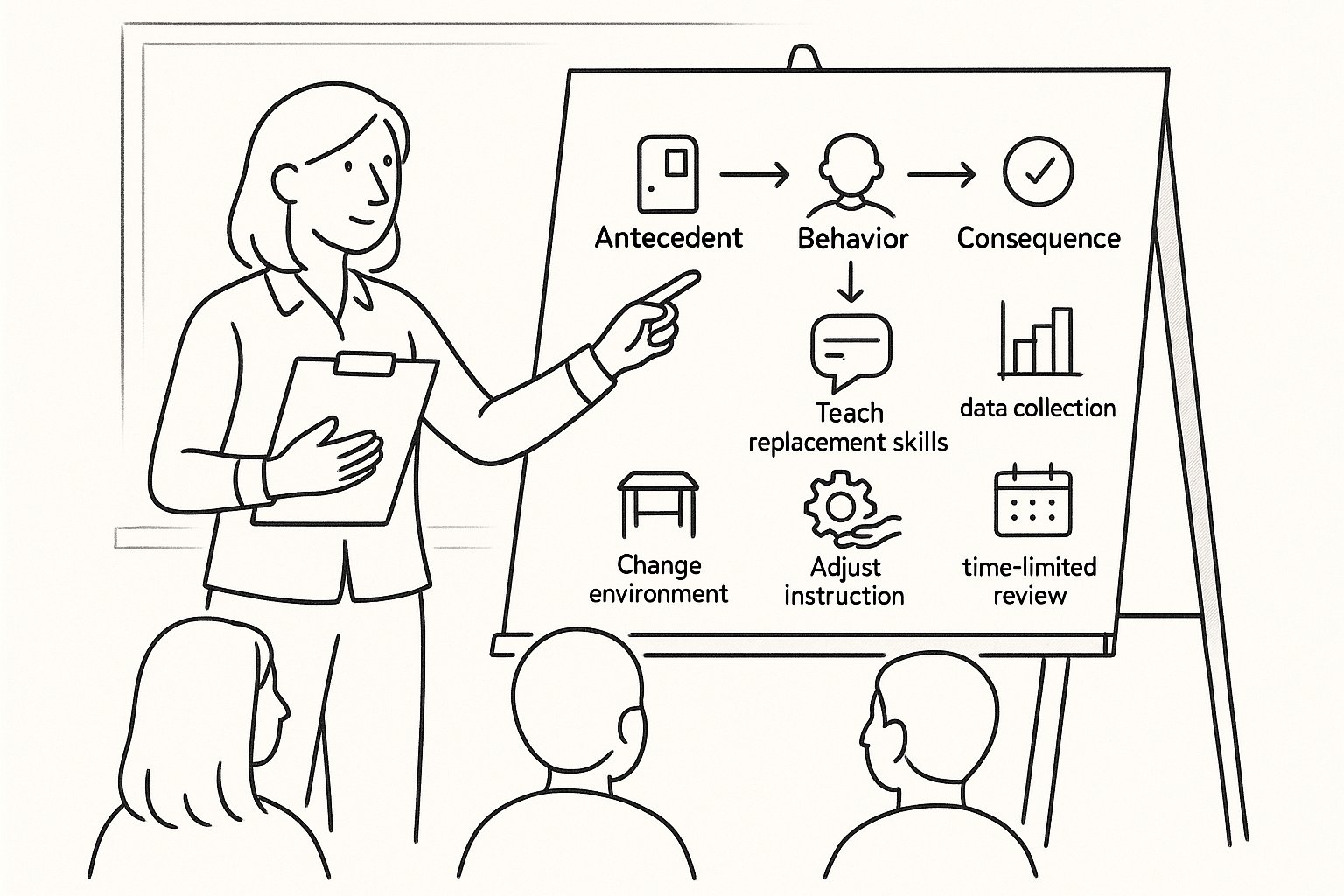
A Behavior Intervention Plan (BIP) is a written plan that outlines strategies and supports to address a student’s challenging behavior. It’s based on a Functional Behavioral Assessment (FBA), which identifies the reasons a behavior occurs, the antecedents, the behavior itself, and the consequences that maintain it. A BIP translates that assessment into practical interventions: teaching replacement skills, changing the environment, adjusting instructional strategies, and setting consistent consequences.
BIPs vary widely in scope. For some students, a BIP is brief and classroom-focused (e.g., a plan for staying seated during lessons). For others with more persistent behaviors, a BIP can be extensive, involving daily data collection, crisis prevention plans, and coordination across services (speech, OT, counseling). The goal is always proactive: prevent problem behavior by addressing unmet needs rather than relying solely on punishment.
Importantly, a BIP is intended to be individualized, measurable, and time-limited with periodic review. Teachers and staff should receive training on implementation, and data should guide adjustments. When properly developed and followed, a BIP can reduce disruptive behavior and help the student access learning.
How A BIP Relates To An IEP, 504 Plan, And General Education Supports
Most families first encounter a BIP as part of an IEP. Under the Individuals with Disabilities Education Act (IDEA), if a student’s behavior impedes their learning or that of others, the IEP team must consider behavior supports and, when needed, conduct an FBA and develop a BIP. In that context the BIP is an integral component of the IEP and carries the procedural safeguards of IDEA (notice, parental participation, dispute resolution options).
But BIPs are not exclusive to IEPs. A school may put behavioral supports in place for a student in general education, often as informal classroom strategies or a documented plan created by teachers and counselors. Similarly, under Section 504 of the Rehabilitation Act, students with disabilities who don’t qualify for IDEA can receive a 504 plan that includes behavioral accommodations: a 504 plan may contain BIP-like interventions.
Key differences to understand:
- Legal protections: An IEP-BIP ties to IDEA’s procedural and substantive protections. A BIP outside an IEP may not carry the same formal dispute-resolution rights.
- Documentation and review: IEP BIPs follow the IEP calendar and review cycles. Informal BIPs may lack consistent review or data collection.
- Implementation and training: Schools are required to carry out IEP supports: informal plans depend more on local practice and staff buy-in.
In short, a BIP can live inside an IEP, inside a 504 plan, or exist as a school-developed behavior plan in general education, but the child’s legal protections and procedural safeguards differ depending on where that BIP is housed.
Legal And Regulatory Considerations: When A BIP Can Exist Independently
Legally, nothing prevents a school from developing a BIP for a student who is not eligible for special education. States and districts often have policies guiding behavior plans for general education students. That said, several regulatory considerations shape when a BIP can and should exist independently:
- IDEA triggers: If a student demonstrates a disability and the behavior is related to that disability, IDEA protections may apply. If the district resists an IEP when behavior appears disability-related, parents should press for evaluation.
- Manifestation determination: For students with IEPs, disciplinary removals may trigger a manifestation determination review. Students without IEPs don’t receive those IDEA protections during suspensions or expulsions.
- Section 504: If a student has a qualifying disability that substantially limits a major life activity, a 504 plan can provide behavior supports and protect against exclusion without due process equivalent to IDEA but with its own civil rights remedies.
- State law and district policy: State education codes and district handbooks can require FBAs/BIPs in particular circumstances (e.g., repeated suspensions, threat assessments). Some states mandate that behavior interventions be evidence-based.
A practical rule: if a BIP is being proposed because the behavior suggests an underlying disability, or if the student faces repeated discipline, the family should request a full special education evaluation and consider Section 504 protections. That preserves the family’s rights and ensures the plan rests on a thorough assessment rather than informal guesswork.
Practical Steps For Parents And Schools When A BIP Is Proposed Without An IEP
When a school proposes a BIP without offering an IEP, we recommend a pragmatic, documented approach. These steps help parents protect their child’s rights and ensure the plan is effective:
- Ask for the rationale in writing. Request documentation explaining why the team believes an IEP is not necessary and what data supports the BIP recommendation.
- Request a special education evaluation (in writing). If behavior suggests a disability or the student’s learning is affected, file a written request for an evaluation under IDEA. Schools must respond within state timelines.
- Request an FBA if one hasn’t been done. A valid BIP should be built on an FBA: demand one if the plan seems generic or punitive.
- Seek a written BIP with measurable goals and data collection. Even outside an IEP, insist the plan include objectives, implementation responsibilities, staff training needs, and a review schedule.
- Keep detailed records. Save emails, meeting notes, behavior logs, and copies of plans. Documentation is critical if disputes arise.
- Consider interim protections. If the child faces exclusion (suspension) and no IEP/504 exists, ask for alternatives that keep the child in school while supports are developed.
- Involve allies: request that a school psychologist or outside clinician attend planning meetings: bring a trusted advocate or friend for support.
We often see better outcomes when parents collaborate calmly but assertively: push for evidence-based supports, insist on data, and don’t accept vague promises. A well-documented BIP, even outside an IEP, can succeed, but it should meet professional standards.
When To Consult An Attorney Or Advocate And What Remedies Are Available
There are times when we advise families to consult an attorney or an experienced special education advocate. Consider legal help if:
- The district refuses a requested evaluation or denies eligibility even though strong evidence of disability.
- The school disciplines the child repeatedly (suspensions, expulsions) without conducting a timely evaluation or offering appropriate supports.
- The proposed BIP is vague, lacks measurable goals, or isn’t being implemented.
- The family believes the school is retaliating or discriminating against the child.
Available remedies differ depending on whether the child qualifies under IDEA or Section 504. Under IDEA, parents can pursue mediation, due process hearings, and complaints to their state education agency. Remedies may include compensatory education, corrective services, or placement changes. Under Section 504, families can file complaints with the school district or the U.S. Department of Education’s Office for Civil Rights and pursue administrative relief or litigation in federal court for discrimination.
An attorney experienced in education law, especially in healthcare or professional settings like ours at Chelle Law where we advise on complex regulatory matters, can clarify deadlines, represent you in hearings, and help negotiate enforceable plans. Even early consultation can prevent missed timelines and preserve important rights.
Conclusion
Yes, a child can have a BIP without an IEP, but the protections, procedures, and likely effectiveness differ. We advise parents to demand an evidence-based FBA, request evaluations where disability is suspected, insist on written, measurable plans, and document every step. When schools resist or discipline escalates, consult an advocate or attorney promptly. Understanding these distinctions helps families secure supports that actually help their child learn and thrive.
Frequently Asked Questions about Behavior Intervention Plans and IEPs
Can a child have a Behavior Intervention Plan (BIP) without an Individualized Education Program (IEP)?
Yes, a child can have a BIP without an IEP. Schools may develop BIPs for students in general education or under a Section 504 plan, but BIPs outside an IEP do not provide the same legal protections and procedural safeguards as those included in an IEP.
What is the difference between a BIP within an IEP and a BIP without one?
A BIP inside an IEP is part of the special education legal framework under IDEA, offering procedural protections, required reviews, and formal implementation. A BIP without an IEP may be informal, with less consistent review, weaker legal rights, and varying implementation depending on school policies.
When should parents request a special education evaluation if a BIP is proposed without an IEP?
Parents should request an evaluation if the child’s behavior suggests an underlying disability or if the behavior impacts learning. Requesting an evaluation ensures the child’s needs are properly assessed under IDEA, preserving parental rights and ensuring supports are based on thorough assessment.
How does a Section 504 plan relate to Behavior Intervention Plans?
A Section 504 plan can provide behavioral accommodations and include BIP-like interventions for students who have disabilities but do not qualify for an IEP. Unlike IDEA, 504 plans offer civil rights protections but fewer procedural safeguards.
What steps can parents take if a BIP is proposed without offering an IEP?
Parents should get the rationale for the BIP in writing, request a special education evaluation and Functional Behavioral Assessment (FBA) if needed, insist on a written BIP with measurable goals, keep detailed records, and involve advocates or clinicians for support.
Why might consulting an attorney or advocate be necessary regarding a BIP without an IEP?
Consultation is advisable if schools refuse evaluations, deny eligibility despite evidence, implement vague or unsupported BIPs, or if the child faces repeated disciplinary actions. Legal experts can help protect rights, negotiate enforceable plans, and pursue remedies under IDEA or Section 504.