
Last Updated on April 20, 2026 by Jennifer Hanson
When a child struggles with behavior at school, families and educators often ask a straightforward question: what are IEP behavior goals, and how do they help? We wrote this guide to cut through the jargon and give you a practical, usable framework. Whether you’re a parent preparing for an IEP meeting or an educator drafting goals, we’ll explain what behavior goals are, when they belong in an IEP, and how to write and monitor them effectively, with an eye toward keeping the team focused on measurable progress and student safety.
In this guide, What Are IEP Behavior Goals A Practical Guide for Parents and Educators 2026 is explained with clear steps and tips.
Key Takeaways — What Are IEP Behavior Goals A Practical Guide for Parents and Educators 2026
- IEP behavior goals are formal objectives focusing on teaching replacement skills to address behavior that impedes a student’s learning or safety.
- Effective behavior goals use the SMART-B framework, ensuring they are Specific, Measurable, Achievable, Relevant, Time-bound, and Behavioral.
- Behavior goals are included in an IEP when a student’s disability-related behaviors significantly affect educational performance and require targeted interventions.
- Functional Behavior Assessments (FBA) help identify triggers and inform the creation of precise, actionable behavior goals.
- Regular data collection and monitoring are essential to track progress, adjust interventions, and ensure goals remain achievable and effective.
- Clear documentation and team collaboration protect student rights and enhance the success of behavior goals in the IEP process.
What IEP Behavior Goals Are And Why They Matter
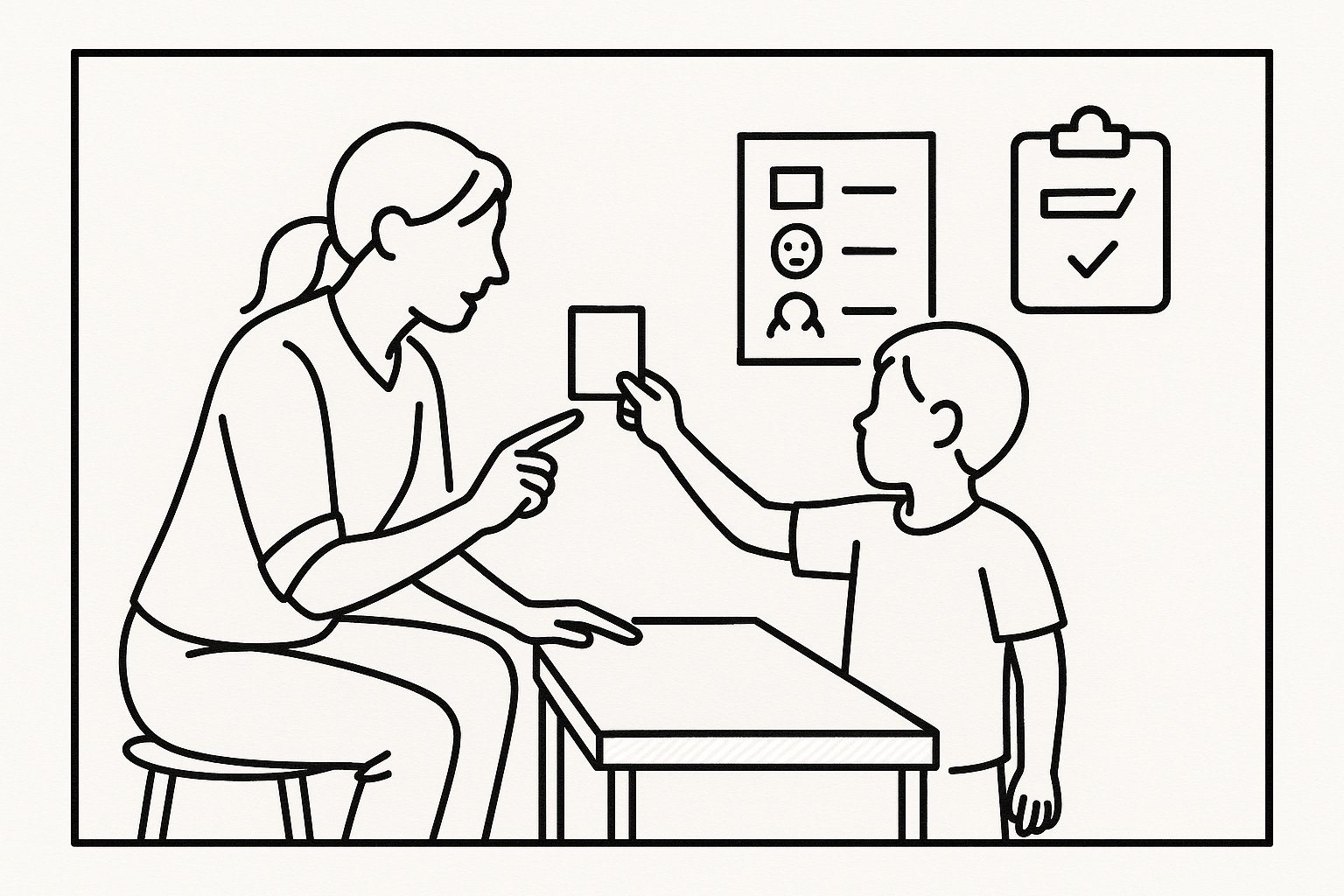
An IEP behavior goal is a formal, written objective within a student’s Individualized Education Program that targets social, emotional, or behavioral skills interfering with the student’s learning or that of others. These goals are not about punishment: they’re about instruction. We use behavior goals to teach replacement skills, what the student should do instead of the problematic behavior, and to create measurable expectations the team can monitor.
Why they matter: behavior directly affects access to instruction. A child who cannot follow routines, regulate emotions, or interact safely with peers may miss academic instruction and social learning. Behavior goals translate vague concerns (“acts out in class”) into actionable outcomes (“will request a break using a visual cue instead of hitting, in 8 of 10 observed opportunities”). That clarity guides instruction, supports progress monitoring, and legally documents the student’s needs and services.
Good behavior goals also protect rights. When behavior impedes learning, schools are required to consider positive behavioral interventions and supports under the Individuals with Disabilities Education Act (IDEA). A well-written behavior goal becomes the basis for services, such as behavior intervention plans (BIP), counseling, or specialized instruction, and helps families and teams evaluate whether those services are working.
When Behavior Goals Belong In An IEP: Eligibility, Triggers, And Team Decisions
Not every behavioral concern needs an IEP goal. We decide to include behavior goals after careful assessment and team discussion. Key considerations include eligibility, the functional impact of the behavior, and whether the behavior is a manifestation of the student’s disability.
Eligibility and impact: If a student’s behavior stems from a disability and it significantly affects educational performance, the team should consider behavior goals. For example, a student with ADHD who frequently leaves the classroom and misses instruction likely needs behavior goals tied to staying on-task and following routines. Conversely, if behavior is situational and unrelated to a disability, school disciplinary routes, not IEP goals, may be appropriate.
Identifying triggers: A behavior that only occurs under certain conditions (e.g., loud transitions, crowded spaces, academic tasks) requires targeted goals that teach coping strategies for those conditions. We recommend conducting a functional behavior assessment (FBA) whenever a pattern of challenging behavior emerges. The FBA identifies antecedents, consequences, and the purpose (function) of the behavior, information essential for creating effective goals.
Team decision-making and documentation: The IEP team, including parents, educators, related-service providers, and sometimes the student, must weigh assessment data and recommended supports. If the team adds behavior goals, they should also specify supports (e.g., BIP, staff training, classroom accommodations) and how progress will be measured. This documentation is crucial if disputes arise, because it shows the team considered and planned interventions rather than reacting inconsistently.
When safety is at stake: For behaviors that pose safety risks (self-harm, aggression), we prioritize immediate protective measures and clear crisis protocols. Those measures pair with long-term behavior goals focused on de-escalation, alternative communication, and reintegration into instruction.
Writing Effective IEP Behavior Goals: The SMART-B Framework
To make behavior goals useful, we favor a practical framework: SMART-B. It’s an adaptation of the familiar SMART goal structure, with a behavioral focus.
- Specific: The target behavior, replacement skill, context, and materials must be defined. Vague goals like “improve behavior” are meaningless: “use a visual cue to request a break during transitions” is specific.
- Measurable: The goal must include clear data points (frequency, duration, percentage, or accuracy) and a method for recording them.
- Achievable: Goals should be realistic given the student’s baseline and supports. Too ambitious targets set teams up for disappointment.
- Relevant: The goal must connect directly to educational access or safety.
- Time-bound: Specify the period for mastery (e.g., by the end of the IEP year, or within 12 weeks) and interim checkpoints.
- Behavioral: Emphasize teaching of replacement skills and context (when and where the behavior is expected to change).
A SMART-B example: “By the end of the IEP year, when transitioning between activities, [student] will use a 3-step visual schedule to complete transitions with verbal prompts in 8 out of 10 observed opportunities across three consecutive weeks, as measured by teacher data sheets.” This includes specificity, measurement, a timeline, and a clear replacement behavior.
Crafting Measurable Objectives And Baselines
Measurable objectives break the main goal into short-term steps and clarify how we collect baseline data. First, we gather a baseline: how often and under what conditions does the target behavior occur now? Baseline data gives us a realistic starting point and helps determine whether the goal is achievable.
When crafting objectives, we recommend:
- Use concrete metrics: frequency counts (e.g., “3 times per day”), duration (e.g., “remains in seat for 20 continuous minutes”), or percentage of opportunities (e.g., “8 of 10 times”).
- Set incremental targets: If baseline is 2/10, aim for 4/10 within six weeks, then 6/10, etc. Short-term objectives keep the team motivated and make progress visible.
- Specify measurement tools: teacher observation checklists, event recording, interval recording, or digital behavior-tracking tools. Naming the tool reduces ambiguity, everyone knows what data will look like.
- Record context: note who collected the data, the setting, and prompts used. That helps isolate whether improvements are generalizing across teachers and environments.
We also document the supports that accompany the objectives: who will teach the skill, how often, and with what resources. That prevents goals from being mere aspirations, they become instructional commitments.
Monitoring Progress, Data Collection, And Adjusting Interventions
Monitoring is where goals live or die. Without consistent data collection, we can’t tell if interventions work. Regular progress review, ideally weekly or biweekly for intensive behaviors, lets teams make timely adjustments.
Best practices for monitoring:
- Keep data simple and consistent: Choose a single reliable method (e.g., frequency counts on a classroom clip chart) and stick with it so trends are visible.
- Use visual charts: Graphs showing progress over time help teams and families see patterns quickly during meetings.
- Schedule regular check-ins: Teams should review data at IEP midpoint reviews and more often when behaviors are acute.
- Analyze fidelity: If progress is flat, check whether the plan is being implemented as intended (staff following prompts, consistent reinforcement). Implementation drift is a common reason goals stall.
- Adjust thoughtfully: If data show no progress after a reasonable trial, increase supports (more frequent prompting, additional staff training) or revise the goal to be more attainable. If behaviors worsen, reconvene the team immediately and consider a revised FBA or crisis plan.
We should also plan for generalization: explicit steps to transfer skills across settings and people. Document how instruction will extend beyond the classroom, for example, practiced during lunch, PE, or on the bus, and how communication with families will support consistency at home.
Finally, maintain clear records. If disagreements escalate to formal disputes, well-documented data, timelines, and meeting notes demonstrate that the team followed a reasoned process.
Conclusion
IEP behavior goals are practical tools: they clarify what skills we’ll teach, how we’ll measure success, and what supports the student needs. By using a SMART-B approach, collecting reliable baseline data, and committing to regular monitoring and adjustment, teams create meaningful, defensible plans that improve learning and safety. When questions arise about services or implementation, keep the focus on documented data, transparent team decisions, and the student’s access to education.
Frequently Asked Questions About IEP Behavior Goals
What are IEP behavior goals and why are they important?
IEP behavior goals are formal objectives within a student’s Individualized Education Program that address social, emotional, or behavioral skills affecting learning. They focus on teaching replacement behaviors to improve access to instruction and ensure student safety, rather than punishment.
When should behavior goals be included in an IEP?
Behavior goals are included when a student’s behavior, stemming from a disability, significantly impacts educational performance. After assessments like a functional behavior assessment and team discussion, goals target specific behaviors affecting learning or safety.
How do educators write effective IEP behavior goals?
Effective IEP behavior goals follow the SMART-B framework: Specific, Measurable, Achievable, Relevant, Time-bound, and Behavioral. This method ensures goals clearly define observable behaviors, measurement methods, realistic targets, and timelines for progress.
How is progress on IEP behavior goals monitored and adjusted?
Progress is monitored regularly using consistent data collection tools, such as frequency counts or charts. Teams review data often, adjust supports or goals as needed, and ensure interventions are implemented faithfully to promote student improvement.
Can IEP behavior goals help with safety concerns like aggression or self-harm?
Yes, IEP behavior goals include safety-focused objectives and crisis protocols. Immediate protective measures pair with long-term goals teaching de-escalation, alternative communication, and re-integration strategies to maintain a safe learning environment.
What role does baseline data play in setting IEP behavior goals?
Baseline data identifies how often and under what conditions a behavior occurs before intervention. It provides a realistic starting point for setting achievable, incremental objectives and helps in measuring progress toward the target behavior.