
Last Updated on July 8, 2026 by Jennifer Hanson
When we ask “What is differentiation in special education?” we’re really asking how classrooms can move beyond one-size-fits-all teaching to meet real student needs. Differentiation is the practical, evidence-informed work of adjusting content, process, products, and learning environments so each learner, especially students with disabilities, can access standards and build independence. In this guide we’ll define core principles, explain why differentiation matters for outcomes and equity, outline legal obligations that shape practice, and share practical strategies teachers and teams can use in IEP classrooms. Our aim: clear, usable steps you can apply tomorrow.
In this guide, Differentiation In Special Education How To Tailor Instruction So Every Student Thrives Practical Guide 2026 is explained with clear steps and tips.
Key Takeaways — Differentiation In Special Education How To Tailor Instruction So Every Student Thrives Practical Guide 2026
- Differentiation in special education customizes teaching in content, process, products, and environment to meet diverse learner needs while maintaining high expectations.
- Effective differentiation improves outcomes and equity by enabling students with disabilities to access grade-level standards alongside peers.
- Legal frameworks like IDEA and IEPs require individualized goals, and differentiation supports these mandates without replacing specialized instruction.
- Practical strategies include ongoing assessment, tiered lessons, flexible grouping, scaffolded materials, and consistent communication with families.
- Differentiation benefits all students in mixed-ability classrooms by fostering inclusion, reducing behavioral issues, and promoting engagement.
- Regular team planning and data monitoring are essential to refine differentiation practices and ensure student progress toward IEP goals.
Understanding Differentiation In Special Education: Definition And Core Principles
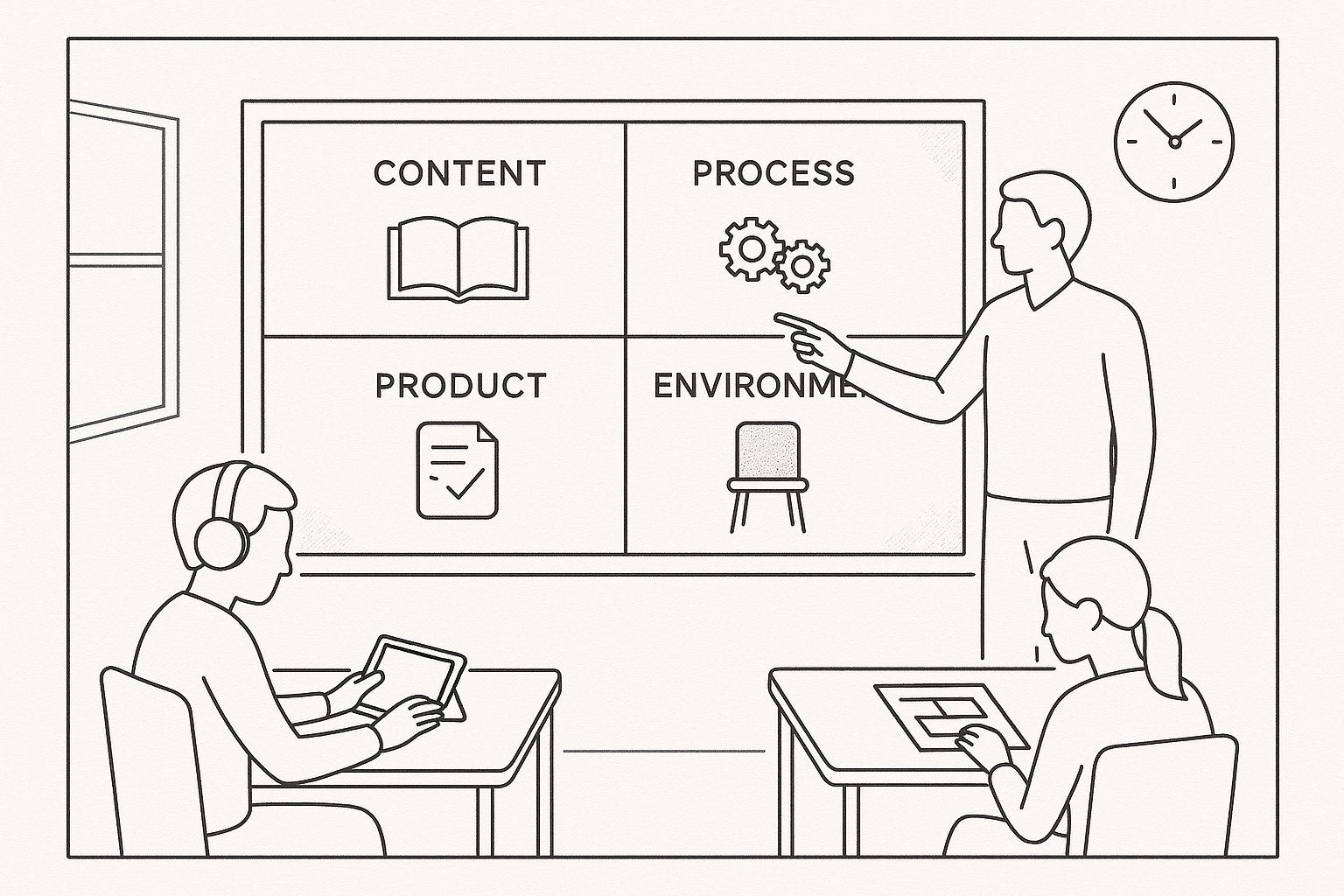
Differentiation in special education is a deliberate approach to teaching that adapts instruction to students’ varied readiness levels, interests, and learning profiles while maintaining high expectations. At its heart, differentiation isn’t watered-down content: it’s multiple pathways to the same learning targets. We think of it across four domains:
- Content: What students learn. This might mean presenting the same grade-level standard with scaffolded supports, using alternate texts, or pre-teaching vocabulary for students who need more background.
- Process: How students learn. We vary instructional methods, small-group guided practice, visual organizers, multisensory approaches, or extended processing time, based on skill gaps and strengths.
- Product: How students show learning. Allowing a student to demonstrate understanding through an oral report, a video, or a simplified written response preserves rigor while matching output to ability.
- Learning environment: Physical and social classroom conditions. Structured corners, noise-reduction options, visual schedules, and predictable routines reduce barriers to learning.
Key principles we rely on when differentiating include ongoing assessment (both formative and informal), presuming competence (setting grade-level goals where possible), and collaborative planning. Differentiation is not individualization in the purest legal sense, IEPs remain the individualized legal plan, but it’s the classroom-level pedagogy that makes those IEP goals achievable alongside grade-level peers.
A common misconception is that differentiation is only for students with disabilities. In truth, it benefits all learners: it’s the engine that allows mixed-ability classrooms to function well while honoring inclusion. When implemented thoughtfully, differentiation fosters access without lowering expectations.
Why Differentiation Matters: Outcomes, Equity, And Classroom Inclusion
Differentiation matters because it moves equity from rhetoric to practice. Research and classroom experience show that students with disabilities achieve better outcomes when instruction is tailored to their needs while preserving meaningful access to grade-level content. When we differentiate well, we see improvements in engagement, reduced behavior challenges, and stronger academic growth.
From an equity perspective, differentiation combats two common pitfalls: exclusion (pulling students out of meaningful learning) and low expectations (providing work that doesn’t challenge). Instead, we aim to keep students meaningfully included with supports that let them contribute and learn alongside peers.
Inclusion driven by differentiation also benefits typically developing peers. Mixed-ability grouping provides leadership opportunities, encourages flexible thinking, and normalizes diverse learning needs. Practically, differentiation reduces the need for constant one-on-one redirection, making classrooms run more smoothly.
Outcomes to track include academic measures (progress toward IEP goals and grade-level benchmarks), engagement indicators (time on task, participation), and social outcomes (peer interactions, self-advocacy). We recommend teams set measurable targets and use frequent short-cycle assessments to adjust instruction rapidly. That iterative approach is why differentiation isn’t a single lesson plan tweak: it’s an ongoing cycle of assess-plan-teach-evaluate.
Legal And Policy Foundations: How IDEA, FAPE, And The IEP Shape Differentiation
Differentiation operates inside a legal framework that defines what schools must provide. Under the Individuals with Disabilities Education Act (IDEA), students are entitled to a Free Appropriate Public Education (FAPE) in the Least Restrictive Environment (LRE). The IEP is the legal vehicle that documents individualized goals, services, accommodations, and how the student will access the general curriculum.
We need to be clear: differentiation supports compliance with these laws but does not replace individualized services that an IEP requires. For example, while a differentiated classroom can provide accommodations (extended time, preferential seating, visual supports), the IEP may mandate specialized instruction or related services that require more intensive, targeted delivery.
Key legal points teams should remember:
- IEPs must be individualized and measurable. Differentiation helps deliver those goals but the IEP remains the school’s legal commitment.
- Inclusion is preferred when appropriate. Schools must consider LRE and document why any removal from the general education setting is necessary.
- Procedural protections matter. Parents must be involved in decisions about placement and supports.
From a compliance standpoint, documentation of how differentiation strategies are used, lesson plans, progress monitoring data, and meeting notes, can be invaluable if disputes arise. We find that proactive collaboration between educators, related-service providers, and families reduces misunderstandings and strengthens legal defensibility.
Practical Strategies For Differentiation In The IEP Classroom
We recommend practical strategies that are classroom-ready and aligned with IEP goals.
- Start with reliable assessment. Use quick screeners, curriculum-based measures, and observations to identify readiness levels and learning profiles. Short, weekly probes show whether a strategy is working.
- Design tiered lessons. Create core lessons with built-in scaffolds: a condensed version for students needing more support, and enrichment tasks for students who have mastered the objective. Keep the learning target identical: vary the pathway.
- Use flexible grouping. Rotate small-group instruction based on data, sometimes groups are skill-based, sometimes mixed-ability for cooperative tasks. We structure schedules so students who need intensive intervention receive it without being permanently segregated.
- Build scaffolds and supports into materials. Provide graphic organizers, sentence starters, chunked instructions, and multisensory resources. Technology, text-to-speech, interactive math tools, speech-to-text, can speed access when matched to the student’s profile.
- Offer product choice with clear rubrics. Let students demonstrate mastery through different modalities (project, oral explanation, portfolio), but keep the success criteria consistent and transparent.
- Train and leverage paraprofessionals carefully. Paraprofessionals should support independence, not replace teacher instruction. We set explicit roles and rotate responsibilities to encourage student autonomy.
- Communicate with families. Share what works, what the data show, and invite goal-focused input. When families see specific strategies and progress, collaboration improves.
- Monitor, document, and revise. Keep short progress notes tied to IEP objectives. If six to eight weeks of data show little progress, reconvene to adjust intensity or goals.
A final practical note: differentiation takes planning time. We find that a weekly 30–60 minute team planning block (general educator, special educator, related-service staff) yields disproportionate benefits, better-aligned instruction, fewer crises, and clearer evidence of progress.
Conclusion
Differentiation in special education is the classroom-level engine that turns legal commitments into daily learning. When we define clear targets, use timely data, and pair inclusive pedagogy with documented IEP supports, students with disabilities make meaningful gains alongside peers. Differentiation isn’t an add-on, it’s essential practice. If you’re an educator or family member, start small: pick one standard, match three pathways, monitor weekly, and iterate. Over time those steps compound into real access and stronger outcomes.
Frequently Asked Questions About Differentiation in Special Education
What is differentiation in special education?
Differentiation in special education is an intentional teaching approach that adjusts content, process, products, and learning environments to meet diverse student needs while maintaining high expectations and access to grade-level standards.
Why is differentiation important for students with disabilities?
Differentiation improves outcomes by tailoring instruction to students’ needs, promoting engagement, reducing behavior challenges, and ensuring equity through meaningful inclusion without lowering academic standards.
How does differentiation support inclusion in mixed-ability classrooms?
Differentiation enables students with and without disabilities to learn together by providing multiple pathways to the same learning goals, fostering leadership, flexible thinking, and reducing the need for one-on-one redirection.
What role do legal requirements like IDEA and IEPs play in differentiation?
Legal frameworks like IDEA and IEPs mandate individualized goals and services; differentiation supports compliance by adapting classroom instruction and accommodations but does not replace the individualized services documented in IEPs.
What are practical strategies for implementing differentiation in an IEP classroom?
Effective strategies include using ongoing assessments, designing tiered lessons with scaffolds, flexible grouping, offering product choices aligned with rubrics, leveraging paraprofessionals to promote independence, and regular communication with families.
How can teachers monitor the effectiveness of differentiation in special education?
Teachers can track progress using frequent short-cycle assessments tied to IEP goals, monitor engagement and social outcomes, keep detailed documentation, and adjust instruction collaboratively based on data and observations.