
Last Updated on July 8, 2026 by Jennifer Hanson
Families and educators often ask: what is an IEP for high-functioning autism, and how do we make it actually work? In this guide we’ll walk through the essentials, what an Individualized Education Program (IEP) is, how eligibility and evaluations work, the accommodations and measurable goals that matter, and who should speak up at meetings. We’ll also cover transition planning so students move from high school into college or the workforce with real supports. Our aim is practical: clear steps, rights you should know, and actionable strategies you can use right away.
In this guide, IEP For High-Functioning Autism A Practical Guide To Support Rights And Transition 2026 is explained with clear steps and tips.
Key Takeaways — IEP For High-Functioning Autism A Practical Guide To Support Rights And Transition 2026
- An IEP for high-functioning autism is a legally binding plan that translates social, executive functioning, and sensory needs into tailored educational supports.
- Eligibility for an IEP requires a comprehensive evaluation showing how autism impacts educational performance and necessitates specialized instruction.
- Effective IEPs use specific accommodations like extended test time, visual schedules, and measurable SMART goals to track student progress.
- Academic and social-emotional supports are crucial, including executive function strategies, pragmatic language teaching, sensory accommodations, and proactive behavior plans.
- Parents, students, and advocates should actively participate in IEP meetings with clear, evidence-based priorities and ensure that self-advocacy skills are included.
- Transition planning must start by age 16, focusing on postsecondary education or employment supports, self-advocacy, and measurable goals to ease the move to adulthood.
What An IEP Is And Why It Matters For High-Functioning Autism
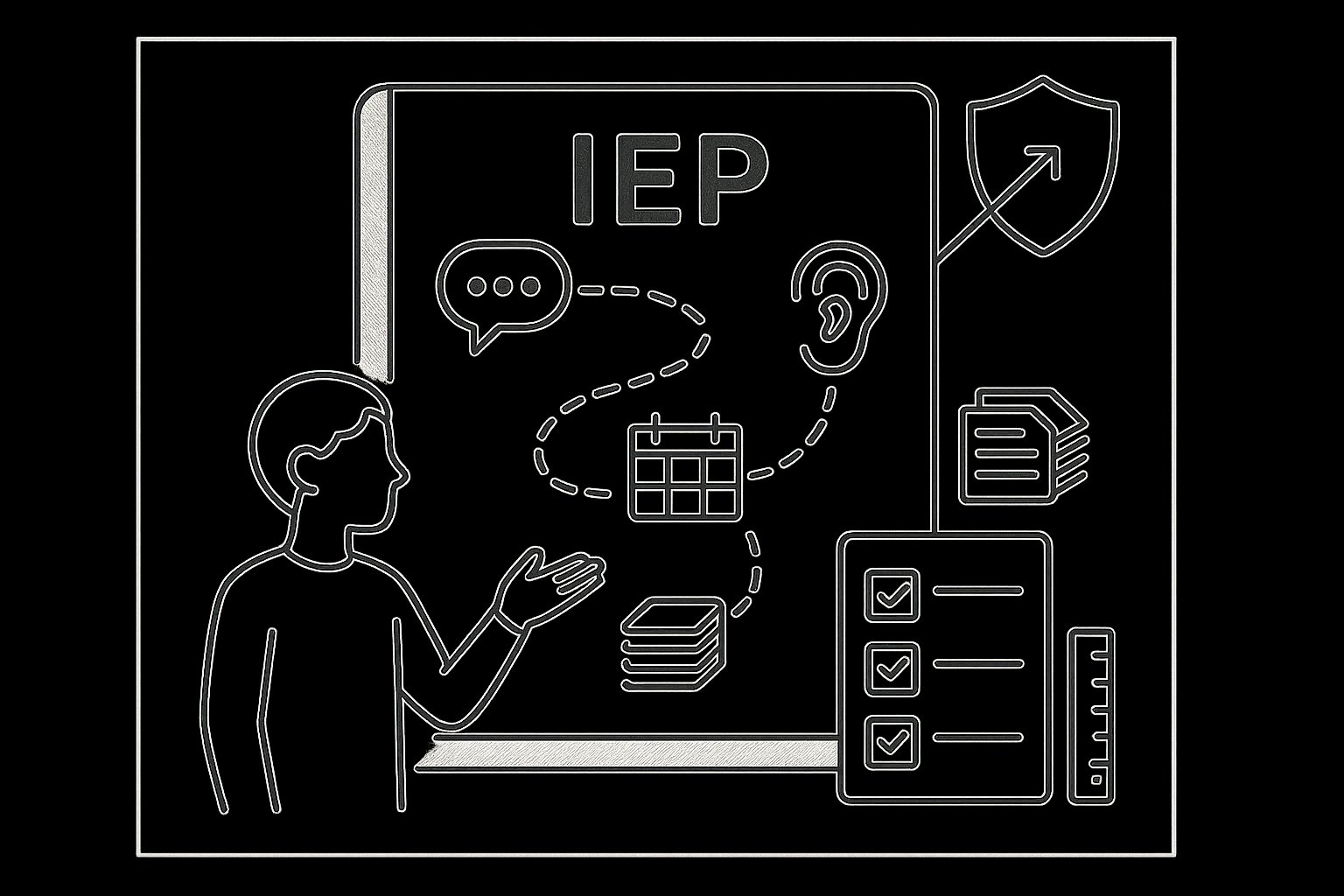
An IEP, short for Individualized Education Program, is a legally binding plan under the federal Individuals with Disabilities Education Act (IDEA) that lays out the special education services and supports a student will receive. For students with high-functioning autism, the IEP is often the single most important tool to ensure school success because it translates needs (social communication differences, executive functioning challenges, sensory sensitivities) into concrete supports.
We think of the IEP as three things at once: an assessment-driven document, a roadmap of services, and a set of enforceable rights. That matters because high-functioning autism can look inconsistent: a student might excel in academics but struggle with group projects, organization, or unstructured time. Without an IEP, these hidden challenges are easy to miss and can undermine long-term outcomes. With a well-written IEP, accommodations and measurable goals protect access to curriculum and promote independence, while giving parents and educators a clear way to track progress and revise supports as needs change.
Eligibility, Evaluation, And How Schools Determine Services
Eligibility usually begins with a referral for evaluation by the school or parent. Under IDEA, autism is a distinct category: to qualify, evaluations must show the student’s autism affects educational performance and requires specialized instruction or related services. We recommend requesting a comprehensive evaluation that includes cognitive testing, academic achievement, speech/language assessment, and an autism-specific behavioral or developmental assessment.
Schools typically assemble a multidisciplinary team, teachers, school psychologist, speech-language pathologist, and the parent, to review data and decide eligibility. We advise bringing external reports (therapist notes, private evaluations) to the meeting: schools must consider them. If the team finds the student eligible, they’ll propose an IEP with present levels of performance, annual goals, accommodations, and service minutes. If you disagree with evaluations or eligibility decisions, procedural safeguards exist: you can request an independent educational evaluation (IEE) at public expense, mediation, or due process. Knowing these rights helps families push for accurate assessments and appropriate services rather than one-size-fits-all placements.
Common Accommodations, Modifications, And Measurable Goals
IEPs for students with high-functioning autism mix accommodations (changes in how a student accesses instruction), modifications (changes to what is expected), and measurable annual goals tied to baseline data. Effective IEP language is specific: it names the accommodation, details who will carry out it, and sets objective criteria for measuring progress.
Examples of common accommodations include extended time on tests, preferential seating, visual schedules, and structured routines. Modifications might reduce the complexity of tasks or allow alternative assignments. Measurable goals should follow the SMART approach, specific, measurable, achievable, relevant, and time-bound, so we can tell whether supports are working.
Academic Supports And Classroom Strategies
Academic supports for high-functioning autism focus on executive function, language processing, and access to instruction. Practical strategies include breaking tasks into sequenced steps, providing checklists, and embedding graphic organizers into lessons. We often recommend assistive tech, speech-to-text, timers, and visual planners, to bridge gaps in writing and time management.
Differentiated instruction helps: allowing alternatives for demonstrating mastery (oral presentations, portfolios) reduces reliance on written output alone. Small-group instruction or co-teaching models give targeted skill work without pulling a student completely out of the general classroom. Finally, explicit teaching of organizational skills, daily planner checks, teacher-student contract for assignments, turns vague expectations into routines students can learn and generalize.
Social-Emotional, Communication, And Sensory Supports
Academic success isn’t enough: social-emotional and sensory supports often determine whether a student thrives. For high-functioning autism we prioritize social skills instruction that is contextual and role-based, practicing peer interactions in real settings, not only in a pull-out group. Speech-language supports may target pragmatic language: turn-taking, perspective-taking, and interpreting idioms.
Sensory supports reduce daily dysregulation. Simple steps, noise-cancelling headphones, access to a quiet break space, predictable transitions, can prevent shutdowns and meltdowns. Behavior intervention plans (BIPs) should be proactive, specifying replacement behaviors and environmental changes rather than punitive responses. We want supports that teach coping skills and preserve dignity while keeping the student engaged in learning.
Parent, Student, And Advocate Roles During IEP Meetings
IEP meetings are where decisions happen, and our role as parents or advocates is to come prepared and stay collaborative but clear. Before a meeting we suggest reviewing current progress reports, listing priorities (academic, social, sensory), and bringing objective evidence, work samples, therapy reports, attendance or disciplinary records that illustrate trends.
During meetings, speak to outcomes: propose specific accommodations and measurable goals rather than vague requests. If the student is able, include them in at least part of the meeting: self-advocacy fosters responsibility and ensures goals reflect their ambitions. Advocates or attorneys can help when disagreements arise, particularly around eligibility, placement, or adequacy of services. Remember procedural safeguards: written notice for changes, consent requirements for initial services, and timelines for evaluations. If needed, request time to review proposals rather than agreeing on the spot.
Transition Planning: From High School To Postsecondary Education Or Work
Transition planning must start early, IDEA requires transition services to be included by age 16 (some states begin planning sooner). For students with high-functioning autism, a robust transition plan bridges academic goals to practical outcomes: college accommodations, vocational skills, independent living, and supported employment.
We recommend beginning with a strengths-and-interest inventory and mapping steps: job sampling, internships, or dual-enrollment classes. Postsecondary supports look different from K–12: colleges are governed by the ADA and Section 504, not IDEA, which means students must self-identify with disability services to receive accommodations. Part of the IEP’s transition goals should teach self-advocacy and paperwork skills, how to request accommodations, prepare a resume, or negotiate interview conditions.
For work, consider supported employment programs and short-term coaching that focus on workplace communication, task initiation, and coping strategies. Include measurable benchmarks in the IEP: number of job-site visits, hours of vocational coaching, or percentage increase in independent task completion. Those concrete steps make the often-abstract move to adulthood manageable and trackable.
Conclusion
An effective IEP for a student with high-functioning autism is practical, specific, and evolving: it identifies real barriers, names precise supports, measures progress, and plans for adulthood. We encourage families to be proactive, insist on clear language, and use the procedural protections available. When an IEP is done right, it doesn’t just protect rights, it opens doors.
Frequently Asked Questions About IEPs for High-Functioning Autism
What is an Individualized Education Program (IEP) for high-functioning autism?
An IEP is a legally binding plan under IDEA that details special education services and supports tailored for students with high-functioning autism, addressing unique challenges like social communication and executive functioning to promote success in school.
How is eligibility for an IEP determined for a student with high-functioning autism?
Eligibility is based on evaluations showing the student’s autism affects educational performance and requires specialized instruction. A multidisciplinary school team reviews cognitive, academic, speech, and autism-specific assessments to decide if an IEP is needed.
What types of accommodations and goals are common in IEPs for high-functioning autism?
IEPs typically include accommodations like extended test time and visual schedules, modifications such as alternative assignments, and measurable annual goals that follow the SMART criteria to track progress effectively.
How can parents and students effectively participate in IEP meetings?
Parents should come prepared with reports and clear priorities, propose specific accommodations, and include the student when possible to support self-advocacy. Advocates can assist during disagreements, ensuring procedural safeguards are upheld.
What supports are included in an IEP to help with social, emotional, and sensory challenges?
Social skills instruction, speech-language supports targeting pragmatic language, sensory accommodations like noise-cancelling headphones, access to quiet spaces, and proactive behavior intervention plans help students thrive beyond academics.
When and how does transition planning fit into IEPs for high-functioning autism?
Transition planning starts by age 16 and connects academic goals to college, work, and independent living. It includes teaching self-advocacy, job sampling, vocational coaching, and measurable benchmarks to prepare students for adulthood.