
Last Updated on July 8, 2026 by Jennifer Hanson
What Is the Role of a Special Education Teacher? In short: they’re the educators who adapt learning, advocate for students with disabilities, and bridge schools, families, and legal requirements so each child can access a meaningful education. As demands evolve in 2026, new technologies, updated laws, and more inclusive classroom models, the role has expanded and become more complex. In this guide we’ll walk through a working day, the core skills and qualifications teachers need, how they collaborate on Individualized Education Programs (IEPs), and the legal responsibilities that shape their practice. Our aim is practical: to clarify what these teachers do and why their work matters.
In this guide, What Does a Special Education Teacher Do The Complete Guide to the Role Responsibilities and Impact in 2026 is explained with clear steps and tips.
Key Takeaways — What Does a Special Education Teacher Do The Complete Guide to the Role Responsibilities and Impact in 2026
- Special education teachers adapt instruction and use assistive technology to meet Individualized Education Program (IEP) goals, ensuring meaningful learning for students with disabilities.
- They play a key role in collaboration by leading IEP teams, setting SMART goals, and coordinating with families and related-service providers.
- Monitoring student progress and using data is critical for adjusting teaching methods and demonstrating measurable growth.
- Understanding and complying with legal frameworks like IDEA and Section 504 is essential to protect students’ rights and provide Free Appropriate Public Education (FAPE).
- Ongoing professional development, including training in behavior supports and educational technology, is vital to address evolving demands in special education.
- Effective communication and documentation help prevent disputes and support ethical practices, ensuring confidentiality and fair treatment for students.
Core Responsibilities and Day‑to‑Day Duties
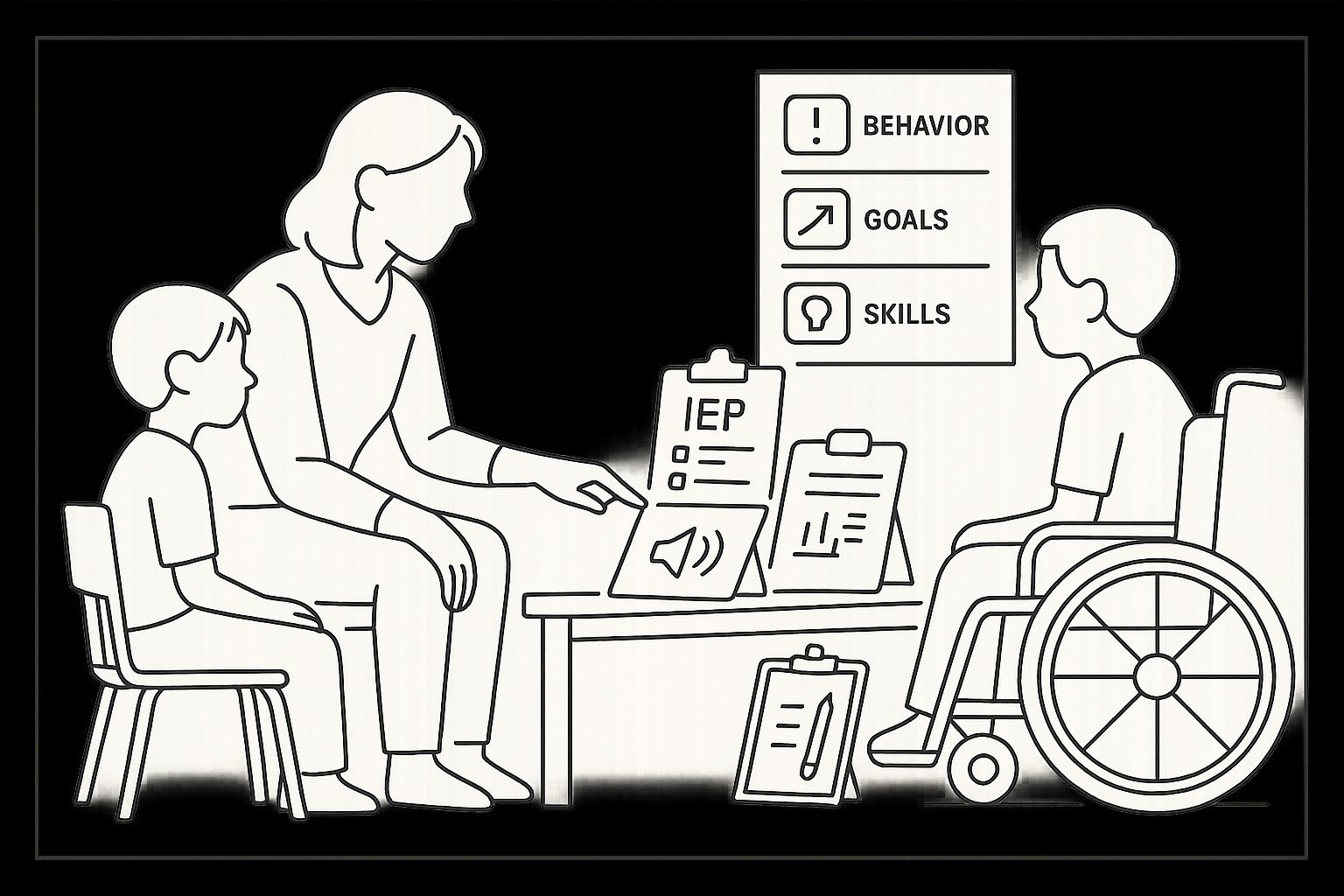
Special education teachers wear many hats. At the simplest level, our day centers on planning, instructing, monitoring progress, and adapting environments so students with diverse needs can learn alongside peers when appropriate.
Classroom instruction and differentiation
- We design lessons that meet Individualized Education Program (IEP) goals while aligning with grade-level standards. That often means breaking concepts into smaller steps, using multisensory supports, and incorporating assistive technology, from text-to-speech apps to switch-accessible devices.
- We provide direct instruction in small groups or one-on-one, and co-teach when inclusion models require shared responsibility with general education teachers.
Assessment and progress monitoring
- We use both formative and standardized assessments to track academic, social, and functional gains. Frequent progress checks tell us whether strategies are working or need adjustment.
- Data collection is constant: anecdotal notes, behavior logs, work samples, and digital trackers feed IEP updates and parent conversations.
Behavior support and social-emotional learning
- Developing positive behavior intervention plans (PBIS, FBA-based strategies) and teaching self-regulation skills are daily priorities. We’re often the ones training paraprofessionals and students on consistent routines.
Communication and family engagement
- We’re the linchpin between school and home. Daily or weekly updates, parent conferences, and coaching families on strategies create continuity that boosts learning.
Administrative tasks
- Paperwork is real: writing IEPs, documenting meetings, preparing compliance reports, and coordinating evaluations with psychologists, speech therapists, and occupational therapists.
Flexible roles across settings
- We might work in resource rooms, self-contained classrooms, or as itinerant teachers supporting multiple schools. Some of us focus on early intervention, others on transition planning for postsecondary life. Whatever the setting, our core is the same: adapt instruction, advocate for access, and ensure measurable progress.
Specialized Skills, Qualifications, and Professional Development
To do this work well in 2026, special education teachers combine formal credentials with ongoing skill-building. We’ll outline the typical qualifications and the competencies that make the difference.
Required qualifications and certification
- Most states require a bachelor’s degree in special education or a related field plus state certification or licensure. Increasingly, districts expect content-area endorsements or master’s-level coursework for specialized tracks (e.g., autism, severe disabilities).
- Additional credentials, behavior analyst certifications (BCBA), dyslexia endorsements, or assistive technology certifications, enhance employability and impact.
Core professional skills
- Instructional design: We create scaffolded lesson plans that incorporate Universal Design for Learning (UDL) principles so multiple learners can access content.
- Assessment literacy: Interpreting standardized scores, progress-monitoring tools, and functional assessments is vital for accurate goal-setting.
- Behavior supports: Skillful use of Functional Behavioral Assessment (FBA) and Positive Behavioral Interventions and Supports (PBIS) reduces disruptions while teaching replacement skills.
- Collaboration: Strong communication with general education teachers, related-service providers, and families keeps supports coordinated.
Technology and adaptive tools
- By 2026, fluency with educational tech, learning management systems, alternative communication devices, and data dashboards, is expected. We leverage tech to personalize pacing, provide scaffolded feedback, and document mastery.
Ongoing professional development
- Special education is a moving target: legal updates, new evidence-based practices, and assistive innovations require continuing education. We pursue workshops, graduate coursework, and peer coaching to stay current.
- Reflective practice matters: using coaching cycles and observation feedback helps us refine instruction and improve student outcomes.
Soft skills that matter
- Patience, creativity, resilience, and cultural competence are as crucial as technical skills. We adapt not only to student needs but to family dynamics, cultural contexts, and the realities of school resources.
Career paths and advancement
- Experienced teachers often move into roles as behavior specialists, instructional coaches, or special education administrators. Some pursue law or advocacy work, particularly when they want to influence policy or compliance at district or state levels.
Collaboration, Individualized Education Programs (IEPs), and Legal Responsibilities
IEPs and collaboration form the backbone of special education practice, but they’re inseparable from legal obligations. We’ll walk through how teams form, how IEPs get built, and the laws that govern our decisions.
IEP teamwork: who does what
- An IEP team typically includes the special education teacher, a parent or guardian, a general education teacher when appropriate, a district representative, and related-service providers (speech, occupational therapy, school psychologist). Students participate when appropriate.
- Our role as special education teachers is to synthesize assessment data, propose measurable annual goals, recommend accommodations and modifications, and identify progress-monitoring methods.
Writing effective, measurable IEP goals
- We craft SMART goals (Specific, Measurable, Achievable, Relevant, Time-bound) tied to baselines. A useful goal might specify reading level growth with clear assessment criteria rather than vague statements about “improving reading.”
- Short-term objectives or benchmarks remain valuable, especially for students who need frequent, observable steps toward longer-term outcomes.
Legal framework and compliance
- IDEA (Individuals with Disabilities Education Act) remains the foundational federal law, guaranteeing Free Appropriate Public Education (FAPE) in the Least Restrictive Environment (LRE). We must ensure eligibility determinations, timely evaluations, and appropriate procedural safeguards.
- Section 504 protections, ADA obligations, and state statutes add layers, particularly around accommodations and nondiscrimination. We work closely with administrators and, when needed, school attorneys to ensure plans meet legal standards.
Documentation and dispute prevention
- Accurate records, assessment results, meeting notes, parent consent forms, and communication logs, reduce misunderstandings and legal exposure. We document rationale for placement decisions and the progress data that supports them.
- When disputes arise, early communication, mediation, and problem-solving meetings often resolve concerns before formal hearings. That’s where legal counsel becomes important: families and districts sometimes seek attorneys to navigate complex disagreements.
Transition planning and postsecondary considerations
- For older students we write transition plans that map goals for employment, higher education, and independent living. These plans require interagency collaboration with vocational rehabilitation and community providers.
Ethics and confidentiality
- We uphold confidentiality under FERPA and relevant state laws and balance student privacy with the need to share information for effective supports. Ethical choices, like restraint/use-of-force policies or exclusionary discipline, require careful adherence to both law and best practice.
In short: collaboration and IEPs are educational processes underpinned by legal duties. We balance empathy and expertise while documenting decisions in ways that protect students’ rights and ensure meaningful progress.
Conclusion
Special education teachers play a pivotal role in turning rights into real learning. We design instruction, coordinate services, interpret law, and partner with families to create measurable, equitable outcomes. As practices and technologies evolve, our work becomes more interdisciplinary and legally informed, requiring ongoing learning and intentional collaboration. If you’re exploring this career or seeking services for a child, know that effective special education combines compassion, data-driven instruction, and rigorous adherence to legal protections to support each student’s growth.
Frequently Asked Questions About the Role of a Special Education Teacher
What is the primary role of a special education teacher?
A special education teacher adapts learning to meet students’ diverse needs, advocates for their rights, collaborates on Individualized Education Programs (IEPs), and ensures each child accesses meaningful education in inclusive or specialized settings.
How do special education teachers use technology in their classrooms?
They leverage assistive technologies like text-to-speech apps, switch-accessible devices, learning management systems, and data dashboards to personalize instruction, provide scaffolded feedback, and monitor student progress effectively.
What qualifications are typically required to become a special education teacher?
Most states require a bachelor’s degree in special education or related fields, state certification, and often endorsements or master’s coursework focusing on specialized tracks such as autism or severe disabilities.
How do special education teachers contribute to Individualized Education Programs (IEPs)?
They synthesize assessment data, write measurable SMART goals, recommend accommodations, monitor progress, and collaborate with families and specialists to tailor educational plans that meet legal standards and student needs.
What are the legal responsibilities special education teachers must follow?
Teachers comply with laws like IDEA and Section 504, ensuring Free Appropriate Public Education and Least Restrictive Environment, documenting carefully to avoid disputes, protecting confidentiality, and upholding procedural safeguards for students.
Why is collaboration important in special education teaching?
Collaboration with general educators, families, related-service providers, and administrators ensures coordinated support, smooth communication, comprehensive IEP development, and better student outcomes across educational and community settings.