
Last Updated on July 8, 2026 by Jennifer Hanson
When a child struggles in school due to a disability that substantially limits a major life activity, families and educators need clear, practical steps. A 504 plan in Oklahoma is a civil-rights based accommodation plan under Section 504 of the Rehabilitation Act designed to remove barriers and provide equal access to education. In this guide we’ll explain what a 504 plan is in Oklahoma, who qualifies, how schools evaluate and create plans, real-world accommodations, when to consider an IEP instead, and what to do if you hit a roadblock, including legal options. Our goal is to give parents and professionals the confidence to navigate the process effectively.
In this guide, What Is A 504 Plan In Oklahoma A Practical Guide For Parents And Professionals 2026 is explained with clear steps and tips.
Key Takeaways — What Is A 504 Plan In Oklahoma A Practical Guide For Parents And Professionals 2026
- A 504 plan in Oklahoma provides necessary accommodations to students with disabilities for equal access to education without special instruction.
- Eligibility for a 504 plan is based on whether a student’s disability substantially limits major life activities like learning or concentrating.
- The evaluation process in Oklahoma includes referrals, data collection, and a 504 team meeting involving parents and school staff.
- Common accommodations under a 504 plan include extended test time, preferential seating, and assistive technology access.
- Families should document requests and maintain communication with schools to ensure timely evaluations and plan implementation.
- If accommodations are insufficient or denied, parents can escalate issues through formal complaints or legal options including the U.S. Department of Education’s Office for Civil Rights.
What Is A 504 Plan In Oklahoma?
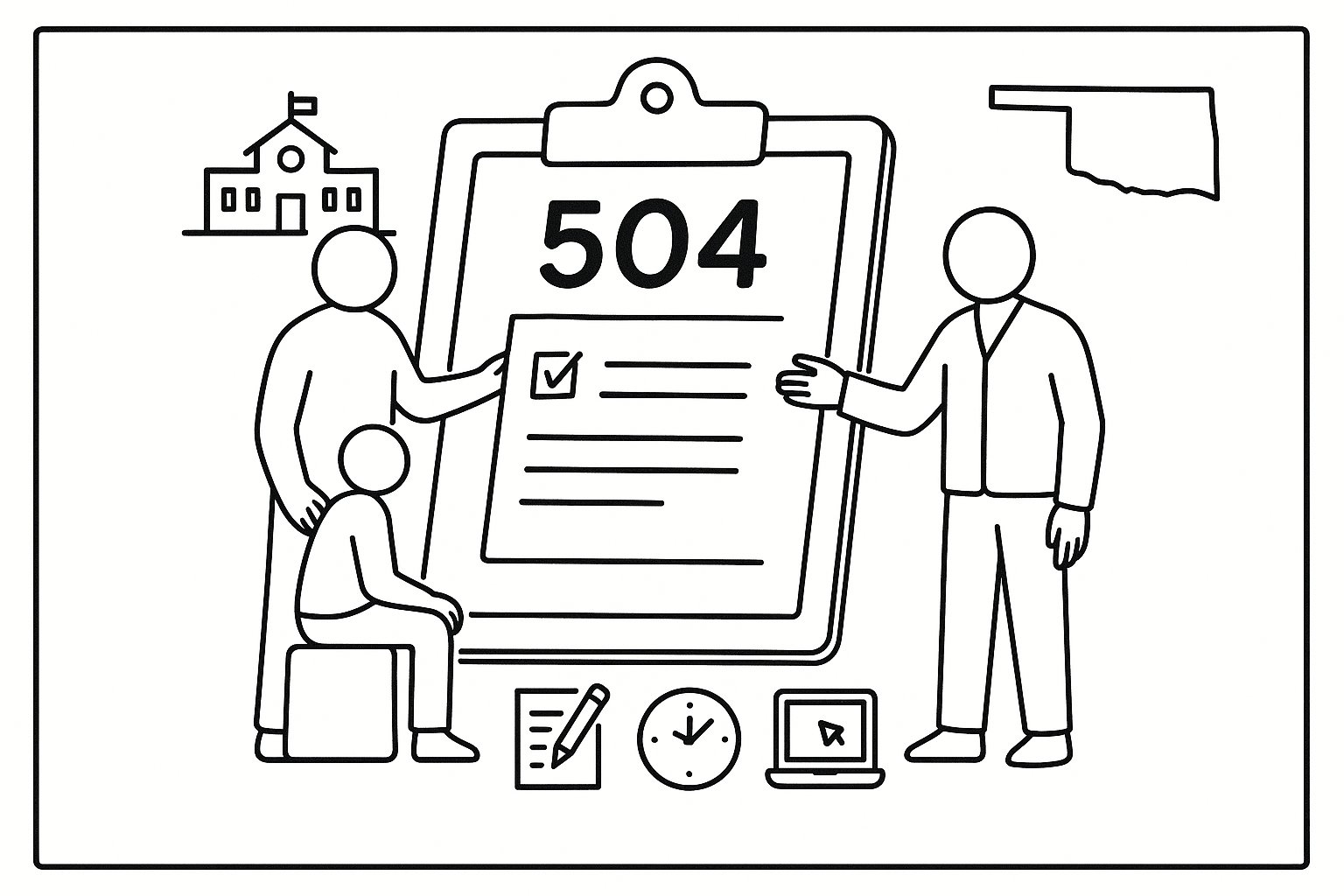
A 504 plan is an individualized document that outlines accommodations and services a public school will provide so a student with a disability can access the same educational opportunities as peers. Section 504 of the Rehabilitation Act of 1973 is a federal civil-rights law: it applies to any program receiving federal funds, including Oklahoma public schools and many charter schools.
Unlike an Individualized Education Program (IEP), which provides specialized instruction under the Individuals with Disabilities Education Act (IDEA), a 504 plan focuses on removing barriers through accommodations rather than delivering special education. Typical accommodations address classroom access, testing conditions, attendance flexibility, and assistive technology.
In Oklahoma, local school districts are responsible for developing and implementing 504 plans. Schools must evaluate students who are suspected of having a disability and offer reasonable accommodations when a qualifying impairment is found. The plan ensures the student isn’t discriminated against because of their disability and that they can participate fully in school activities, from academics to extracurriculars.
Who Is Eligible Under Section 504 In Oklahoma?
Eligibility under Section 504 hinges on whether a student has a physical or mental impairment that substantially limits one or more major life activities, such as learning, concentrating, walking, seeing, or caring for oneself. The determination is broader than IDEA’s criteria and can include medical conditions, chronic illnesses, and mental-health disorders that affect educational access.
We often see eligibility for students with ADHD, diabetes, asthma, anxiety disorders, mobility impairments, or temporary disabilities following injury or surgery. The key question the school team asks is: does the impairment substantially limit the student’s ability to participate in or benefit from the school’s programs without accommodations?
How Oklahoma Schools Assess Eligibility
Oklahoma schools typically follow a multi-step process to assess eligibility: referral, data collection, evaluation, and a 504 team meeting. Referrals can come from parents, teachers, or other school staff. The school collects academic records, teacher observations, medical documentation, and standardized test results as relevant.
Evaluation may include classroom observations, educational testing, and input from medical or mental-health professionals. The 504 team, which must include people who know the student and the evaluation data, reviews the information and decides whether a 504 plan is appropriate. Importantly, parents have the right to participate in meetings and to request independent evaluations if they disagree with the school’s findings.
How To Request A 504 Plan In Oklahoma: Step‑By‑Step
Requesting a 504 plan is a straightforward process if you know the steps. We recommend documenting every interaction and keeping copies of medical records and teacher notes.
- Start with a written request. Send a dated letter or email to your child’s teacher, school counselor, or building principal requesting a 504 evaluation. State the disability or condition, how it affects school, and ask for a meeting within a reasonable time.
- Provide supporting documentation. Attach recent medical records, diagnostic reports, or letters from treating clinicians that explain how the condition affects learning or school participation.
- Participate in the school’s evaluation. The district will collect educational and medical data. Attend meetings, share classroom observations, and ask questions about what tests or observations the school will perform.
- Attend the 504 team meeting. The team reviews the evidence and determines eligibility. If eligible, the team develops the 504 plan listing accommodations, responsible staff, and review timelines.
- Monitor and request revisions. A 504 plan should be a living document. If accommodations aren’t working, request another meeting. Schools are required to carry out the plan and to periodically review it.
If the school delays or refuses an evaluation, we recommend following up in writing and keeping copies. Persistence and clear documentation make a difference in getting timely decisions.
Typical Accommodations, Real‑World Examples, And When To Consider An IEP Instead
Common 504 accommodations address access and participation rather than specialized instruction. Examples include:
- Extended time on exams and assignments
- Preferential seating or reduced-distraction settings
- Permission to carry and self-administer medication (e.g., insulin)
- Use of assistive technology (text-to-speech, audiobooks)
- Modified attendance or assignment deadlines for medical absences
- Breaks during class or tests for students with anxiety or medical needs
Real-world examples: a high school student with Type 1 diabetes might have a 504 plan permitting blood glucose testing in school, quick access to snacks, and lenient attendance for medical appointments. A child with ADHD may get seating near the teacher, daily organizational check-ins, and shortened assignments assignments.
When to consider an IEP instead: If a student requires specialized instruction, that is, changes to the curriculum or specially designed instruction delivered by qualified staff, an IEP under IDEA may be appropriate. Signs that an IEP might be needed include persistent academic gaps even though accommodations, need for explicit remedial instruction, or intensive behavioral interventions. We suggest requesting an IDEA evaluation if you suspect the child needs services beyond accommodation.
Resolving Disputes And Legal Options In Oklahoma
Disagreements over 504 eligibility, accommodations, or implementation are common. Fortunately, there are structured steps to resolve disputes before escalating to litigation.
Start with informal communication: request a meeting with the 504 team, bring clear documentation, and propose specific solutions. If that fails, submit a written complaint to the school district’s 504 coordinator or superintendent and ask for a formal review.
If the district doesn’t resolve the issue, parents can file a complaint with the U.S. Department of Education’s Office for Civil Rights (OCR) or pursue due process rights where applicable. OCR investigates discrimination claims under Section 504 and can issue findings and corrective actions. In some cases, administrative hearings or state complaints through the Oklahoma State Department of Education may be available.
Legal counsel is often helpful when cases involve systemic denial of services, repeated noncompliance, or complex medical documentation. Although Chelle Law primarily represents healthcare professionals in contract and administrative matters, our attorneys have experience with administrative appeals and hearings and can advise on procedural rights, documentation strategy, and representation before administrative bodies. Consulting an attorney can clarify timelines, evidentiary needs, and potential outcomes.
Keep in mind strict timelines for certain complaints: acting promptly and documenting every step strengthens your position.
Conclusion
A 504 plan in Oklahoma levels the playing field by securing reasonable accommodations so students with disabilities can participate in school. We encourage parents and professionals to document concerns, request evaluations in writing, and engage actively in 504 meetings. If you encounter resistance, use district complaint procedures and consider OCR or legal advice for escalation. With the right information and persistence, most families secure effective accommodations that let students thrive.
Frequently Asked Questions About 504 Plans in Oklahoma
What is a 504 plan in Oklahoma and who does it help?
A 504 plan in Oklahoma is a federal civil-rights based accommodation plan under Section 504 of the Rehabilitation Act. It helps students with disabilities who have impairments that substantially limit major life activities, ensuring equal access to education by providing necessary accommodations in public schools.
How do Oklahoma schools determine if a student is eligible for a 504 plan?
Schools assess eligibility through a multi-step process including referral, data collection, evaluation, and a 504 team meeting. They review academic records, medical documentation, and observations to decide if the student’s impairment substantially limits their ability to participate in school without accommodations.
What types of accommodations can be included in an Oklahoma 504 plan?
Typical accommodations include extended time on tests, preferential seating, use of assistive technology, permission to carry medication, modified attendance policies, and breaks during class. These help remove barriers so students can fully participate in educational and extracurricular activities.
How can parents request a 504 plan for their child in Oklahoma?
Parents should submit a written, dated request to the school specifying the disability and its impact on learning. They should provide medical documentation, participate in evaluations and meetings, and collaborate with the school 504 team to develop and monitor the plan effectively.
When should a family consider an Individualized Education Program (IEP) instead of a 504 plan in Oklahoma?
An IEP is appropriate when a student requires specialized instruction beyond accommodations. Signs include persistent academic challenges despite accommodations or the need for explicit remedial teaching or behavioral interventions, which are provided under the IDEA law.
What options are available if a school delays or refuses a 504 evaluation in Oklahoma?
Parents can follow up in writing, request meetings with the 504 team, file complaints with the school district, or escalate disputes to the U.S. Department of Education’s Office for Civil Rights. Legal counsel may also assist, especially for complex or repeated denial of services.