
Last Updated on July 8, 2026 by Jennifer Hanson
We know how overwhelming special-education jargon can feel when a child’s success is on the line. A 504 Plan is a civil-rights protection that keeps students with disabilities on an even playing field in school, but the process and protections vary in practice. In this guide we’ll explain what a 504 Plan is in Louisiana, who qualifies, how to request one, typical timelines and paperwork, common accommodations you’ll see in classrooms and on tests, and where to turn if disputes arise. Our aim is to give parents, educators, and healthcare professionals a concise, practical roadmap for action in 2026.
In this guide, What Is a 504 Plan in Louisiana A Clear Guide For Parents Educators and Healthcare Professionals 2026 is explained with clear steps and tips.
Key Takeaways — What Is a 504 Plan in Louisiana A Clear Guide For Parents Educators and Healthcare Professionals 2026
- A 504 Plan in Louisiana ensures students with disabilities receive accommodations to provide equal access to education under federal civil rights law.
- Students qualify for a 504 Plan if a disability substantially limits major life activities, impacting learning or school participation.
- Parents can request a 504 Plan by contacting the school and providing detailed medical documentation linking the disability to school challenges.
- The school evaluates eligibility within 30 to 60 days, and a team then develops an individualized plan with specific accommodations like extended test time or modified assignments.
- 504 Plans cover various accommodations in class, testing, and health needs to remove barriers without requiring specialized instruction.
- Parents have rights to participate, access records, and appeal decisions, with multiple dispute resolution options and local advocacy resources available in Louisiana.
What A 504 Plan Is And Who It Helps
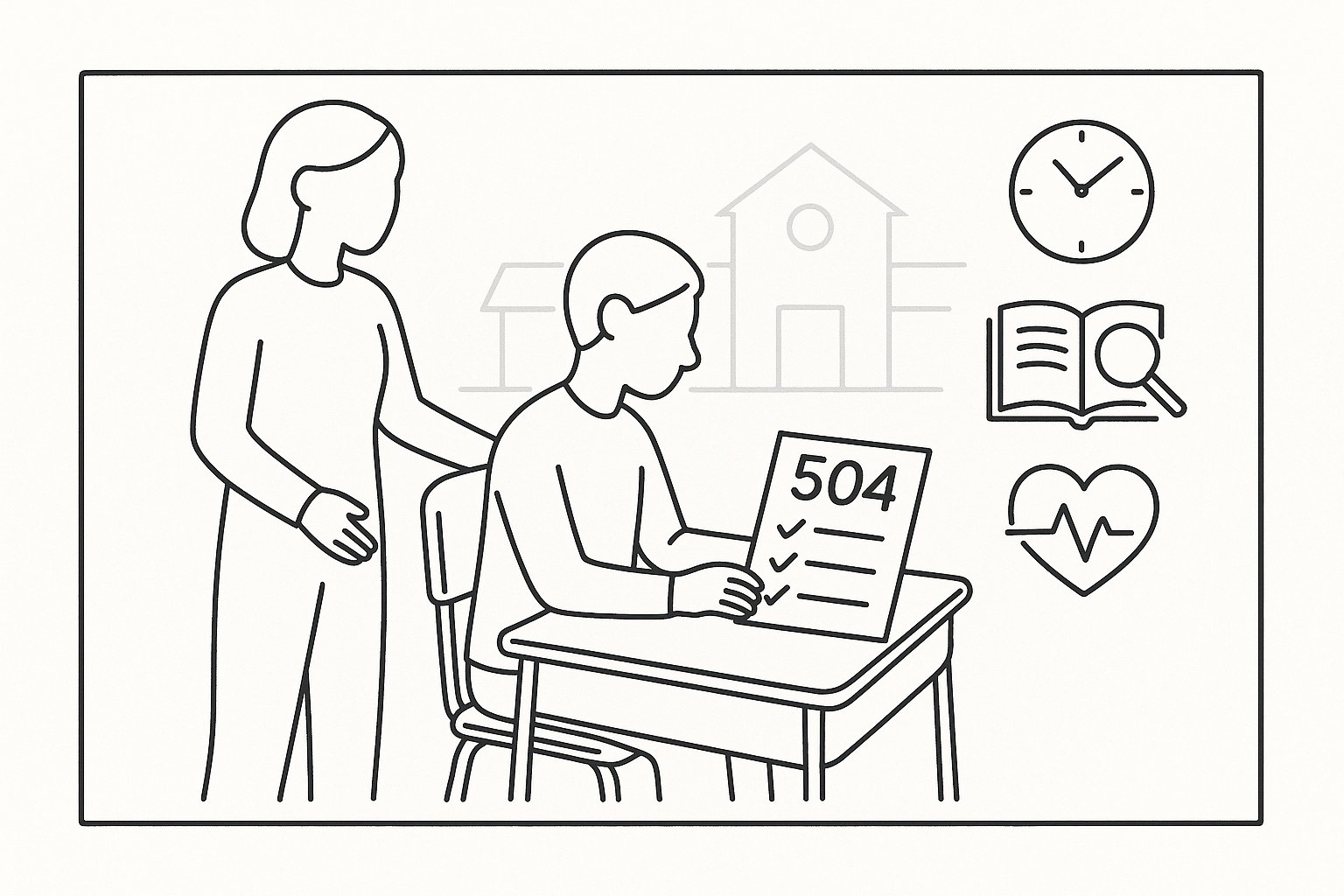
Section overview
A 504 Plan comes from Section 504 of the Rehabilitation Act of 1973, a federal civil-rights law that prohibits disability-based discrimination in programs receiving federal funding, including public and most private K–12 schools. Unlike an Individualized Education Program (IEP), which is part of the Individuals with Disabilities Education Act (IDEA) and focuses on specialized instruction, a 504 Plan focuses on equal access through accommodations and modifications. It’s about removing barriers so the student can participate in the same curriculum and activities as peers.
Who it helps
We see 504 Plans used for a broad range of conditions that substantially limit one or more major life activities: chronic health conditions (like diabetes, asthma, seizure disorders), attention and executive-function challenges (ADHD), temporary disabilities (recovery from major surgery), sensory impairments, mental-health conditions (anxiety, depression), and other medical diagnoses that affect learning or school participation. The key question is functional impact, does the condition materially limit the student’s ability to learn, concentrate, communicate, or access school services?
How 504 differs from IDEA/IEP
It’s important we keep distinctions clear. An IEP provides specially designed instruction and related services when a child meets IDEA’s eligibility categories. A 504 Plan does not grant specially designed instruction but can require accommodations (extended time, preferential seating), related aids, and reasonable modifications to policies. Schools must provide the protections of Section 504 regardless of whether a student qualifies for IDEA services.
How To Request And Develop A 504 Plan In Louisiana
Initiating a request
We recommend starting with the school, usually the classroom teacher, school counselor, or the school’s 504 coordinator. Requests may be verbal, but put it in writing to create a record: describe the medical condition, the ways it affects school functioning, and the accommodations you think will help. If you’re a healthcare professional or employer involved in care, provide a concise medical letter detailing diagnosis, functional limitations, and recommended accommodations.
School evaluation process
After a request, the school must evaluate the student to determine eligibility. Evaluation categories are flexible: medical records, teacher observations, classroom work, standardized test results, and input from parents and medical providers can all factor in. We often advise families to provide current documentation that clearly links diagnosis to school limitations, vague notes are less helpful.
Team development and plan drafting
If the student is found eligible under Section 504, the school’s 504 team, which usually includes the parent, teacher, school nurse, counselor, and a district representative, meets to develop the plan. The plan should be written, individualized, and describe specific accommodations, who is responsible for implementing them, and how they’ll be reviewed. Examples: extended time on tests, modified PE requirements, permission to carry and self-administer medication, or a crisis plan for seizures or severe allergies.
School choice and private schools
Public schools that receive federal funds are covered by Section 504. Private schools that don’t accept federal funds aren’t federally obligated, though state or local laws may apply. Charter schools and magnet programs usually fall under 504, so ask the program’s admissions or compliance officer about their process.
Role of medical documentation and professionals
As healthcare professionals, we encourage detailed, functional documentation. A letter that states limitations (e.g., “student experiences daily concentration loss affecting timed exams”) and suggests precise accommodations helps the school design an effective plan. Schools cannot ask for particular diagnoses beyond what’s necessary to establish functional impairment, but clear medical input speeds resolution and prevents guesswork.
Typical Timeline And Required Documentation
Expected timeline
Timeframes can vary by district. In many Louisiana districts, schools aim to complete evaluations and eligibility determinations within 30 to 60 school days after receiving a formal request or consent for evaluation. But, local workloads, scheduling, and the need for additional assessments can extend timelines. If timing is critical, for example, before an IEP or testing window, notify the school and follow up in writing.
Documentation parents should gather
- Medical reports: current physician, psychiatrist, or therapist notes that state diagnosis and functional impact.
- Medication records: what meds are taken, schedules, side effects relevant to school functioning.
- Teacher input: samples of classwork, behavior logs, and descriptions of observed difficulties.
- Standardized testing and prior evaluations: past psychoeducational or neurological evaluations, if available.
- Attendance and disciplinary records: patterns can support claims of impairment related to health.
Documentation schools typically produce
Schools should provide written notices when an evaluation is proposed, when eligibility is determined, and when a 504 Plan is implemented or revised. We advise keeping copies of all written communications, meeting notes, and the finalized 504 Plan. If the school declines to evaluate or refuses accommodations, request the reason in writing and ask for appeal options.
Practical tips to speed the process
Be organized and proactive. Submit medical letters that explicitly connect limitations to specific school tasks. Attend meetings, bring examples (teacher emails, missed assignments), and suggest reasonable accommodations. If delays persist, escalate to the district 504 coordinator and document all contacts.
Common Classroom, Testing, And School-Life Accommodations
Classroom accommodations
We regularly see these accommodations in Louisiana schools: preferential seating (near teacher or away from distractions), break schedules for medical needs, assignment extensions, reduced assignments load when appropriate, use of assistive technology (text-to-speech, audiobooks), and visual supports or written checklists for multi-step tasks. For students with sensory issues, sensory breaks or access to a quiet area can be lifesaving.
Testing accommodations
Standardized testing and classroom assessments often require modifications: extended time, separate testing locations, small-group administration, use of a reader or scribe, or flexible scheduling (breaks for medication or medical equipment). Schools must ensure accommodations on state assessments where the student’s 504 Plan prescribes them.
Health- and safety-related accommodations
Section 504 often covers medical needs that affect daily school life: permission to carry and administer inhalers or epinephrine, individualized emergency-action plans for seizures or anaphylaxis, catheterization or feeding assistance, or frequent restroom access. For chronic illness, schools may set attendance flexibility, homebound instruction, or blended in-person/remote accommodations during flare-ups.
Extracurriculars and discipline
504 Plans can require reasonable modifications to extracurricular participation and protect students from discriminatory discipline related to their disability. For example, a student with ADHD may receive warnings and behavior supports before suspension for conduct related to the disability. Schools must consider whether misconduct stems from disability before imposing major discipline.
Rights, Dispute Resolution, And Where To Get Help In Louisiana
Parent and student rights under Section 504
Students have a right to an evaluation if they’re suspected of having a disability that substantially limits a major life activity. Parents have a right to notice before the school initiates evaluation or changes services, to participate in meetings, to review records, and to appeal decisions. Schools must provide accommodations without charging families for services that are part of the educational program.
Informal and formal dispute resolution
We encourage trying an informal resolution first: request a meeting, involve the district 504 coordinator, and use mediation services if available. If informal steps fail, parents can file a complaint with their local school system, the Louisiana Department of Education’s Office of Student Support and Accountability, or with the U.S. Department of Education’s Office for Civil Rights (OCR). OCR complaints should be filed within 180 days of the incident, though exceptions apply.
When to seek legal help
If disputes remain unresolved, if a school refuses to provide reasonable accommodations, or if a denial causes significant educational harm, consult an attorney experienced in education and disability law. Because Chelle Law specializes in healthcare employment and professional matters, our role is often in advising healthcare professionals on documentation and in coordinated advocacy: we also refer families to trusted special-education advocates and attorneys when litigation or administrative appeals are necessary. An attorney can help pursue OCR complaints, due-process rights where applicable, and negotiated resolutions.
Local resources and advocacy groups
Louisiana has several advocacy organizations and parent centers that provide guidance: the Louisiana Department of Education website outlines local procedures and contacts: parent training and information centers offer workshops: and local disability advocacy nonprofits can attend meetings with families. Use these resources early, they frequently accelerate understanding and resolution.
Frequently Asked Questions about 504 Plans in Louisiana
What is a 504 Plan in Louisiana and who does it help?
A 504 Plan in Louisiana is a civil-rights protection under Section 504 of the Rehabilitation Act ensuring students with disabilities receive accommodations for equal access to education. It helps students with conditions like ADHD, asthma, diabetes, anxiety, or temporary disabilities that substantially limit major life activities.
How does a 504 Plan differ from an IEP?
Unlike an IEP, which provides specialized instruction under IDEA, a 504 Plan ensures equal access through accommodations and modifications without special instruction. 504 Plans focus on removing barriers so students can participate in the same curriculum as peers, rather than providing specialized teaching.
How do parents request a 504 Plan in Louisiana schools?
Parents should start by contacting the child’s teacher, school counselor, or 504 coordinator, preferably submitting a written request describing the disability, its impact on school, and suggested accommodations. Providing detailed medical documentation linking the condition to school limitations helps the evaluation process.
What accommodations are commonly provided under a 504 Plan?
Common accommodations in Louisiana include extended test time, preferential seating, breaks for medical needs, assistive technology, modified assignments, permission to self-administer medication, and individualized emergency plans for health conditions.
How long does it typically take to develop a 504 Plan in Louisiana?
Timelines vary by district, but schools usually aim to evaluate and determine eligibility within 30 to 60 school days after receiving a formal written request. Factors like workload and additional assessments can affect timing, so parents should follow up proactively.
What should parents do if a school denies or delays a 504 Plan?
Parents can request the denial reason in writing, ask about appeal options, attempt informal resolution meetings with the school or district 504 coordinator, and if unresolved, file complaints with the Louisiana Department of Education or the U.S. Department of Education’s Office for Civil Rights. Consulting an education attorney may be necessary for legal support.