
Last Updated on April 20, 2026 by Jennifer Hanson
Navigating school supports for a child with a disability can feel overwhelming. A 504 plan is a common, and often misunderstood, tool that ensures students with disabilities receive accommodations to access their education. In this guide we explain what a 504 plan covers in Kentucky, who qualifies under federal and state rules, how to request one, and how it differs from an Individualized Education Program (IEP). Our goal is to give parents and school staff clear, practical steps so they can advocate effectively for a student’s rights.
In this guide, What Is A 504 Plan In Kentucky A Practical Guide For Parents And Schools 2026 is explained with clear steps and tips.
Key Takeaways — What Is A 504 Plan In Kentucky A Practical Guide For Parents And Schools 2026
- A 504 plan in Kentucky ensures students with disabilities receive necessary accommodations for equal access to education without altering academic standards.
- Eligibility for a 504 plan is based on having a physical or mental impairment that substantially limits major life activities, including temporary conditions.
- Requesting a 504 plan involves providing documentation of the disability’s impact and working with the school district’s procedures and grievance processes.
- Unlike an IEP, a 504 plan provides accommodations in the general education environment but does not include specialized instruction or goals.
- Parents should keep detailed records of 504 plans, accommodations used, and communications with schools to support effective advocacy and compliance.
- Understanding the differences between 504 plans and IEPs helps parents choose the best support pathway and ensures proper educational access for their child.
What A 504 Plan Covers And How It Differs From General Accommodations
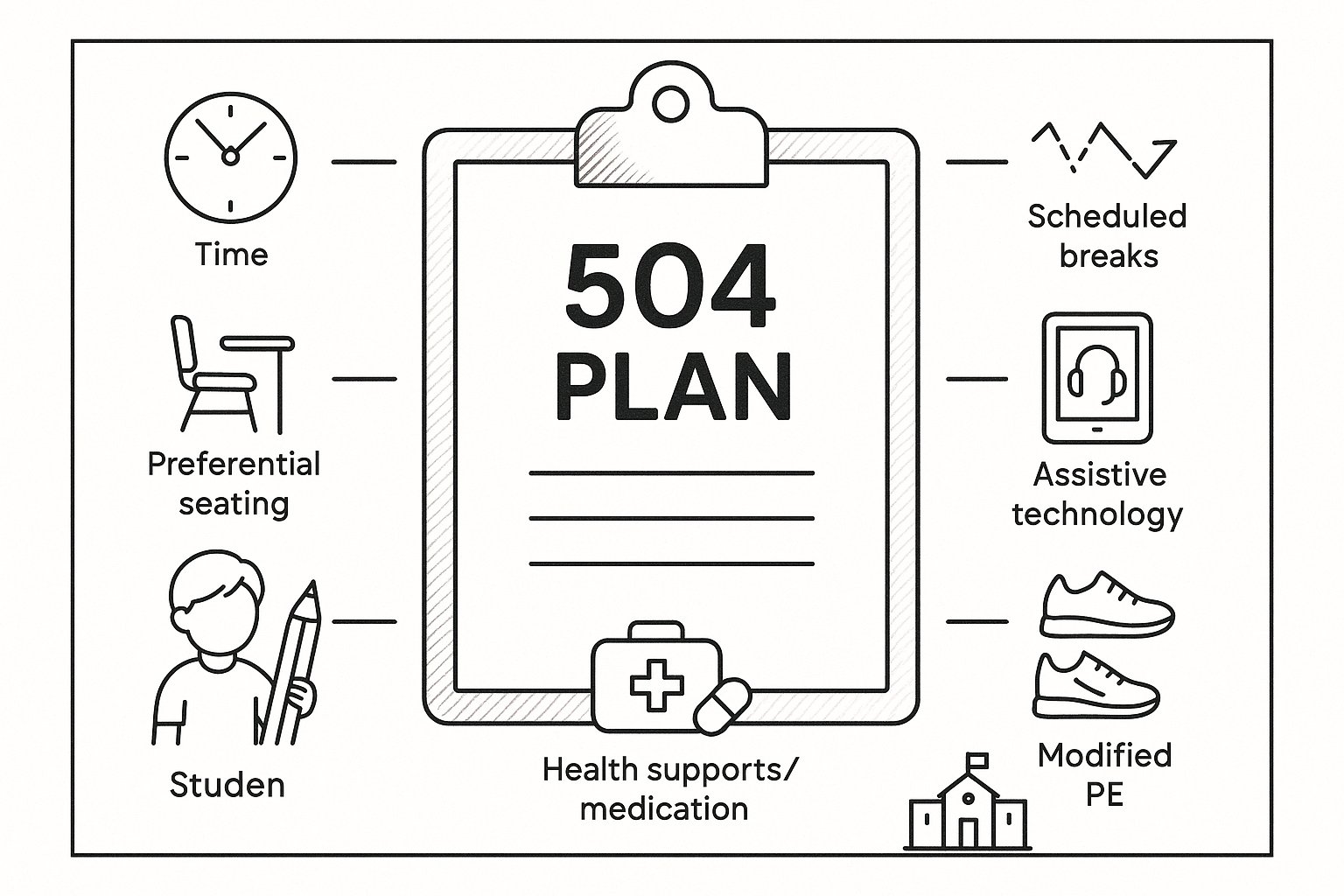
A Section 504 plan stems from Section 504 of the Rehabilitation Act of 1973, a federal civil-rights law that prevents disability-based discrimination in programs receiving federal funds, which includes public schools in Kentucky. A 504 plan documents the specific accommodations, services, and supports a student needs so their disability does not limit access to learning.
Typical accommodations under a 504 plan include longer time on tests, preferential seating, breaks during class, modified physical education requirements, assistive technology, and health-related supports like medication administration or emergency action plans. Importantly, 504 plans are tailored to provide equal access, not to change the academic standards or create specialized instruction (which is the role of an IEP).
How a 504 plan differs from general accommodations: schools sometimes provide ad hoc or informal accommodations (for example, allowing extra time for a test once). Those informal measures aren’t the same as a formal 504 plan. A written 504 plan creates enforceable documentation of accommodations and clarifies responsibilities for educators and parents. It also carries legal protections: if the school fails to carry out an agreed 504 plan, parents can pursue administrative complaints or civil remedies under federal law.
In Kentucky, school districts follow federal law but may also have district-level procedures or forms. We recommend keeping a copy of any 504 plan, noting start dates, and tracking whether accommodations are actually used during school days. That documentation is helpful if adjustments, reviews, or disputes become necessary.
Who Is Eligible For A 504 Plan Under Kentucky And Federal Law
Eligibility under Section 504 applies when a student has a physical or mental impairment that substantially limits one or more major life activities, such as learning, reading, concentrating, walking, or breathing, or the student has a record of such an impairment, or is regarded as having one.
In practice, that covers a broad range of conditions: ADHD, diabetes, asthma, mobility impairments, certain chronic illnesses, mental-health conditions, and other health issues that interfere with school participation. Eligibility doesn’t require the condition to be permanent: a temporary disability that substantially limits a major life activity can qualify.
Kentucky follows federal standards for 504 eligibility. School teams typically consider medical records, teacher observations, academic data, and parent input. Unlike eligibility for special education under the Individuals with Disabilities Education Act (IDEA), which has specific disability categories and requires that the student needs specialized instruction, 504 eligibility focuses on access, whether an impairment substantially limits a major life activity in the school environment.
We encourage parents to document diagnoses, share relevant medical or psychological evaluations with the school, and describe day-to-day impacts. Schools can’t require a particular diagnosis to qualify a student: they must assess functional impact. If a district denies eligibility, parents have the right to appeal through the district’s Section 504 grievance procedures and through federal complaint channels.
How To Request A 504 Plan In Kentucky Schools
Requesting a 504 plan is an achievable step when a student’s health or disability affects their educational access. We’ll walk through the process and explain expectations for the district.
504 Plan Versus IEP: Key Differences Parents Should Know
Parents often confuse a 504 plan with an IEP. Both protect students with disabilities, but they serve different legal frameworks and goals.
Purpose: A 504 plan ensures equal access to education by removing barriers. An IEP, governed by IDEA, provides specially designed instruction and related services to meet a child’s unique educational needs.
Eligibility: 504 eligibility hinges on a substantial limitation of a major life activity. IEP eligibility requires that the student meet one of IDEA’s disability categories and, crucially, need specialized instruction to benefit from education.
Services and documentation: IEPs are typically more comprehensive, they include measurable annual goals, progress reporting, specialized instruction, and related services (speech, occupational therapy, etc.). IEP teams follow stricter procedural safeguards, including prior written notice, consent requirements, and due-process hearing rights. 504 plans are generally less prescriptive but still require written accommodation agreements and procedural protections like grievance procedures and the right to an impartial hearing in many contexts.
Placement: IEPs can result in special education placement or changes to the educational program. 504 plans keep the student in the general education environment but with accommodations.
We suggest parents explore both pathways if a child’s needs are complex. Requesting a 504 evaluation does not prevent you from pursuing an IDEA evaluation, and vice versa. Sometimes a student begins with a 504 plan and later qualifies for special education services when needs change.
Conclusion
A 504 plan is an essential tool to secure equal access for students with disabilities in Kentucky schools. We’ve outlined what 504s cover, who’s eligible, how to request and document the process, and how 504s compare to IEPs. Keep records, communicate clearly with school staff, and escalate thoughtfully if implementation falters. If you need help understanding rights or navigating disputes, consider consulting an education or disability rights attorney, it can make the process far less stressful and more effective.
Frequently Asked Questions About 504 Plans in Kentucky
What is a 504 plan in Kentucky schools?
A 504 plan in Kentucky is a federally protected document that outlines accommodations and supports a student with a disability needs to access their education equally in public schools.
Who qualifies for a 504 plan under Kentucky and federal law?
Students with a physical or mental impairment that substantially limits major life activities like learning or concentrating qualify. This includes conditions like ADHD, asthma, diabetes, or temporary disabilities affecting school access.
How does a 504 plan differ from an Individualized Education Program (IEP)?
A 504 plan provides accommodations to ensure equal access without changing academic standards, while an IEP offers specialized instruction and related services for students who meet specific disability categories under IDEA.
How can parents request a 504 plan in Kentucky schools?
Parents should contact their child’s school to initiate an evaluation, provide medical or psychological documentation, and collaborate with the school team to determine eligibility and appropriate accommodations.
What types of accommodations are typically included in a 504 plan?
Common accommodations include extended test time, preferential seating, class breaks, modified physical education, assistive technology, and health supports like medication administration or emergency plans.
Can a student have both a 504 plan and an IEP?
Yes, a student can start with a 504 plan and later qualify for an IEP if additional specialized instruction is needed. Requesting one does not prevent evaluation or eligibility for the other.