
Last Updated on April 20, 2026 by Jennifer Hanson
Special education teachers play a critical role in ensuring students with disabilities access meaningful learning, supports, and opportunities. In this text we’ll break down what special education teacher responsibilities look like today, from daily classroom work to the legal and administrative duties that often go unseen. Whether you’re exploring the field, working with schools, or advising families, understanding these responsibilities helps us advocate for compliant, effective services.
In this guide, What Special Education Teachers Do Roles Responsibilities and Legal Duties 2026 is explained with clear steps and tips.
Key Takeaways — What Special Education Teachers Do Roles Responsibilities and Legal Duties 2026
- Special education teacher responsibilities include planning and delivering tailored instruction, implementing accommodations, and continuously monitoring student progress to meet diverse needs.
- Developing and monitoring Individualized Education Programs (IEPs) is central, requiring measurable goals, data-driven assessments, and strict legal compliance.
- Effective classroom management combines structured routines, positive behavior supports, and inclusive practices that ensure meaningful participation for students with disabilities.
- Strong communication with families and collaboration with general education teachers and specialists are essential for consistent support and promoting student success.
- Special education teachers must uphold legal and ethical duties, including adhering to IDEA regulations, maintaining confidentiality, and managing administrative tasks that support compliance and student welfare.
Key Day-To-Day Responsibilities Of Special Education Teachers
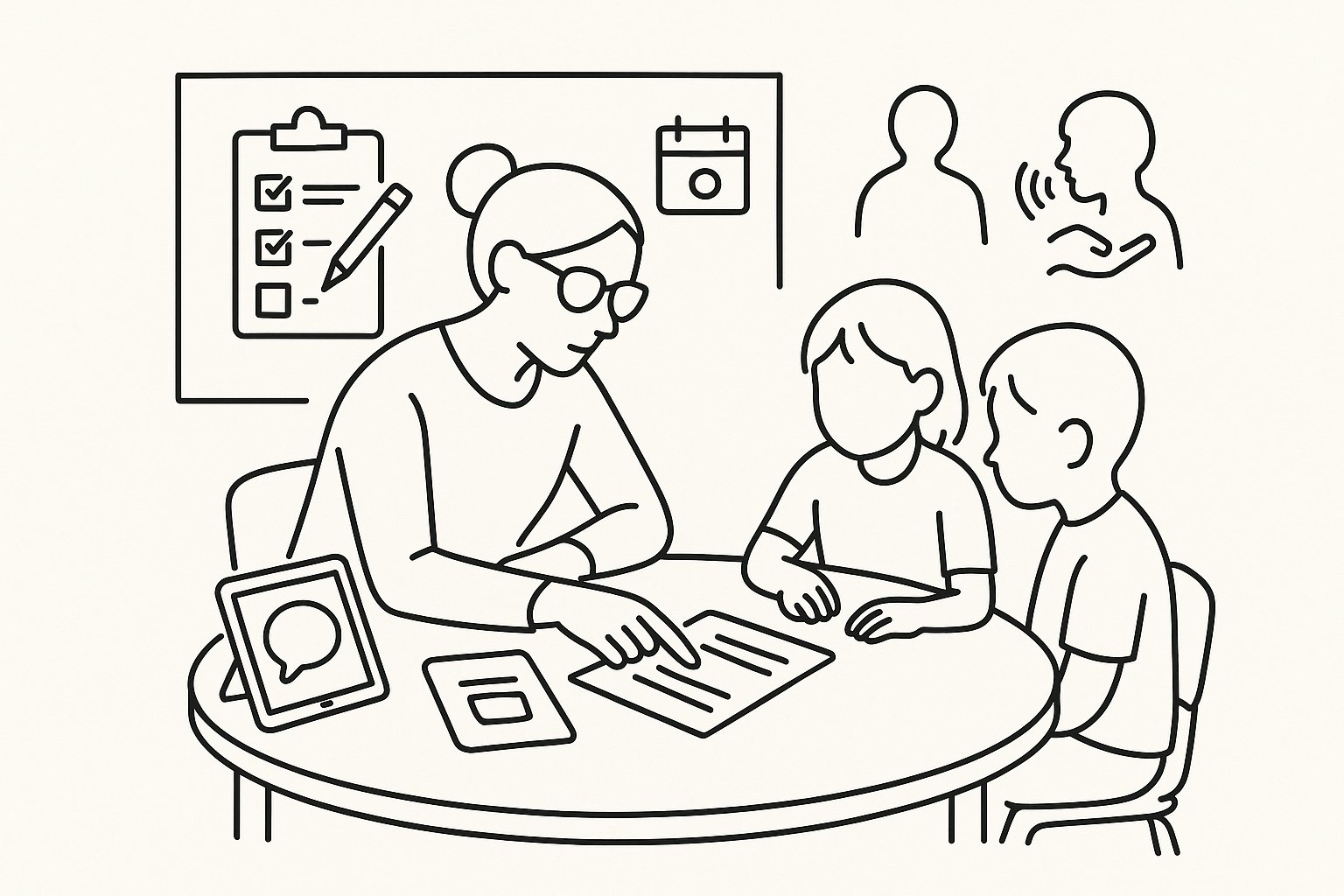
Special education teachers wear many hats every day. On a typical day we plan differentiated lessons, deliver instruction tailored to students’ needs, and coordinate supports that help each child access the curriculum. That includes:
- Adapting general education materials and creating specialized resources so learning objectives are reachable.
- Delivering direct instruction in small groups or one-on-one settings for skills like reading, math, communication, and social development.
- Implementing accommodations and modifications, for example, extended time on tests, simplified language, assistive technology, or step-by-step task breakdowns.
- Monitoring progress through informal checks, work samples, and daily observations so we can respond quickly when students stall.
- Collaborating with paraprofessionals and related-service providers (speech therapists, occupational therapists, behavior specialists) so approaches are consistent across settings.
Beyond instruction, a substantial portion of day-to-day work is communication: we update families, consult with general education teachers, attend planning meetings, and document interventions. Many special education teachers also supervise and mentor classroom aides and coordinate transitions between settings (resource room, integrated classroom, community-based instruction).
Because so much of our work is individualized, strong organizational systems are essential. We manage caseloads that often include a dozen or more students with varying needs, and we balance direct teaching time with paperwork, meetings, and training. It’s a dynamic role that requires instructional skill, patience, and continuous problem solving.
Instructional Planning, Assessment, And IEP Implementation
Instructional planning for students with disabilities is goal-driven and assessment-informed. We start by interpreting students’ present levels of performance, identifying measurable goals, and designing evidence-based strategies to reach them. Our planning routines typically include:
- Conducting formative and summative assessments to establish baselines and measure growth.
- Creating scaffolded lesson plans aligned to IEP goals and state standards, with clear accommodations and progress-monitoring checkpoints.
- Integrating assistive technology and universal design for learning (UDL) principles to make content accessible to multiple learners.
- Adjusting instruction using data: if progress is slow, we reteach with different methods, increase frequency of interventions, or consult specialists for behavior or communication supports.
Assessment is not a one-time event. We use curriculum-based measurements, portfolio reviews, observations across contexts, and standardized testing data where applicable. These data inform parent conferences, IEP revisions, and placement decisions.
Implementing IEPs requires fidelity: we ensure the services, accommodations, and related services listed on a student’s IEP are delivered as written, and we document the frequency and effectiveness of those services. When implementation gaps appear, we initiate problem-solving with the IEP team to preserve legal compliance and educational benefit.
Writing, Reviewing, And Monitoring Individualized Education Programs (IEPs)
The IEP is central to special education practice. Writing strong IEPs means we set measurable annual goals, define short-term benchmarks when needed, and describe how progress will be measured. When we draft or review IEPs we:
- Translate evaluation results into functional, achievable goals focused on academic, social-emotional, and life skills.
- Specify services (special instruction minutes, pull-out vs. push-in models), accommodations (testing, environment), and who will deliver each service.
- Document placement decisions and justify them based on data and least restrictive environment (LRE) principles.
- Establish communication plans to keep families informed and engaged in progress monitoring.
Monitoring IEPs means regular data collection and scheduled reviews. We lead or participate in annual IEP meetings, and we pursue interim meetings when progress is insufficient or when student needs change. Accurate, timely documentation helps protect both student rights and school compliance, a practical necessity given the regulatory environment.
Classroom Management, Inclusive Practices, And Family Communication
Effective classroom management in special education balances structure with flexibility. We create predictable routines, teach expected behaviors explicitly, and use positive behavior supports to reduce disruptions while promoting independence. Key strategies include visual schedules, token economies, task analyses for complex activities, and pre-teaching of social expectations.
Inclusive practices are a priority: we collaborate with general education teachers to co-plan and co-teach when appropriate, ensuring students with disabilities participate meaningfully in grade-level content. Inclusion isn’t just placement: it’s adapting instruction so students can contribute, learn, and be assessed fairly. We advocate for supports, paraprofessional assistance, alternative materials, or adapted assessments, that remove barriers to participation.
Family communication is continuous and reciprocal. We share successes and concerns, provide clear explanations of progress data, and involve families in decision-making. This may look like weekly communication logs, parent-teacher conferences, or quick daily messages for students with behavioral or medical needs. We also partner with families to generalize skills across home and school settings: caregivers’ input is invaluable for setting realistic goals and implementing consistent strategies.
When disputes arise, early, transparent communication often prevents escalation. We document conversations and seek collaborative problem-solving because consistent, respectful family partnerships improve outcomes and reduce legal risk for schools.
Legal, Ethical, And Administrative Duties For Special Education Teachers
Special education is governed by federal and state laws, primarily the Individuals with Disabilities Education Act (IDEA), and teachers must understand legal obligations tied to evaluation, eligibility, IEP development, placement, and procedural safeguards. Our legal and administrative responsibilities include:
- Ensuring procedural timelines are met: evaluations, IEP meetings, and notice requirements have strict deadlines that protect student rights.
- Maintaining accurate records: meeting notices, consent forms, progress reports, and documentation of services are essential for compliance and for defending decisions if disputes occur.
- Upholding confidentiality under FERPA and related privacy laws when handling student records and communications.
- Participating in due process when necessary: we may attend meetings, provide records, or testify about a student’s program and progress.
Ethically, we must prioritize student welfare, avoid conflicts of interest, and provide services based on need rather than convenience. That means advocating for services even when resources are tight and recommending evaluations or placements grounded in data and best practice.
Administratively, special education teachers often contribute to program development, professional development, and policy implementation. We may supervise paraprofessionals, complete Medicaid billing documentation in some districts, and coordinate transition planning for older students moving to postsecondary education or employment.
Given the legal complexities, some educators and districts consult legal counsel, for example, firms experienced in education and employment law like Chelle Law, when navigating contract, discipline, or procedural disputes. Legal guidance can help align school practice with statutory requirements and protect both student rights and staff responsibilities.
Frequently Asked Questions about Special Education Teacher Responsibilities
What are the primary daily responsibilities of a special education teacher?
Special education teachers plan differentiated lessons, deliver tailored instruction, adapt materials, implement accommodations, monitor progress, and collaborate with paraprofessionals and related-service providers to support each student’s unique needs.
How do special education teachers implement and monitor Individualized Education Programs (IEPs)?
They write measurable goals based on evaluations, specify services and accommodations, ensure services are delivered as written, collect progress data regularly, participate in IEP meetings, and adjust plans as needed to meet student needs and maintain legal compliance.
What classroom management strategies do special education teachers use to support inclusive learning?
They balance structure with flexibility using predictable routines, explicit behavior teaching, positive behavior supports, visual schedules, task analyses, and collaboration with general education teachers to adapt instruction for meaningful inclusion.
Why is family communication important in special education, and how is it maintained?
Continuous communication engages families in decision-making, shares progress and concerns, and supports skill generalization across settings. Teachers use logs, conferences, daily messages, and collaborative problem-solving to build respectful partnerships that improve outcomes.
What legal and ethical duties must special education teachers fulfill?
Teachers comply with IDEA and privacy laws by meeting procedural timelines, maintaining accurate records, protecting confidentiality, advocating ethically for needed services, and sometimes consulting legal counsel to ensure compliance and protect student rights.
How do special education teachers use assessments to guide instructional planning?
They conduct formative and summative assessments to establish baselines and monitor growth, create scaffolded lessons aligned to IEP goals, integrate assistive technology, and adjust instruction based on data to address students’ evolving needs.