
Last Updated on October 16, 2026 by Jennifer Hanson
EMH, short for Emotional/Mental Health (sometimes referenced as Emotional or Mental Health needs in educational settings), is a category that shows up in special education eligibility discussions, individualized education programs (IEPs), and placement decisions. For many families and educators, “EMH” feels abstract: is it a diagnosis, a service, or a label? In this guide we break down what EMH means in practice, who qualifies, common challenges students face, effective instructional strategies, how IEPs and placements work, and the legal protections families should know. Our aim is to give clear, usable information you can act on.
In this guide, What Is EMH In Special Education A Practical Guide For Parents And Educators 2026 is explained with clear steps and tips.
Key Takeaways — What Is EMH In Special Education A Practical Guide For Parents And Educators 2026
- EMH in special education refers to emotional or mental health conditions that significantly impact a student’s educational performance, focusing on educational needs rather than specific diagnoses.
- Qualification for EMH requires documenting that emotional or mental health challenges adversely affect learning and that general education interventions have been insufficient.
- Assessment for EMH eligibility uses multiple tools including rating scales, observations, academic tests, and mental health input to build a comprehensive, culturally responsive profile.
- Effective support for students with EMH includes tiered behavioral interventions, trauma-informed practices, academic accommodations, social-emotional learning, and related counseling services.
- Individualized Education Programs (IEPs) under EMH focus on measurable social-emotional and academic goals with regular progress monitoring in the least restrictive environment.
- Families have legal rights in the EMH special education process and should document communications, request specific services, and use advocacy steps including mediation or legal counsel when necessary.
What Is EMH In Special Education? Definition And Key Characteristics
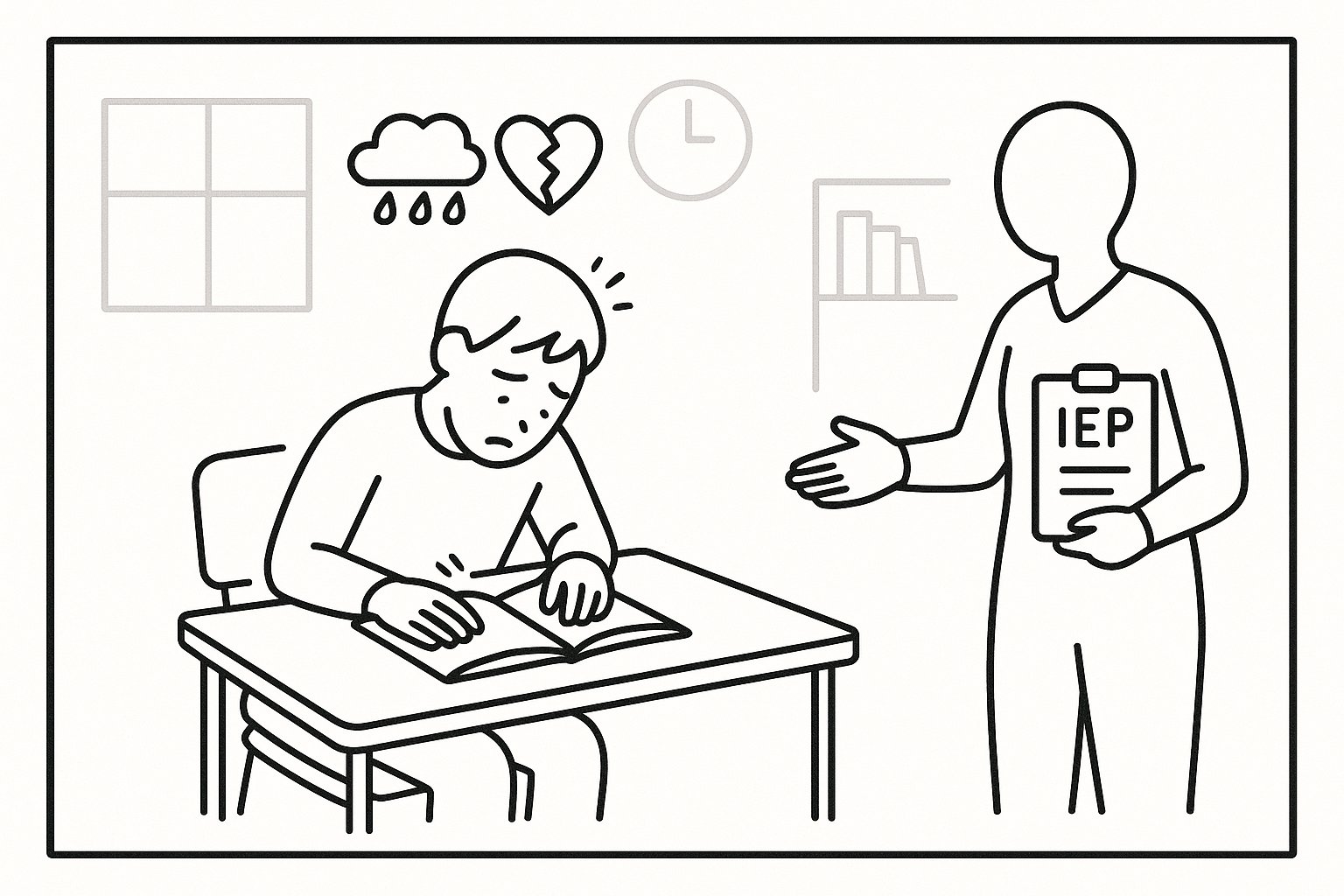
EMH in special education typically refers to students whose emotional or mental health conditions significantly affect their educational performance. That can include chronic anxiety, depression, severe mood disorders, trauma-related disorders, and some behavioral health conditions that interfere with learning. Important clarifications:
- EMH is not a single medical diagnosis: it’s an educational eligibility category. School teams look at how a condition affects access to curriculum and participation.
- The determining factor is educational impact. A student may have a clinical diagnosis but not qualify for EMH if their learning and classroom participation aren’t substantially affected.
- EMH presentations vary widely. Some students struggle primarily with sustained attention and task completion: others display aggressive behavior, withdrawal, or difficulty regulating emotions under stress.
Key characteristics educators and families often see include persistent difficulty managing emotions, frequent absences due to mental health, escalating conflicts with peers or adults, and patterns of declining academic performance tied to emotional states. Recognizing EMH early, and framing it as an educational need rather than a moral failing, helps us design supports that keep students engaged.
Who Qualifies For An EMH Eligibility Determination
Qualification for an EMH eligibility determination begins with concern from teachers, parents, or other professionals. The special education team, typically including parents, teachers, school psychologists, and sometimes mental health providers, gathers evidence to decide whether emotional/mental health needs adversely affect educational performance.
We look for patterns: is the student’s behavior consistent across settings, is there a clear link between emotional symptoms and academic decline, and are interventions in general education insufficient? To qualify, the team must document that the student’s emotional or mental health condition results in an educational need that can be addressed through special education services. Schools also consider whether alternative supports (like counseling or Section 504 plans) have been tried and whether those supports were inadequate.
Because eligibility criteria and terminology differ among states and districts, families should ask their district for its policy documents and criteria. That transparency helps avoid confusion and positions us to advocate effectively when additional evaluation or services are needed.
Assessment Process And Common Evaluation Tools
Assessments for EMH eligibility combine multiple data sources. We aim to build a comprehensive picture of behavior, emotional functioning, and academic impact. Common components include:
- Teacher and parent rating scales (e.g., BASC-3, Conners Rating Scales) to quantify symptoms across settings.
- Classroom observations to document frequency, intensity, and duration of behaviors and their impact on instruction.
- Academic testing to determine whether emotional issues are causing performance gaps (curriculum-based measures, standardized achievement tests).
- Mental health records or input from outside therapists, when available and with consent.
- Social-emotional assessments and interviews, which can include structured tools or school psychologist interviews.
We must ensure evaluations are nondiscriminatory and culturally responsive. That means avoiding single-source judgments and interpreting behaviors in context: trauma, language differences, or unmet health needs can mimic EMH. The team compiles this evidence into an eligibility meeting where we decide whether special education services under EMH are appropriate.
Typical Academic, Behavioral, And Social-Emotional Challenges Associated With EMH
Students with EMH often show a mix of academic, behavioral, and social struggles that feed on each other. Academically, we commonly see inconsistent performance: strong skills one week, marked declines the next when emotional regulation falters. Difficulties with sustained attention, organization, and completion of tasks are frequent.
Behavioral challenges range from externalizing behaviors (aggression, defiance, impulsivity) to internalizing patterns (withdrawal, chronic absenteeism, refusal to participate). These behaviors interrupt learning and peer relationships and can prompt punitive responses unless we reframe them as signals of unmet needs.
Social-emotional challenges include trouble forming trusting relationships with peers and adults, limited coping strategies, heightened reactivity to stress, and difficulty understanding social cues. Those challenges can lead to isolation or conflict, compounding anxiety and depressive symptoms. Recognizing the interplay among academic strain, behavior, and emotional health helps us target interventions holistically.
Instructional Strategies, Accommodations, And Related Services That Help Students With EMH
Supporting students with EMH combines classroom strategies, targeted interventions, and related services. Practical, evidence-informed approaches include:
- Tiered behavioral supports: Positive Behavioral Interventions and Supports (PBIS) adapted for emotional needs, with individualized behavior intervention plans (BIPs) when needed.
- Trauma-informed practices: predictable routines, sensory regulation options, and staff trained to de-escalate rather than punish.
- Academic accommodations: reduced task length, chunked assignments, extra time, and preferential seating to reduce distractions.
- Social-emotional learning (SEL): explicit instruction in coping skills, problem-solving, and emotion regulation built into the school day.
- Related services: school-based counseling, school psychologist sessions, and collaboration with outside mental health providers. For some students, coordination with community providers and family supports is essential.
We also prioritize classroom-level adjustments that signal support rather than stigma. Simple shifts, like pre-teaching material, offering movement breaks, or allowing a cool-down space, can keep students in class and learning. The goal is to reduce barriers while teaching skills that generalize across settings.
IEP Development, Placement Options, And Progress Monitoring For EMH
When a student qualifies for special education under EMH, the IEP becomes the roadmap. In developing goals and services, we focus on measurable social-emotional and academic outcomes. Good IEPs specify:
- Targeted, observable goals (e.g., “Will use a self-monitoring checklist to complete 80% of independent tasks over four consecutive weeks”).
- Accommodations and specialized instruction tied to goals (e.g., daily check-ins, modified assignments).
- Related services frequency and setting (e.g., 30 minutes/week of individual counseling: group social skills instruction).
- Behavioral supports and crisis plans, when appropriate.
Placement choices range from general education with supports to specialized classrooms or therapeutic programs. We prefer the least restrictive environment that meets the student’s needs: that often means maximizing time in general education with embedded supports. Progress monitoring is critical: frequent, objective data collection on academic and behavioral goals (weekly probes, session notes, rating scale changes) guides adjustments. If progress stalls, the team reconvenes to tweak interventions or consider different placements.
Legal Rights, Procedural Safeguards, And Practical Advocacy Tips For Families
Families have specific rights under special education law: timely evaluations, informed consent, participation in IEP meetings, access to records, and procedural safeguards including mediation and due process. We recommend families take practical steps to protect their child’s rights:
- Document everything: emails, meeting notes, incident reports, and copies of evaluations. Dated records are powerful.
- Ask for clear, measurable IEP goals and a defined plan for monitoring progress. Vague language weakens accountability.
- Request specific services in writing (counseling minutes, staffing ratios, or consult time) rather than broad descriptions.
- Use independent evaluations when needed: districts usually must consider them.
- Know timelines: respond to meeting notices, request assessments promptly, and track when the district must act.
If disputes arise, start with the school’s problem-solving process, escalate to formal complaints, mediation, or due process if necessary. Legal counsel can be helpful when rights are in jeopardy or when placement decisions threaten a student’s education. While Chelle Law’s primary focus is healthcare employment law, families sometimes benefit from legal professionals experienced in administrative advocacy: we encourage parents to consult local special education attorneys or advocates who understand state procedures. Above all, strong advocacy combines clear documentation, collaborative communication, and persistence.
Frequently Asked Questions About EMH in Special Education
What is EMH in special education?
EMH stands for Emotional/Mental Health and is an educational eligibility category for students whose emotional or mental health conditions significantly affect their learning and classroom participation.
Who qualifies for EMH eligibility in special education?
Students qualify for EMH if their emotional or mental health needs adversely impact educational performance, after the special education team reviews evidence from multiple sources and finds that general education interventions are inadequate.
What types of academic and behavioral challenges are common in students with EMH?
Students with EMH often face variable academic performance, difficulties with attention and task completion, behavioral issues like aggression or withdrawal, and social-emotional struggles such as trouble forming relationships and managing stress.
What instructional strategies help students with EMH succeed in school?
Effective strategies include positive behavioral supports, trauma-informed practices, academic accommodations like chunked assignments and extra time, social-emotional learning, and access to related services such as counseling and school psychologist support.
How are IEPs tailored for students with EMH?
IEPs for EMH focus on measurable social-emotional and academic goals, specify accommodations, related services like counseling frequency, behavioral supports, and outline progress monitoring with data to adjust supports as needed.
What legal rights do families have regarding EMH eligibility and services?
Families have rights to timely evaluations, informed consent, participation in IEP decisions, access to records, and procedural safeguards. Documenting communications and requesting clear, measurable goals strengthens advocacy efforts.