
Last Updated on April 20, 2026 by Jennifer Hanson
When a student needs school-based accommodations for a disability, timing matters as much as the accommodations themselves. We’ll walk through the 504 Plan timeline so parents and educators understand how long each step typically takes, what legal safeguards apply, and where delays most often occur. Whether you’re initiating a referral, preparing documentation, or tracking implementation, this guide gives a clear, practical roadmap you can use to keep the process moving and protect a student’s rights.
In this guide, What Is the 504 Plan Timeline A Practical Guide for Parents and Educators 2026 is explained with clear steps and tips.
Key Takeaways — What Is the 504 Plan Timeline A Practical Guide for Parents and Educators 2026
- The 504 Plan timeline begins with a referral and typically moves through evaluation, eligibility determination, plan development, and implementation within weeks.
- Section 504 requires schools to provide accommodations promptly to ensure students with disabilities access education equally, with no unnecessary delays.
- Parents should track all steps carefully, including referral dates, evaluations, meetings, and implementation evidence, to protect the student’s rights.
- If delays or missed accommodations occur beyond two weeks, parents should escalate the issue to the 504 coordinator and consider filing formal complaints.
- Legal safeguards under Section 504 enable parents to pursue timely resolution through complaints to state agencies or the U.S. Office for Civil Rights.
- Clear communication, documentation, and proactive follow-up are essential to keep the 504 Plan timeline on track and ensure effective accommodation delivery.
Quick Overview: What Section 504 Covers And Who Qualifies
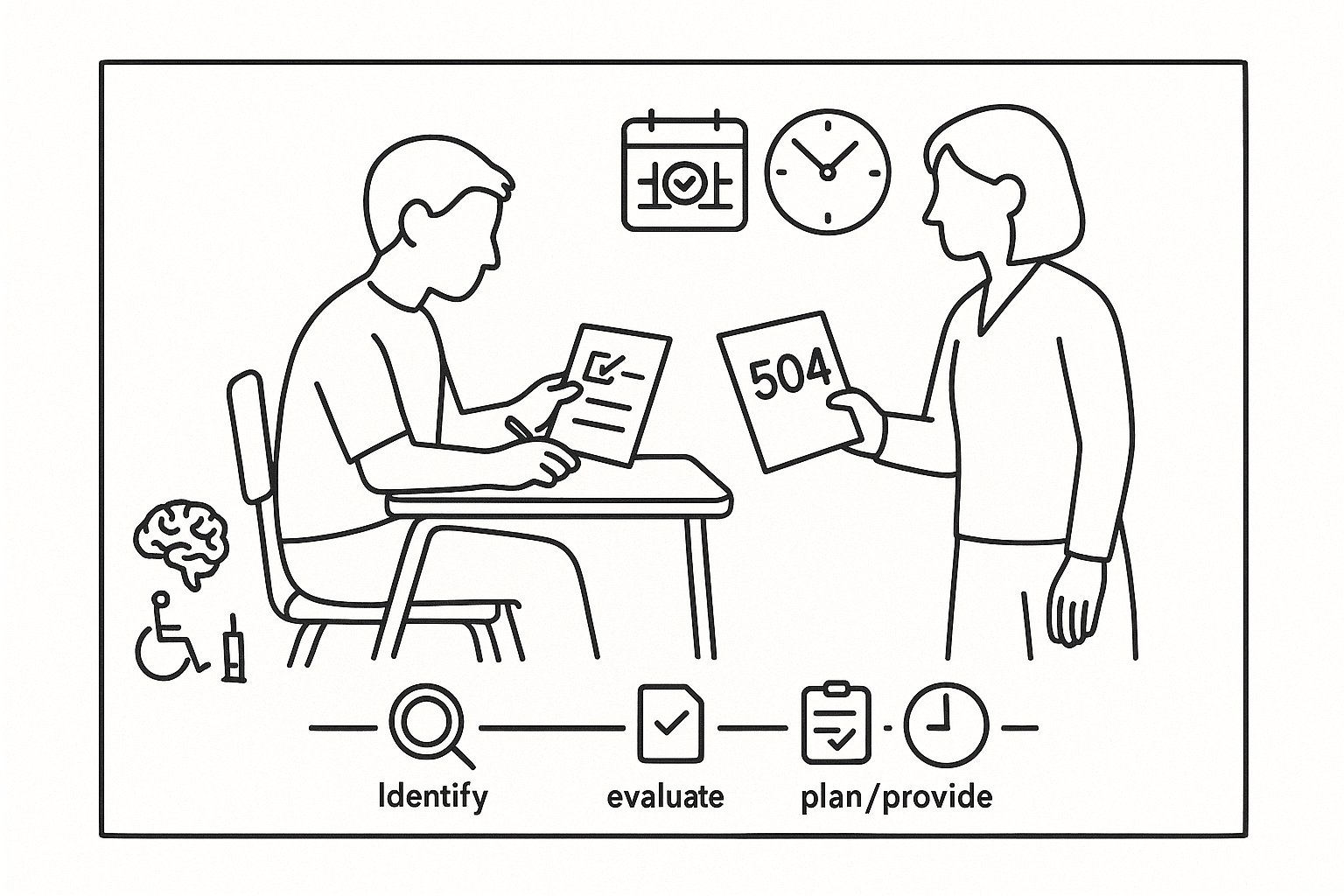
Section 504 of the Rehabilitation Act is a civil-rights law that prohibits disability-based discrimination in programs that receive federal funding, including public schools. In plain terms, Section 504 requires schools to provide reasonable accommodations and services that allow students with disabilities to access the educational environment on equal terms with peers. A student qualifies if they have a physical or mental impairment that substantially limits one or more major life activities, think learning, reading, concentrating, walking, or even major bodily functions.
Common examples include students with ADHD, diabetes, severe allergies, mobility impairments, chronic medical conditions, or certain mental-health diagnoses. Unlike an Individualized Education Program (IEP) under IDEA, a 504 Plan does not require that a student need special education: rather, it ensures access through accommodations (preferential seating, extended time, medical plans, assistive tech, etc.).
We emphasize this because the timeline for a 504 Plan is driven by assessment and documentation of that substantial limitation. Schools must identify, evaluate, and provide accommodations but have different internal procedures and titles for the same steps. That variability is why understanding typical timeframes and legal expectations is crucial, it helps parents push for timely action and helps educators set realistic schedules while staying compliant.
Step‑By‑Step 504 Plan Timeline: From Referral To Implementation
Referral/Identification (Day 0–7): A 504 process usually starts with a referral. That can come from a parent, teacher, physician, or the student. We recommend making referrals in writing and keeping a copy. Many districts acknowledge receipt within a week.
Evaluation (2–30 days after referral): Once referred, the school will determine whether an evaluation is needed. This can include review of medical records, teacher observations, classroom work, and standardized data. If testing or outside medical information is required, gathering documents may add time. Typical internal evaluations are completed in 10–30 school days, though some districts act faster.
Eligibility Determination (1–10 days after evaluation): A 504 team, often including parents, the school’s 504 coordinator, at least one teacher, and relevant specialists, meets to decide eligibility. We encourage parents to attend and bring medical reports or detailed teacher notes. If the team determines the student is substantially limited in a major life activity, the student is eligible.
Plan Development (1–14 days after eligibility): If eligible, the team drafts a 504 Plan specifying accommodations, responsible staff, monitoring methods, and review dates. Plans should be clear and practical: vague language causes implementation gaps. We suggest insisting on written details: who will provide the accommodation, how often, and what documentation will show it’s working.
Implementation (1–14 days after plan finalization): Schools are required to put accommodations into effect promptly. “Promptly” is not precisely defined federally, but most districts carry out within a few school days to two weeks. If related services require training or scheduling changes, this may extend slightly, but parents should expect near-immediate action for basic academic and health accommodations.
Monitoring and Annual Review (Ongoing: formal review annually): The plan should include monitoring procedures and an annual review date. Schools often use shorter check-ins (30–90 days) to assess effectiveness and make adjustments. If a student’s needs change, either side can request a re-evaluation at any time.
Key Deadlines, Typical Timeframes, And Legal Requirements
There isn’t a single national clock for every step of a 504 Plan like there is under IDEA for special education, but there are enforceable expectations and legal protections we must keep in mind.
No-Fault Timeliness Expectation: Schools that receive federal funds are required to identify and evaluate students who may need accommodations “without unnecessary delay.” Courts interpret that to mean prompt action based on reasonable parental requests and available evidence. If a school delays unreasonably, parents can file a complaint with their state education agency or the U.S. Department of Education’s Office for Civil Rights (OCR).
Document Retention and Notices: Schools must provide parents with notices about evaluations and decisions, and they must keep records of referrals, evaluations, meeting notes, and plans. We advise parents to request copies after each major step, it helps if disputes arise.
Timeline Triggers to Watch: Certain actions often trigger faster timelines, for instance, when a student’s medical condition requires an immediate health plan or life-saving accommodation (e.g., allergy or seizure protocols). In those cases, temporary accommodations should be implemented right away while a formal plan is developed.
Due Process and Complaints: If disagreements persist, parents may file a Section 504 complaint with OCR, request an internal grievance hearing if the district provides one, or pursue state-level remedies. Unlike IDEA, Section 504 remedies vary by jurisdiction, so timelines for appeals differ. We recommend prompt documentation and, if needed, legal counsel to preserve rights and expedite resolution.
What Parents, Guardians, And Schools Should Track During The Process
A few simple records make the 504 timeline far easier to manage and defend if there’s a disagreement.
Essential items to track:
- Referral date and method (email, letter, in-person meeting). Keep copies.
- Dates of all evaluations, who conducted them, and copies of the reports.
- Meeting invitations, attendance lists, and meeting notes from eligibility and plan-development sessions.
- The final 504 Plan, with signatures (if applicable), start date, and specific accommodation details.
- Implementation evidence: teacher notes, assignment records showing accommodations were used, clinician notes for health-related supports, and communication logs.
- Follow-up check-ins and progress-monitoring notes, including dates for any proposed changes.
Practical tips we use and recommend: Always follow up verbal conversations with a concise email that recaps what was discussed and any agreed next steps, this creates a clear paper trail. If the school promises to carry out accommodations by a certain date, ask that promise be added to the plan or documented in an email. If delays happen, request written reasons and an expected timeline for resolution.
When to escalate: If you see repeated missed implementations, unexplained delays beyond two weeks for basic accommodations, or safety-related gaps (medication administration, emergency plans), escalate to the district’s 504 coordinator and file a written complaint. Keep copies of every correspondence. If necessary, consult with an attorney experienced in education law to discuss filing an OCR complaint or other remedies: legal counsel can help compress timelines where rights are at stake.
Conclusion
Understanding the 504 Plan timeline helps families and schools move efficiently from concern to accommodation. We encourage clear written referrals, attentive tracking of evaluation and meeting dates, and prompt follow-up when implementation lags. If disputes arise, timely documentation and knowledge of complaint options preserve rights and often speed resolution. When in doubt, reach out to the district’s 504 coordinator or consult counsel, being proactive is the single best way to keep the timeline on track.
Common Questions About the 504 Plan Timeline
What is the typical timeline for a 504 Plan from referral to implementation?
The 504 Plan process usually starts with a referral within 7 days, evaluation in 2–30 days, eligibility determination in 1–10 days, plan development in 1–14 days, and implementation within 1–14 days after finalization, totaling about 1 to 3 months for full setup.
Who qualifies for a 504 Plan under Section 504?
Students with a physical or mental impairment that substantially limits major life activities like learning, reading, or concentrating qualify, including conditions like ADHD, diabetes, severe allergies, or mobility impairments, ensuring they receive accommodations for equal educational access.
How quickly must schools implement accommodations after a 504 Plan is finalized?
Schools are required to implement accommodations promptly, typically within a few school days to two weeks, with faster action for urgent health-related needs, although exact timing varies by district policies and complexity of accommodations.
What legal rights do parents have if there are delays in the 504 Plan process?
Parents can file complaints with their state education agency or the U.S. Department of Education’s Office for Civil Rights if schools delay unreasonably, request grievance hearings if available, and seek legal counsel to protect their child’s rights and ensure timely accommodations.
How can parents and schools track the 504 Plan process effectively?
By keeping detailed records of referrals, evaluation dates and reports, meeting notes, the finalized plan with accommodations, evidence of implementation, and progress monitoring, and by following up verbal conversations with written emails to create a clear paper trail.
Can a 504 Plan be reviewed or changed after implementation?
Yes, the 504 Plan includes monitoring and an annual formal review, with shorter check-ins every 30–90 days; either parents or schools can request re-evaluation and adjustments anytime if the student’s needs change or accommodations are ineffective.