
Last Updated on October 16, 2026 by Jennifer Hanson
When a student’s behavior interferes with learning, a Behavior Intervention Plan (BIP) turns concern into a clear, testable plan. We wrote this guide to demystify what a BIP is, show a realistic example you can adapt, and explain how families and school teams put one into practice. Whether you’re a parent, special education teacher, or school administrator, we’ll walk through the essential elements, a sample template you can use, and the monitoring steps that keep a BIP effective and legally sound.
In this guide, What Is a Behavior Intervention Plan A Practical Example and How It Works 2026 Guide is explained with clear steps and tips.
Key Takeaways — What Is a Behavior Intervention Plan A Practical Example and How It Works 2026 Guide
- A Behavior Intervention Plan (BIP) is a data-driven, personalized strategy designed to reduce challenging behaviors and teach replacement skills, crucial for supporting students with disabilities.
- Effective BIPs include clear problem statements, functional behavioral hypotheses, specific interventions tailored to the behavior’s cause, and measurable data collection plans.
- Implementation fidelity and collaboration among families and school teams ensure consistent application of the BIP and promote student progress.
- Regular review meetings and decision rules based on data guide adjustments to the BIP, maintaining its effectiveness and legal compliance.
- Providing training to staff and communicating regularly with families improves understanding and support for the BIP’s goals, enhancing outcomes for the student.
What Is A Behavior Intervention Plan (BIP) And Why It Matters In Special Education
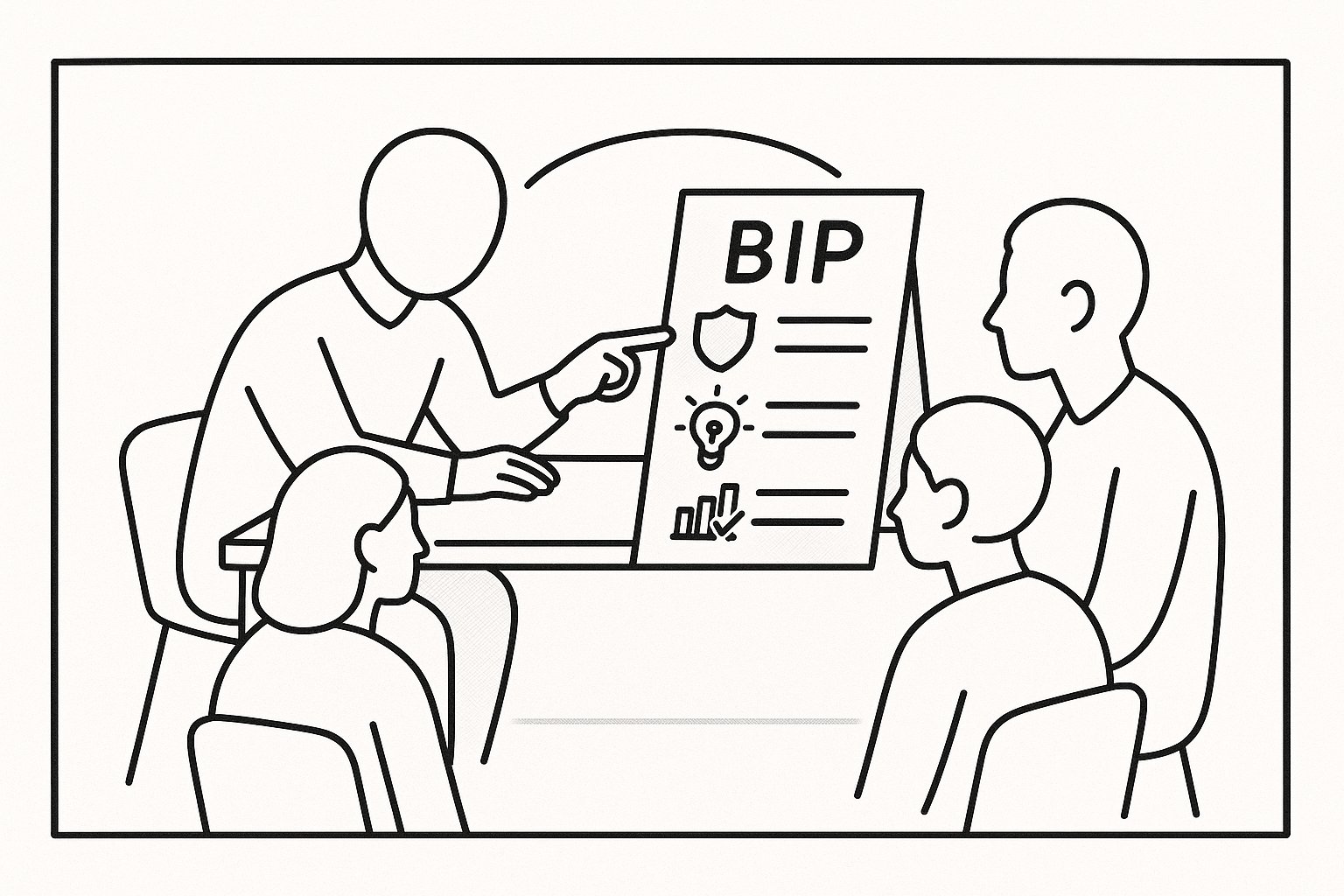
A Behavior Intervention Plan (BIP) is a written strategy designed to reduce challenging behaviors and teach replacement skills. It’s most commonly developed for students with disabilities who qualify for special education under IDEA (Individuals with Disabilities Education Act) after a Functional Behavioral Assessment (FBA) identifies the function of the behavior. We think of the BIP as the bridge between understanding why a behavior happens and making practical classroom changes that support learning.
Why it matters: a well-crafted BIP protects a student’s right to a Free Appropriate Public Education (FAPE) by ensuring behavior supports are proactive, individualized, and data-driven. For families, it provides transparency and measurable goals. For school teams, it organizes responsibilities, consistent interventions, and data collection so progress (or lack of it) is visible. A poor or vague BIP, by contrast, leads to inconsistent implementation, frustration, and possible disputes that can escalate to formal complaints or legal action.
Key takeaways about purpose:
- Prevent harm and reduce classroom disruption while teaching alternative skills.
- Ensure interventions are tied directly to the hypothesized cause of the behavior (the function).
- Provide measurable objectives that guide reviews and decision-making.
In short: a BIP isn’t punishment. It’s a structured plan that aligns supports, staff, and family around clear, data-based strategies to help a student succeed.
Key Elements Of An Effective BIP And How They Work In Practice
An effective BIP contains several core elements that translate assessment into action. Below we list them and show how each one functions in the classroom.
- Clear problem statements: Describe the behavior objectively (what, where, when, and how often). Good examples avoid judgmental language: they focus on observable actions. For instance: “Student leaves seat and shouts during math instruction, occurring 3–5 times per 30-minute lesson.”
- Functional hypothesis: State why the behavior occurs, what the student gains or avoids (attention, escape, sensory input, or tangibles). The hypothesis directs the intervention. If shouting gains adult attention, interventions aim to provide attention for appropriate alternatives and minimize reinforcement for shouting.
- Specific interventions: Interventions should be evidence-based and matched to the function. This can include antecedent strategies (changing the environment), teaching replacement skills (requesting breaks or help), and consequence strategies (consistent responses that don’t inadvertently reinforce problem behavior).
- Skills teaching: Behavioral change requires teaching alternatives. For a student who shouts for attention, we might teach an appropriate signal, role-play requests, and reinforce use of the new skill.
- Data collection plan: Decide what to measure (frequency, duration, latency), who collects data, and how often. Frequent, consistent measurement is how we know whether the plan is working.
- Implementation fidelity and team roles: Document who will carry out each component (teacher, paraeducator, school psychologist), necessary training, and how the team will ensure consistency across settings.
- Safety and crisis protocols: If behaviors pose a safety risk, include de-escalation steps and emergency procedures that align with district policy and state law.
- Review schedule and decision rules: Establish timelines for review (e.g., weekly for 4–6 weeks, then monthly) and clear criteria for making changes (e.g., 50% reduction in target behavior).
How these elements work together: The FBA gives us the hypothesis: the interventions address the antecedent and teach alternatives: data tells us if the interventions are effective: fidelity checks make sure they’re implemented: and reviews let us refine or step up supports. This cycle makes a BIP a living document rather than a one-time form.
Sample BIP Template: Problem Statement, Functional Hypothesis, Interventions, And Data Plan
Below is a concise, practical BIP example we can adapt to many situations. We include specific responsibilities and a simple data plan so teams can put it into action immediately.
Student: A.J. (3rd grade)
Target behavior (observable): Leaves seat without permission and yells during small-group math instruction. Average 4 occurrences per 30-minute session over last 2 weeks.
Functional hypothesis: A.J. leaves seat and yells to gain peer/adult attention and to escape perceived difficulty with the math task.
Antecedent strategies (preventive):
- Seat A.J. near teacher and a positive peer model: provide visual schedule of math tasks.
- Pre-teach and preview math vocabulary and the first problem before group begins.
- Use task chunking with brief, predictable breaks (2–3 minutes) after 8–10 minutes of work.
Teaching (replacement) strategies:
- Teach A.J. a discrete “help card” signal to request adult help without leaving the seat.
- Teach a quick coping strategy (deep breath count to 5) and practice with role-play twice daily during practice time.
- Teach self-monitoring: A.J. will use a 5-point checklist to rate effort and ask for breaks when at 2 or below.
Consequence strategies (responses to behavior):
- When A.J. uses the help card appropriately: immediate positive, specific praise and a token toward a reinforcer.
- If A.J. leaves seat/yells: neutral redirection to seat, prompt to use help card: do not provide attention for yelling. If behavior persists, offer a brief, structured break after completing a short task.
Reinforcement system:
- Daily token system: 1 token for each 10-minute interval without target behavior, plus bonus token for using help card. Tokens exchangeable for a preferred activity at 10 tokens.
Data collection plan:
- Measure frequency of leaving seat and yelling per 30-minute math session. Paraeducator collects data each session on a simple tally sheet.
- Weekly summaries compiled by special education teacher and reviewed at weekly team check-in.
Implementation fidelity:
- Teacher and paraeducator will receive a 30-minute training on the BIP and practice role-play scenarios before implementation.
- Fidelity checklist completed twice weekly by school psychologist for first month, then weekly for two months.
Decision rules and review timeline:
- Review weekly for 6 weeks. If target behavior decreases ≥50% and replacement skills increase, continue plan and fade prompts. If no improvement after 6 weeks, reconvene for a functional reassessment and consider intensified supports (e.g., small-group instruction or counseling).
Notes on documentation and parental involvement:
- Provide family with a one-page summary of the plan, home strategies, and contact for weekly progress notes. Consistent home-school messaging improves generalization.
This template shows the level of specificity we expect in an actionable BIP: observable definitions, function-based interventions, clear data rules, and named implementers.
How To Implement, Monitor, And Review A BIP With Families And School Teams
Implementation is where most BIPs succeed or fail. We need strong communication, clear roles, and a disciplined review process.
Step 1, Launch with a team meeting: Before rolling out the BIP, meet with the family and all school staff who interact with the student. Walk through each component, demonstrate replacement skill teaching, and provide a one-page cheat sheet for daily use. This shared understanding reduces drift in practice.
Step 2, Assign responsibilities: List who does what daily (e.g., teacher collects session tallies, para provides prompts, counselor teaches coping skills). Include timelines for training and fidelity checks.
Step 3, Collect consistent data: Use simple, consistent measures (tally, duration, or interval sampling) and limit the number of variables so data are usable. We recommend a single point person to compile weekly summaries and flag trends early.
Step 4, Communicate with families regularly: Short weekly notes (email or phone) that report successes and challenges build trust and invite family strategies that support school goals. If the family has behavioral supports at home, integrate compatible contingencies.
Step 5, Review meetings with decision rules: Hold formal reviews per the BIP timeframe (often weekly at first). Use decision rules written in the plan (e.g., 50% reduction in 6 weeks) to guide next steps. If progress stalls, consider a reconvened FBA, additional training, or supplemental services.
Step 6, Document everything: Maintain meeting minutes, training logs, fidelity checklists, and data summaries in the student’s file. Documentation protects student rights and supports transparency if disagreements escalate to formal disputes.
Legal and ethical considerations: Teams must ensure interventions comply with district policy, state law, and IDEA protections. Restrictive procedures (seclusion, restraint) require specific authorization and documentation: avoid them unless safety necessitates and proper protocols are followed. When in doubt, consult district behavioral specialists or legal counsel to ensure compliance.
Sustaining gains: As behaviors decrease and skills generalize, create a fading plan for supports and a plan for booster sessions. Successful transition planning ensures that skills hold up across settings and grade levels.
Conclusion
A BIP turns assessment into actionable supports: a clear problem definition, a function-based hypothesis, targeted teaching, consistent consequences, and a disciplined data review. When families and school teams collaborate, carry out with fidelity, and document progress, BIPs help students learn safer, more effective ways to meet their needs. If questions arise about interventions, documentation, or legal compliance, it’s wise to consult district specialists or legal counsel to protect the student’s rights while maximizing learning outcomes.
Frequently Asked Questions About Behavior Intervention Plans
What is a Behavior Intervention Plan (BIP) and why is it important in special education?
A Behavior Intervention Plan (BIP) is a written strategy designed to reduce challenging behaviors and teach replacement skills for students with disabilities. It ensures behavior supports are proactive, individualized, data-driven, and protects the student’s right to a Free Appropriate Public Education (FAPE).
What are the key elements included in an effective Behavior Intervention Plan?
An effective BIP includes clear problem statements, a functional hypothesis explaining why the behavior occurs, evidence-based specific interventions, teaching replacement skills, a data collection plan, implementation fidelity with assigned roles, safety protocols, and a review schedule with decision-making criteria.
Can you provide an example of interventions used in a Behavior Intervention Plan?
For a student who leaves their seat and yells for attention, interventions may include seating the student near the teacher, pre-teaching tasks, using a discrete help signal, teaching coping strategies like deep breathing, and a reinforcement system with tokens for positive behaviors.
How should a Behavior Intervention Plan be implemented and monitored with families and school teams?
Implementation involves a team meeting to explain the plan, assigning clear responsibilities, consistent data collection, regular communication with families, scheduled review meetings guided by decision rules, and thorough documentation to ensure fidelity and transparency.
What role does data collection play in a Behavior Intervention Plan?
Data collection tracks the frequency or duration of target behaviors and replacement skills, helping the team assess if interventions are effective, allowing timely adjustments, and ensuring the plan remains a living, responsive document.
When should a Behavior Intervention Plan be reviewed or adjusted?
A BIP is typically reviewed weekly for 4–6 weeks initially. If the target behavior decreases by 50% and replacement skills improve, supports may be faded. If progress stalls, a reconvened Functional Behavioral Assessment or intensified supports should be considered.