
Last Updated on October 16, 2026 by Jennifer Hanson
Anxiety can quietly derail a student’s learning, attendance, and social engagement, but an Individualized Education Program (IEP) can make a measurable difference. In this guide we explain what an IEP for anxiety is, when a student may qualify, and how parents and educators can work together to design supports that restore access to education. We’ll cover legal criteria, assessments, common accommodations, real-world examples, and practical steps to develop, carry out, and monitor an effective IEP. Our goal is to give you clear, actionable information so you can advocate confidently for a child who’s struggling.
In this guide, What Is An IEP For Anxiety A Practical Guide For Parents And Educators 2026 is explained with clear steps and tips.
Key Takeaways — What Is An IEP For Anxiety A Practical Guide For Parents And Educators 2026
- An IEP for anxiety is an educational plan tailored to remove barriers caused by anxiety, ensuring students access the curriculum effectively.
- Eligibility for an anxiety-related IEP depends on demonstrating that anxiety substantially limits educational performance, not just the diagnosis itself.
- Common accommodations include flexible scheduling, testing modifications, and access to quiet spaces to reduce anxiety triggers in school.
- Developing an effective IEP involves setting measurable goals, specifying services clearly, and regularly monitoring progress to adjust supports as needed.
- Parents and educators must collaborate closely, using documented evidence and legal rights to advocate for appropriate services and resolve disputes.
- Real-world examples show that personalized accommodations in an IEP can improve attendance, participation, and academic outcomes for students with anxiety.
What An IEP For Anxiety Is And How It Helps Students
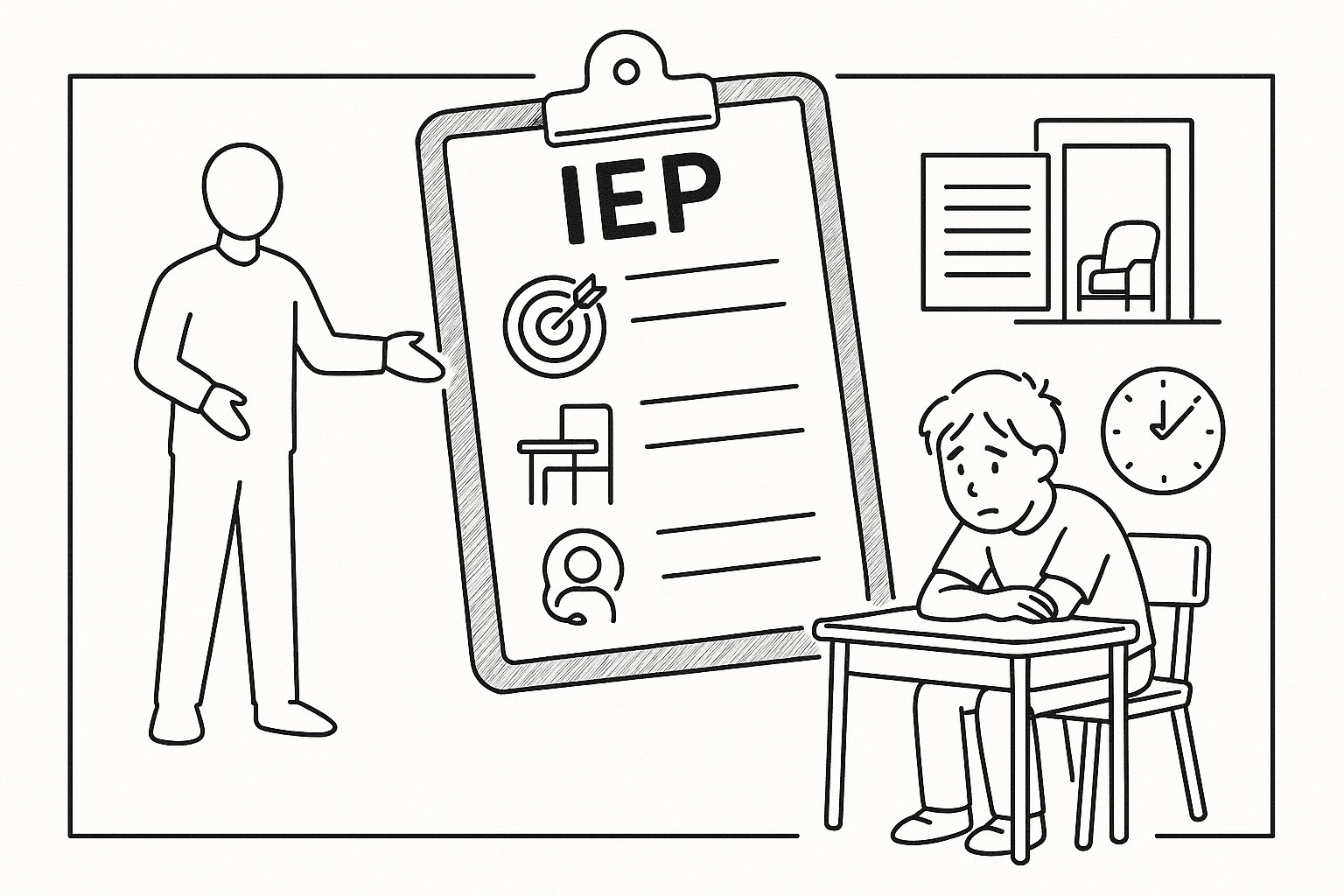
An IEP for anxiety is the formal plan a school develops under the Individuals with Disabilities Education Act (IDEA) when a student’s anxiety substantially limits their ability to access the general education curriculum. It’s not a therapy plan: it’s an educational blueprint that lists measurable goals, specialized instruction, accommodations, and related services designed to remove barriers in the school setting.
We often see anxiety present as school refusal, panic attacks in class, extreme avoidance of certain tasks (like reading aloud), or chronic absenteeism. When those behaviors interfere with learning or participation, schools may consider eligibility for special education. The IEP then translates clinical recommendations into school-based supports, for example, breaking tests into shorter sections, providing a quiet space for assessments, or scheduling regular check-ins with a trained staff member.
Importantly, an IEP is individualized. Two students with similar diagnoses may receive very different supports because the IEP targets the specific educational impacts of anxiety. The team measures progress, revises goals, and documents the services the school will deliver. That documentation gives parents both a roadmap and enforceable commitments from the district.
Eligibility, Assessment, And Legal Criteria For Anxiety‑Related IEPs
Eligibility hinges on two principal determinations: first, that the student has a qualifying disability category under IDEA (often “Other Health Impairment” or “Emotional Disturbance”), and second, that the disability adversely affects the child’s educational performance and requires specially designed instruction.
Practically, schools look for evidence that anxiety interferes with academics, attendance, or social participation. Chronic absenteeism tied to anxiety, repeated in-class disruptions due to panic, or inability to complete assignments because of severe worry are common triggers for formal evaluation. We should remember that the threshold is functional impact, the mere presence of an anxiety diagnosis isn’t sufficient by itself.
Legally, parents have procedural protections: the right to request an evaluation, to participate on the IEP team, and to challenge decisions through due process if necessary. Timelines and consent rules apply: once a parent requests an evaluation, the district must respond within IDEA-defined periods and obtain consent before testing. If disagreements arise, schools and families can use mediation or due process hearings: consulting an attorney experienced in education law can help in complex disputes or when procedural violations affect services.
What Evidence, Evaluations, And Team Members Are Needed
A robust eligibility determination pulls from multiple sources. Typical evidence includes:
- Clinical documentation from a pediatrician, psychiatrist, psychologist, or therapist describing diagnosis and functional limitations.
- School-based data: attendance records, grades, teacher observations, behavior logs, and work samples.
- Standardized assessments of academic achievement and social-emotional functioning, administered by the school psychologist or other qualified evaluators.
- Parent reports and, when appropriate, the student’s self-report.
Team members usually include the parent(s), classroom teacher(s), a special education teacher, school psychologist, a district representative knowledgeable about available resources, and sometimes a related-service provider (for instance, a counselor). Together, they synthesize clinical and school-based evidence to decide eligibility and design the IEP.
Common Accommodations, Related Services, And Real‑World Examples
Accommodations and services for anxiety focus on reducing stressors, building coping skills, and maintaining academic progress. Common accommodations include:
- Flexible scheduling: delayed start times, shortened school days temporarily, or staggered transitions.
- Testing modifications: extended time, separate testing location, or breaking tests into smaller parts.
- Classroom supports: preferential seating, advanced notice of changes in routine, and reduced assignments load.
- Environmental adjustments: access to a quiet room, pass to leave class for calming breaks, or sensory tools.
Related services often provided on an IEP can include school-based counseling, social skills groups, behavioral intervention plans (BIPs) when behaviors impede learning, and sometimes occupational therapy if anxiety presents with sensory or regulation challenges.
Real-world examples help translate theory into practice:
- Middle school student with panic attacks: The IEP included a daily 10-minute check-in with the counselor, permission to leave class for brief grounding breaks, extended test time, and a written plan for gradual exposure to public speaking tasks. Attendance improved and grades stabilized over a semester.
- Elementary student with selective mutism and school refusal: The team implemented a stepped inclusion plan (starting with one class period, increasing time weekly), weekly speech-language therapy focused on social communication, and a home-school communication log. Over the school year, the child’s participation increased, and homebound instruction phased out.
- High schooler with generalized anxiety affecting concentration: Supports included noise-reduction headphones, assignment chunking with interim deadlines, and access to teletherapy during the school day. The student completed coursework and graduated on time.
These examples show the IEP’s flexibility: we tailor supports to educational barriers, not just diagnostic labels.
How To Develop, Implement, And Monitor An IEP For Anxiety
Developing an effective IEP is a collaborative, iterative process. We recommend this practical approach:
- Start with clear, measurable goals. Each goal should address a specific educational deficit caused by anxiety, for example, increasing classroom participation from 1/weekly to 3/weekly or improving on‑time assignment submission to 90% over a quarter. Measurable goals let the team track progress objectively.
- Match services to function. If anxiety causes avoidance of tests, focus on test‑taking accommodations and anxiety-reduction strategies. If it primarily affects attendance, prioritize gradual re-entry plans and attendance-related supports.
- Specify frequency, duration, and provider. The IEP must state how often counseling occurs, who provides it, and where it happens. Vague language invites inconsistency.
- Build a crisis and prevention plan. For students with panic or severe withdrawal, include a short, clear protocol for staff to follow during high‑anxiety episodes and for communicating with parents.
- Train staff and ensure fidelity. Teachers need to know accommodations and how to carry out them. Small in-service trainings or a one-page accommodation summary often makes a big difference.
- Monitor and adjust regularly. Use data: attendance, grades, teacher observations, and direct measurements tied to goals. Schedule interim reviews (e.g., 6–9 weeks) plus to the annual IEP meeting to make timely adjustments.
- Engage families as partners. Parents know the child’s triggers and successful strategies outside school. Regular, constructive communication helps keep home and school aligned.
If implementation problems arise, for example, services listed but not delivered, document missed services and seek resolution through the school’s complaint procedures. When legal or procedural disputes persist, we advise consulting counsel experienced in special education law to explore remedies while keeping the child’s educational needs front and center.
Conclusion
An IEP for anxiety turns clinical insight into concrete educational supports that help students participate and progress. By focusing on measurable goals, individualized accommodations, clear service delivery, and ongoing monitoring, parents and educators can reduce the school-based impact of anxiety. When disagreements or procedural barriers occur, knowing your legal rights and documenting concerns gives you options, from informal problem-solving to formal dispute resolution. We encourage families to be proactive, ask for evaluations when necessary, and insist on IEP language that clearly describes services so students get the support they need.
Frequently Asked Questions About IEPs for Anxiety
What is an IEP for anxiety and how does it help students?
An IEP for anxiety is a specialized educational plan under IDEA that supports students whose anxiety significantly limits their school participation. It includes measurable goals, accommodations, and services designed to remove barriers and help students access the curriculum effectively.
When might a student qualify for an IEP due to anxiety?
A student may qualify if their anxiety substantially affects their educational performance, causing issues like chronic absenteeism, panic attacks in class, or inability to complete assignments. Eligibility requires evidence that anxiety interferes functionally with learning, not just a diagnosis alone.
What types of accommodations are commonly included in an IEP for anxiety?
Common accommodations include flexible scheduling, extended time on tests, separate testing locations, preferential seating, access to quiet spaces, and permission for calming breaks. These help reduce anxiety triggers and support academic participation.
Who is involved in developing an IEP for a student with anxiety?
The IEP team typically includes parents, classroom and special education teachers, a school psychologist, a district representative, and sometimes related service providers like counselors. They collaborate to evaluate evidence and design tailored supports.
How can parents and educators ensure an IEP for anxiety is effective and monitored?
They should set clear, measurable goals, match services to specific needs, clarify service frequency and providers, build crisis plans, train staff on accommodations, regularly review progress, and maintain open communication to adjust supports as needed.
Can an IEP for anxiety include related services beyond accommodations?
Yes, related services often include school-based counseling, social skills groups, behavioral intervention plans, and sometimes occupational therapy if anxiety affects sensory regulation or behavior, providing comprehensive support within the school setting.