
Last Updated on April 20, 2026 by Jennifer Hanson
Special education teachers hold one of the most consequential roles in our schools and communities. We’re not just talking about lesson plans and grading, these professionals design individualized pathways that let students with disabilities learn, participate, and thrive. In 2026, expectations for special education teachers include deeper collaboration with families, sharper data skills, and a mindset that balances compassion with measurable outcomes. This article lays out the core responsibilities and eight key characteristics parents and employers should look for when evaluating or hiring a special education teacher.
In this guide, What Makes a Great Special Education Teacher 8 Key Characteristics Every Parent and Employer Should Know In 2026 is explained with clear steps and tips.
Key Takeaways — What Makes a Great Special Education Teacher 8 Key Characteristics Every Parent and Employer Should Know In 2026
- Special education teachers design individualized learning paths that enable students with disabilities to thrive academically and socially.
- Core characteristics of effective special education teachers include empathy, patience, resilience, and adaptability to meet diverse student needs and evolving educational tools.
- Strong communication, collaboration, and advocacy skills are essential to coordinate services, align supports, and ensure legal compliance with IDEA and FAPE requirements.
- Instructional strategies like differentiation, scaffolding, and Universal Design for Learning help tailor education to diverse learners and promote measurable student progress.
- Data-driven decision making and clear IEP development are critical for setting measurable goals, monitoring progress, and adjusting instruction effectively.
- Qualifications typically include state certification and ongoing professional development to keep pace with legal, technological, and pedagogical changes in special education.
What A Special Education Teacher Does: Role, Responsibilities, And Impact
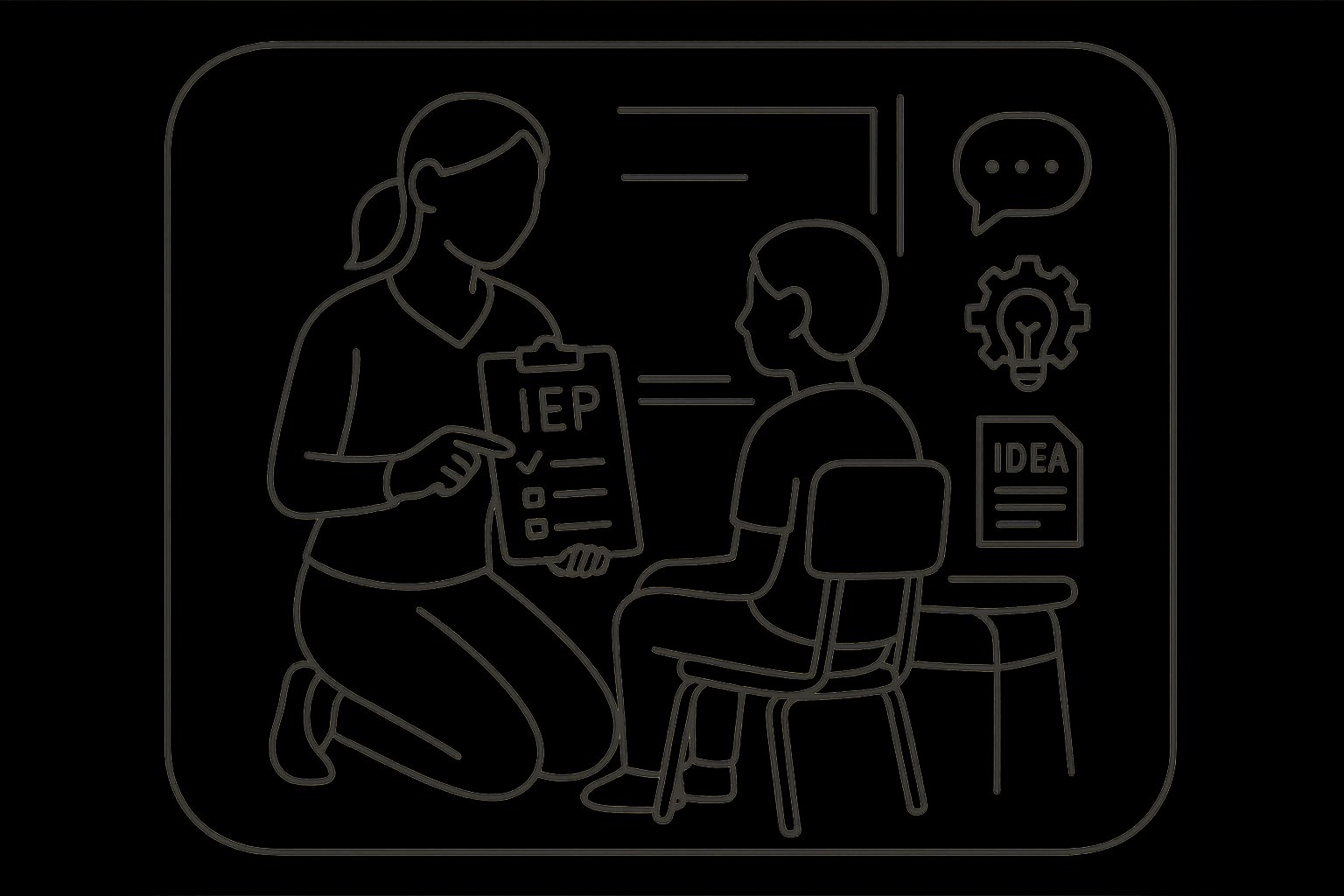
Special education teachers work across a spectrum: from consulting in inclusive classrooms to leading specialized settings for students with significant cognitive, physical, behavioral, or learning needs. Our responsibilities usually include: conducting assessments, writing and implementing Individualized Education Programs (IEPs), adapting curriculum, managing classroom behaviors, coordinating related services (speech, OT, PT), and communicating with families and multidisciplinary teams.
The impact is both practical and profound. Practically, special educators ensure legal compliance with IDEA (Individuals with Disabilities Education Act) and state rules, helping districts meet obligations for FAPE (Free Appropriate Public Education). More importantly, we create learning environments where students build academic skills, social competence, and self-advocacy. For parents, that means clearer goals and measurable progress. For employers and school leaders, it means a professional who reduces risk, supports inclusion, and improves student outcomes.
In many districts today, special education teachers also serve as coaches, training general education colleagues on differentiation and Universal Design for Learning (UDL). That dual role amplifies our influence: one teacher’s expertise can improve instruction for dozens of students beyond their caseload.
Core Personal Traits: Empathy, Patience, Resilience, And Adaptability
Certain personal traits are non-negotiable in special education. Empathy allows us to see learning through a student’s lens and to build trust with families. When a child resists a task or responds with frustration, empathy helps us interpret behavior as communication rather than defiance.
Patience is obvious but often underestimated: progress can be incremental, and routines matter. We value small wins and maintain consistency so students know what to expect. Resilience is equally important, special education can be emotionally demanding and administratively complex. We deal with high-stakes meetings, funding constraints, and occasional setbacks: resilience keeps us constructive rather than reactive.
Adaptability ties these traits together. A great special education teacher adjusts plans when a strategy isn’t working, shifts communication styles to fit a family’s needs, and embraces new technologies or evidence-based practices. In 2026, adaptability also means comfort with hybrid learning tools and telepractice, which have become more common since the pandemic-era expansions of remote services.
When parents or employers evaluate a candidate, look not just for warmth, but for evidence of flexibility, examples of altering instruction mid-lesson, responding calmly to disruptions, and integrating feedback from therapists or administrators.
Essential Professional Skills: Communication, Collaboration, And Advocacy
Strong professional skills transform personal qualities into measurable results. Communication is central: we must explain complex educational terms simply, write clear IEP goals, and keep families informed without jargon. Good communication also prevents misunderstandings and reduces the likelihood of disputes that can escalate to formal complaints.
Collaboration is the day-to-day reality. Special educators coordinate with general education teachers, therapists, school psychologists, and administrators to align supports. Successful collaboration means shared goals, regular planning time, and mutual respect. We should be able to help team meetings and translate assessment data into classroom strategies our colleagues can carry out.
Advocacy rounds out this skillset. Teachers often serve as the student’s primary advocate within a school system, ensuring accommodations are honored, services are scheduled, and transitions are planned. Advocacy requires knowledge of legal rights, persuasive communication, and calm persistence.
When hiring, ask for examples where the candidate negotiated for services, resolved conflicts, or built effective cross-disciplinary plans. That evidence separates good teachers from great ones.
Instructional Strategies: Differentiation, Scaffolding, And Universal Design For Learning
Instructional expertise is where daily progress happens. Differentiation means tailoring content, process, and product to meet diverse learners, varying complexity, offering alternative assignments, and providing tiered supports. Scaffolding breaks tasks into smaller steps and gradually reduces support, enabling students to internalize skills.
Universal Design for Learning (UDL) goes further: it designs flexible learning environments from the outset, offering multiple means of engagement, representation, and expression. A teacher fluent in UDL plans lessons so that most students access core content with minimal retrofitting.
Practical examples include using visual schedules for students with executive function challenges, offering text-to-speech tools for readers, and embedding formative checks that guide immediate adjustments. In our classrooms, evidence-based practices, like explicit instruction and systematic prompting, combine with these frameworks to create predictable, scaffolded opportunities for success.
We evaluate instructional strategies by looking for measurable gains on IEP objectives and by observing whether supports transfer across settings (classroom, cafeteria, community).
Assessment, IEP Development, And Data-Driven Decision Making
Assessment drives everything we do. Initial evaluations identify eligibility and baseline functioning: progress monitoring tells us whether interventions are working. We use a blend of formal assessments, curriculum-based measures, and observational data to paint a complete picture.
IEP development is part legal document, part instructional roadmap. Effective IEPs include measurable, attainable goals, clearly defined services (frequency, location, provider), and specific accommodations. We write goals that are student-centered and testable, so progress is objective rather than anecdotal.
Data-driven decision making means we set progress-monitoring intervals, analyze trends, and adjust instruction based on evidence. For example, if a student isn’t making expected growth after a six-week intervention, we escalate supports, consult specialists, or revise the approach. That cyclical process, assess, plan, carry out, evaluate, is the backbone of quality special education.
Parents and employers should look for teachers who can explain data in plain language and who use graphs or brief summaries to show growth over time. That transparency builds trust and supports well-informed choice-making.
Qualifications, Training, And Career Path Options For Special Education Teachers
Most special education teachers hold a bachelor’s degree plus state certification in special education: many districts prefer or require a master’s degree. Certifications vary by state and by category of disability (e.g., mild/moderate vs. severe/profound). Additional credentials, such as behavior analyst certification (BCBA), language development endorsements, or dyslexia training, enhance a teacher’s toolbox.
Ongoing professional development is essential. We pursue coursework in assessment, behavior intervention, assistive technology, and legal compliance. Trainings in trauma-informed practices and culturally responsive pedagogy are increasingly expected.
Career paths are diverse: classroom teacher, resource specialist, behavior specialist, curriculum coordinator, or administrator. Some teachers move into related fields such as special education law, school psychology, or nonprofit advocacy. Employers should consider candidate experience, caseload size, age ranges served, and any leadership roles, because those details predict readiness for complex positions.
From an employer perspective, clear job descriptions and contract language matter. Given the legal responsibilities and workload intensity, school districts and private employers benefit from drafting contracts that specify caseload limits, planning time, and professional development expectations to retain skilled teachers.
Conclusion
Great special education teachers combine heart and expertise: empathy and resilience, paired with rigorous assessment, collaborative skills, and instructional know-how. For parents and employers, the best hires are those who can document student progress, communicate clearly, and adapt when data or circumstances change. As needs and regulations evolve in 2026, prioritizing these characteristics helps us build programs that are legally sound, educationally effective, and genuinely inclusive.
Frequently Asked Questions About Special Education Teachers
What are the primary responsibilities of a special education teacher?
Special education teachers conduct assessments, develop and implement Individualized Education Programs (IEPs), adapt curriculum, manage classroom behaviors, coordinate related services, and communicate with families and multidisciplinary teams to support students with disabilities.
Which key personal traits should a special education teacher have?
Effective special education teachers exhibit empathy, patience, resilience, and adaptability. These traits help them understand student needs, remain consistent despite challenges, manage emotional demands, and adjust teaching strategies as needed.
How do special education teachers use data to support student progress?
They use formal assessments, curriculum-based measures, and observations to monitor progress. Data-driven decision making involves setting measurable goals, analyzing trends, and adjusting instruction to ensure students meet their IEP objectives effectively.
What professional skills are essential for special education teachers?
Strong communication, collaboration with multidisciplinary teams, and advocacy skills are vital. These enable teachers to explain complex terms clearly, coordinate supports, and ensure students’ rights and accommodations are upheld.
How do instructional strategies like Universal Design for Learning benefit students in special education?
Universal Design for Learning creates flexible lessons that accommodate diverse learners by offering multiple ways to engage, represent information, and express knowledge, minimizing the need for later modifications and supporting inclusive education.
What qualifications and training do special education teachers typically need?
Most hold a bachelor’s degree plus state certification in special education, often with a master’s degree preferred. Ongoing professional development in areas like behavior intervention, assistive technology, and legal compliance is also essential to maintain effectiveness.