
Last Updated on April 20, 2026 by Jennifer Hanson
Special education data collection has evolved rapidly, driven by legal mandates, digital tools, and a push for measurable outcomes. Whether you’re a teacher tracking progress, a school administrator ensuring compliance, or a parent advocating for a child’s IEP, we need clear, trustworthy data. In this guide we’ll explain what special education data collection means in 2026, outline the legal framework schools must follow, identify the key types of data that matter, and share best practices for collecting, managing, and protecting sensitive information. Our aim is practical: to help teams make better decisions and protect student rights.
In this guide, What Is Special Education Data Collection A Practical Guide For Educators And Families In 2026 is explained with clear steps and tips.
Key Takeaways — What Is Special Education Data Collection A Practical Guide For Educators And Families In 2026
- Special education data collection systematically gathers diverse information like progress monitoring and behavior assessments to tailor effective Individualized Education Programs (IEPs).
- Compliance with legal frameworks such as IDEA, FERPA, and HIPAA ensures the protection of student rights and accurate documentation in special education data collection.
- Collecting multiple data types—baseline, progress, attendance, behavior, and qualitative notes—provides a comprehensive view essential for informed decision-making and IEP adjustments.
- Best practices include defining clear data collection purposes, standardizing methods, maintaining data integrity, protecting privacy, and following retention policies.
- IEP teams should use clear goals, minimally invasive probes, assigned roles, regular data reviews, and family involvement to make special education data collection actionable and meaningful.
What Special Education Data Collection Means
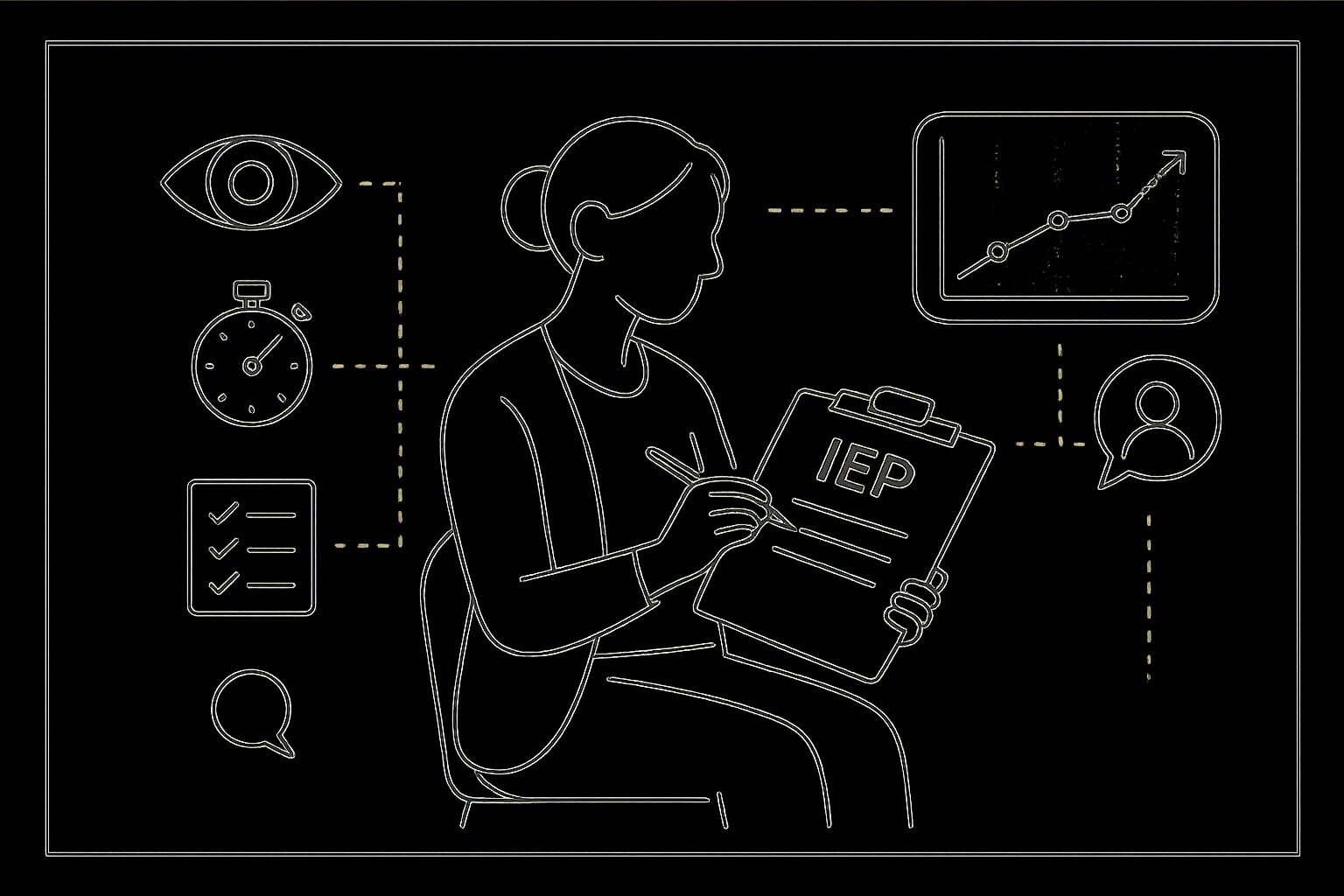
Special education data collection is the systematic process of gathering information about a student’s learning, behavior, services, and outcomes so teams can design, carry out, and adjust supports under an Individualized Education Program (IEP). It isn’t just grades or test scores, data includes observations, formative assessments, session logs, functional behavior assessments, progress-monitoring probes, and parent input. In practice, we collect both quantitative measures (e.g., correct responses per minute) and qualitative notes (e.g., student engagement, response to prompts).
Good collection practices turn raw observations into actionable evidence. That evidence shows whether an accommodation or modification is working, whether goals should be revised, and whether related services are being delivered with fidelity. For families, clear data builds trust: it demonstrates progress or signals when to change course. For educators and administrators, it informs resource allocation, compliance reporting, and professional development needs. Eventually, special education data collection is the backbone of student-centered decision-making.
Legal Framework And Compliance Requirements Schools Must Follow
Special education data collection sits squarely within a legal framework designed to protect students’ rights. Federally, the Individuals with Disabilities Education Act (IDEA) requires schools to use data to develop IEPs, measure progress, and demonstrate FAPE (Free Appropriate Public Education). Section 504 and the Americans with Disabilities Act also influence documentation for accommodations. States add their own rules about timelines, assessment procedures, and reporting formats.
We must also consider privacy laws. The Family Educational Rights and Privacy Act (FERPA) governs access to and sharing of student education records, while the Health Insurance Portability and Accountability Act (HIPAA) can intersect when health providers outside the school system supply medical records. In practice, schools should maintain clear policies about who can access special education data, how consent is obtained for sharing, and how long records are retained. Noncompliance risks legal challenges, loss of federal funding, and erosion of family trust, so accurate data collection and documentation aren’t optional.
Key Types Of Data Collected And Why They Matter
There are several categories of data special education teams collect, each serving a distinct purpose:
- Baseline and diagnostic data: Initial assessments establish where a student is functioning relative to age and grade expectations. Without baselines, progress can’t be measured accurately.
- Progress-monitoring data: Frequent, brief measures (CBMs, probes) indicate whether goals are being met and whether instruction should change.
- Attendance and service-delivery logs: These show whether the student received the minutes and related services promised in the IEP, critical for compliance and fidelity.
- Behavioral data: ABC (Antecedent-Behavior-Consequence) charts, frequency counts, and duration measures inform behavior intervention plans and safety decisions.
- Functional assessments and qualitative notes: Observational summaries, parent interviews, and work samples contextualize numerical scores and capture skills like social interaction or task initiation.
Each type matters because it answers a different question: Are we delivering services? Are those services effective? Do we need a different approach? When teams combine these data sources, they create a fuller picture that supports better decisions and helps document compliance for IDEA and state review.
Best Practices For Collecting, Managing, And Protecting Special Education Data
Collecting good data starts with clear intent. We recommend these best practices:
- Define the purpose: For each measure, state what decision the data will inform (e.g., adjust instruction, update an IEP goal). This prevents aimless collection.
- Standardize methods: Use consistent probes, timing, and conditions so comparisons over time are valid. Train staff and create brief protocols.
- Make data visible and timely: Use secure digital dashboards or spreadsheets that show real-time progress to the IEP team and, when appropriate, families.
- Ensure data integrity: Document who collected the data, when, and under what conditions. Audit logs help if disputes arise.
- Protect privacy: Limit access on a need-to-know basis, use encrypted systems, and obtain informed consent for sharing records. Align practices with FERPA and any relevant state privacy laws.
- Retain and dispose responsibly: Follow state retention schedules and have a clear destruction policy for obsolete records.
When legal questions arise, about compliance, disclosure, or interpretation, schools and families sometimes need counsel. Given our background in healthcare and administrative law, we recognize the complexity when medical documentation and educational records overlap and recommend consulting counsel early in disputes to avoid procedural missteps.
Practical Steps For IEP Teams To Collect Actionable Data
IEP teams can use a tight workflow to keep data useful and manageable:
- Start with clear, measurable goals. Translate broad objectives into observable, timed measures (e.g., “student will read 60 correct words per minute with 95% accuracy”).
- Select minimally invasive probes. Choose short tools that align with the target skill and can be administered daily or weekly without overburdening staff.
- Assign roles and schedules. Identify who collects data, who records it, and how often the team reviews it. Consistency matters more than complexity.
- Use templates and tech wisely. Simple spreadsheets or secure special-education modules in Student Information Systems reduce errors. Avoid duplicative entry.
- Review data at regular intervals. Schedule data-review meetings tied to decision rules (e.g., after four consecutive data points below target) so adjustments aren’t delayed.
- Involve families. Share concise summaries and teach families how to observe behaviors at home: their input often reveals patterns not visible at school.
By following these steps, we make data collection a tool for instruction, not just paperwork. It reduces subjectivity in meetings and helps teams act quickly when students need change.
Conclusion
Special education data collection isn’t a bureaucratic burden, when done thoughtfully, it’s the engine of effective instruction and legal protection. By focusing on purposeful measures, consistent methods, privacy, and family partnership, we can create IEPs that truly support students’ growth. If you’re navigating a complex situation, especially where medical documentation or legal obligations intersect, consulting an attorney experienced with education and healthcare records can help protect rights and keep the focus on student outcomes.
Special Education Data Collection FAQs
What is special education data collection and why is it important?
Special education data collection is the systematic gathering of information about a student’s learning, behavior, and services to support and adjust their Individualized Education Program (IEP). It ensures measurable progress, informs decisions, and protects student rights.
What types of data are collected in special education?
Key data types include baseline assessments, progress-monitoring probes, attendance and service logs, behavioral data, and qualitative notes. These help track student performance, service delivery, and inform necessary adjustments to supports.
Which legal laws govern special education data collection?
Federal laws like the Individuals with Disabilities Education Act (IDEA), Section 504, and the Americans with Disabilities Act set requirements for data use. Privacy is protected under FERPA and HIPAA, ensuring responsible data access and sharing.
How can schools ensure privacy when managing special education data?
Schools limit access to authorized personnel, use encrypted storage systems, obtain informed consent for sharing data, and follow FERPA and state privacy laws to protect sensitive student information.
What are best practices for effective special education data collection?
Effective practices include defining data purpose, standardizing collection methods, using digital tools for real-time access, ensuring data integrity with documentation, protecting privacy, and responsibly retaining or disposing of records.
How do IEP teams use special education data to improve student outcomes?
IEP teams set clear, measurable goals, select appropriate data probes, assign collection roles, review data regularly, and involve families. This process helps adjust instruction promptly to support student growth effectively.