
Last Updated on April 20, 2026 by Jennifer Hanson
Interviewing for a special education teacher role is different from a general classroom position, interviewers want to know not just what you can teach, but how you problem-solve, plan, and protect students’ rights. In this guide we’ll break down the seven essential types of special education teacher interview questions you’re likely to face in 2026, why interviewers ask them, and how we recommend answering with confidence. Whether you’re entering the field, switching school districts, or preparing for a promotion, we’ll help you craft specific, evidence-based responses that show both your skills and your judgment.
In this guide, What Are Special Education Teacher Interview Questions 7 Essential Question Types And How To Answer Them In 2026 is explained with clear steps and tips.
Key Takeaways — What Are Special Education Teacher Interview Questions 7 Essential Question Types And How To Answer Them In 2026
- Special education teacher interview questions assess your ability to prioritize student needs, legal knowledge, data use, behavior management, collaboration, and adaptability.
- Use the STAR method (Situation, Task, Action, Result) with evidence-based examples to craft clear, measurable answers showcasing your skills and judgment.
- Be prepared to discuss classroom management strategies, including crisis de-escalation, behavior support plans, and data-driven interventions.
- Demonstrate understanding of legal frameworks like IDEA and Section 504 by aligning your responses with compliance and procedural safeguards.
- Bring concrete artifacts such as anonymized progress data or IEP samples to support your claims and reinforce your competency.
- Ask thoughtful questions about caseload, professional development, and outcome measurement to engage interviewers and assess district fit.
What Interviewers Are Trying To Learn From Special Education Candidates
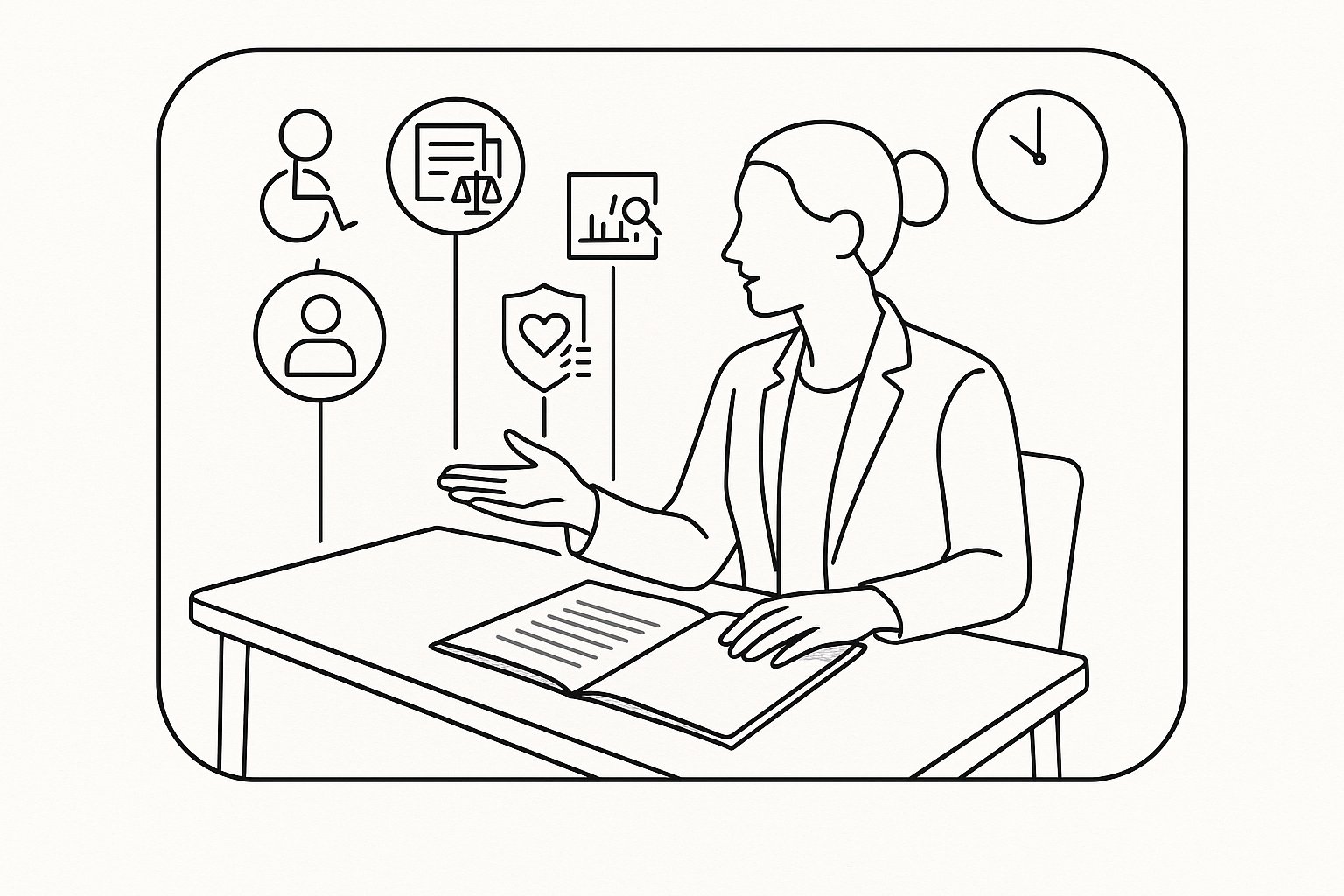
Interviewers hire for safety, effectiveness, and fit. When we interview for a special education role, they’re evaluating several overlapping competencies:
- Student-centered decision making: Can we show clear examples where student needs drove our instructional choices or accommodations? Interviewers want to see that we prioritize individual access and outcomes.
- Legal and ethical awareness: Special education work is governed by IDEA, Section 504, FERPA, and state regs. They’re assessing whether we understand timelines, procedural safeguards, and documentation basics.
- Assessment and data use: Are we comfortable using formal and informal assessments to set goals, monitor progress, and adjust instruction? They’ll listen for concrete data-driven examples.
- Classroom management and behavior support: Can we manage diverse learners safely and responsively? Interviewers look for evidence of proactive systems, positive behavior supports, and crisis prevention.
- Collaboration and communication: Special education rarely happens in isolation. They want to know we can work with general educators, therapists, families, and administrators to carry out IEPs.
- Flexibility and resilience: Caseloads, schedules, and student needs shift quickly. They’re testing our problem-solving skills and emotional stamina.
When we structure answers, we should aim to show not only what we did but why it mattered for student access and outcomes. Crisp examples, legal awareness, and measurable results position us as low-risk, high-value hires.
Common Behavioral Questions For Special Education Teachers
Behavioral questions dominate special education interviews because they reveal applied skill. Below we list three focused categories interviewers use and sample questions you should prepare for, plus brief notes on what to emphasize in responses.
Classroom Management And Behavior Support Questions (Examples)
Examples:
- “Describe a time you de-escalated a student in crisis. What steps did you take?”
- “How do you support consistent behavior across settings when general education teachers aren’t following the plan?”
- “Tell us about a time you used data to change a behavior intervention.”
What interviewers want: They want to see proactive systems (routines, visual supports), individualized behavior intervention plans (BIPs) based on functional behavior assessments (FBAs), and an emphasis on prevention. When we answer, we should describe the antecedent-behavior-consequence analysis, concrete de-escalation steps (calm voice, remove triggers, safety checks), and follow-up (data collection, team meetings).
A strong response includes measurable outcomes: fewer incidents, improved compliance, or increased time on task. If safety or restraint was involved, we should be explicit about policy alignment and efforts to reduce use going forward.
How To Prepare Strong, Specific Answers Using STAR And Evidence-Based Examples
We can make our interview answers memorable and defensible by combining STAR (Situation, Task, Action, Result) with evidence-based language. Here’s a practical template and examples tailored to special education.
How to structure answers:
- Situation: Briefly set context (student age, setting, primary challenge), one or two sentences.
- Task: State your responsibility or the team’s goal (develop IEP, reduce incidents, etc.).
- Action: Detail the interventions, assessments, collaborators, and your exact role. Use discipline-specific terms (FBA, scaffolding, AAC, PBIS).
- Result: Give measurable outcomes and follow-up (progress percentages, reduction in incidents, family satisfaction). If results were mixed, candidly explain next steps.
Example (Behavior):
Situation: A middle-school student had escalating outbursts interfering with learning. Task: We needed to reduce incidents and teach replacement skills. Action: We conducted an FBA, implemented a BIP with visual supports and a token economy, trained staff, and monitored incidents daily. Result: Incidents dropped 60% in eight weeks, time-on-task rose, and the team adjusted supports for generalization.
Example (IEP/Instruction):
Situation: A student with dyslexia was two grade levels behind. Task: Close the gap in decoding and fluency. Action: We used daily multisensory phonics, bi-weekly curriculum-based measures, and small-group instruction aligned with grade standards. Result: Decoding accuracy increased from 46% to 82% in 16 weeks: IEP goals were revised upward.
Why STAR + evidence works: It frames us as reflective professionals who use data, not anecdotes. It also shows we operate within compliance, important since districts hire low-liability, high-skill candidates. When possible, keep artifacts ready: anonymized progress graphs, sample IEP goals, or communication templates. Those demonstrate competency and make our claims easier to believe.
Preparation checklist:
- Choose 6–8 STAR stories covering behavior, instruction, assessment, collaboration, crisis response, and equity/cultural responsiveness.
- Attach metrics: baseline, checkpoint, and outcome.
- Rehearse concise leads (20–45 seconds) and deeper follow-ups for interview probes.
- Know basic legal timelines and terms so answers align with IDEA and local policies.
We should also prepare two or three thoughtful questions for interviewers about caseload composition, support for professional development, and how the district measures special education outcomes, that turns the interview into a mutual evaluation.
Conclusion
Interviewers are looking for evidence that we can safely, legally, and effectively teach students with diverse needs. By organizing responses around STAR, using concrete assessment and outcome data, and demonstrating collaborative problem-solving, we position ourselves as dependable candidates. Let’s prepare a suite of specific examples, bring supporting artifacts, and ask informed questions, those steps will help us stand out in 2026’s competitive special education hiring landscape.
Common Questions About Special Education Teacher Interviews
What are special education teacher interviewers looking to learn from candidates?
Interviewers want to see student-centered decision making, legal and ethical awareness, data use for assessment, classroom management skills, collaboration ability, and flexibility to handle changing student needs.
How should I structure answers to special education interview questions?
Use the STAR method: describe the Situation, Task, Action you took, and measurable Result. Include evidence-based examples focusing on student outcomes and legal compliance.
What types of behavioral questions are commonly asked in special education teacher interviews?
Common questions focus on classroom management, behavior support, crisis de-escalation, consistency across settings, and data-driven intervention adjustments.
Why is legal and ethical knowledge important for a special education teacher interview?
Because special education work is governed by laws like IDEA and Section 504, interviewers assess your understanding of timelines, procedural safeguards, and proper documentation to ensure compliance and protect students’ rights.
How can I effectively demonstrate my problem-solving skills during the interview?
Provide clear examples where you used data, collaboration, and flexible approaches to address diverse student needs or crises, showing resilience and student-focused solutions.
What questions should I ask the interviewer in a special education teacher interview?
Ask about caseload composition, support for professional development, and how the district measures special education outcomes to show engagement and mutual evaluation.