
Last Updated on April 20, 2026 by Jennifer Hanson
An IEP timeline flowchart turns the often-confusing Individualized Education Program (IEP) process into a visual map we can follow. Whether you’re a parent trying to track evaluation dates and meeting windows or a school administrator coordinating compliance, a clear flowchart reduces missed deadlines, prevents disputes, and helps teams focus on student outcomes. In this guide we’ll explain what an IEP timeline flowchart is, who uses it, the must-have components, how to read one during meetings, and how to get or make a customized chart, plus when to call legal help.
In this guide, What Is An IEP Timeline Flowchart A Practical Guide For Parents And Schools 2026 is explained with clear steps and tips.
Key Takeaways — What Is An IEP Timeline Flowchart A Practical Guide For Parents And Schools 2026
- An IEP timeline flowchart visually maps key dates and actions in the Individualized Education Program process, ensuring clear, predictable steps for parents, educators, and administrators.
- The timeline highlights crucial legal deadlines under IDEA, helping to avoid missed evaluations, meetings, and service start dates that can delay student support.
- Core components of the flowchart include trigger events, evaluation windows, eligibility decisions, IEP development, progress monitoring, and procedural safeguards.
- Using the flowchart during meetings improves communication by clarifying responsibilities, scheduling tasks, and reducing misunderstandings among team members.
- Creating or obtaining a customized IEP timeline flowchart tailored to local rules supports compliance and enhances collaboration, while legal help should be sought if timelines are repeatedly missed or disputes arise.
- Overall, an IEP timeline flowchart protects student rights, streamlines the special education process, and improves educational outcomes by keeping teams aligned and accountable.
What Is An IEP Timeline Flowchart And Who Uses It?
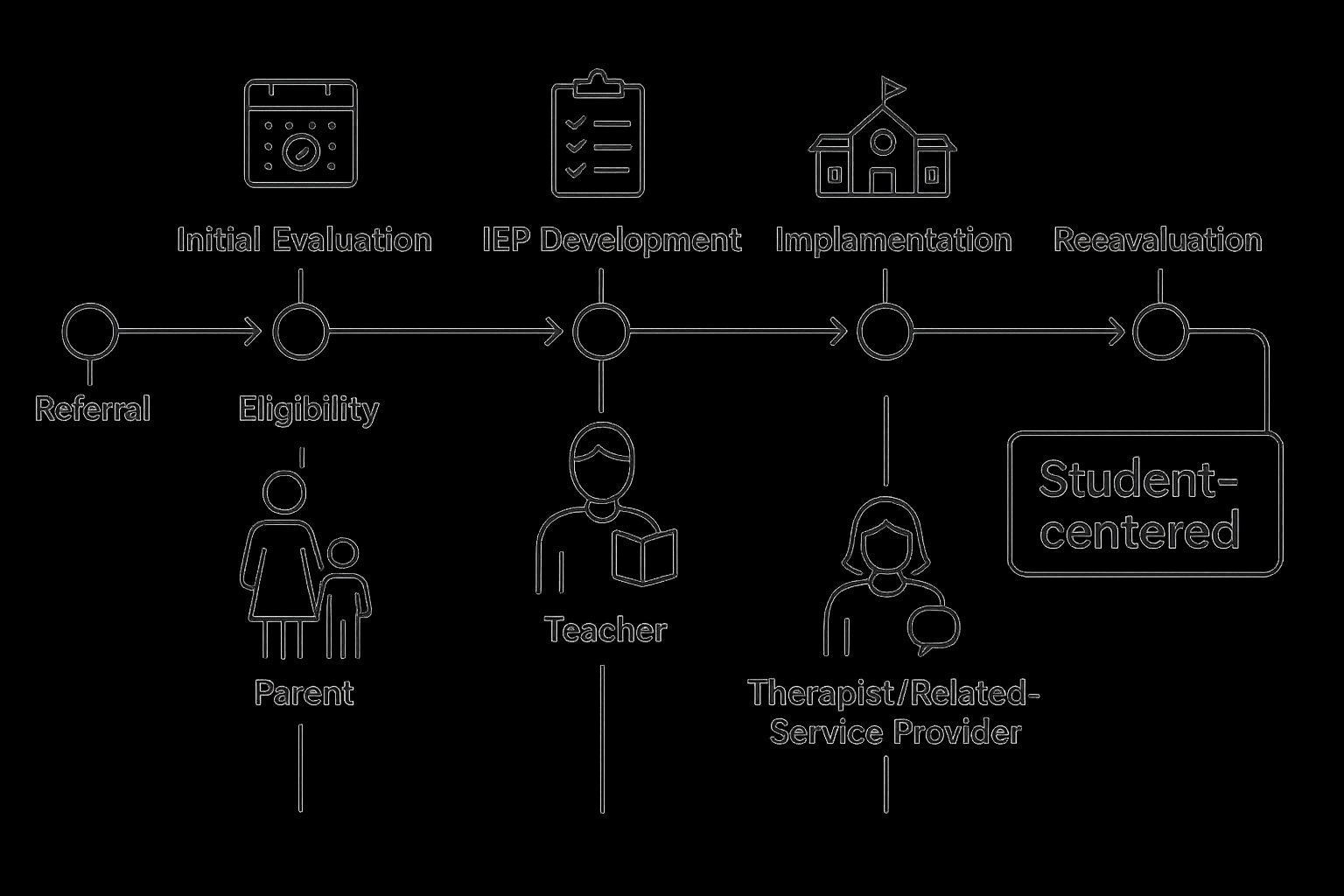
An IEP timeline flowchart is a visual representation of the key dates, decision points, and actions involved in the special education process. It typically tracks events from referral and initial evaluation through eligibility determination, IEP development, implementation, progress monitoring, and reevaluation. The goal is simple: make the timeline predictable and transparent for everyone involved.
Who uses an IEP timeline flowchart? Several groups benefit:
- Parents and guardians: They gain a predictable roadmap of when meetings will occur, what documents to expect, and when services should begin. That reduces anxiety and helps parents prepare for participation.
- General and special educators: Teachers use the flowchart to align instruction, accommodations, and progress reporting with legal obligations and team decisions.
- School administrators and special education coordinators: Flowcharts serve as compliance tools to ensure the district meets state and federal deadlines and to allocate staff or resources.
- Related service providers (e.g., speech therapists, occupational therapists): Providers use timeline charts to coordinate evals, start services, and schedule progress reviews.
In practice, an IEP timeline flowchart is both a compliance document (helpful for administrators) and a communication tool (helpful for parents and teachers). When designed well, it reduces misunderstandings and keeps the team student-centered.
Why IEP Timelines Matter For Parents, Educators, And Administrators
Timelines are not bureaucratic niceties, they’re legal and practical safeguards. Under the Individuals with Disabilities Education Act (IDEA) and many state laws, certain actions must happen within defined windows: evaluations must be completed within specific days after referral, meetings need to be scheduled within set periods, and reevaluations occur at defined intervals. Missing deadlines can delay services, erode trust, and trigger complaints or legal claims.
For parents, an accurate timeline means predictable access to evaluations and services. If we know when an eligibility decision or IEP meeting is due, we can plan attendance, gather documentation, and prepare questions. For teachers, timelines help integrate accommodations and progress monitoring into daily routines so the IEP isn’t an afterthought.
Administrators rely on timelines to manage caseloads, assign staff, and demonstrate compliance in audits or hearings. A visual flowchart highlights bottlenecks, for example, a backlog in evaluations, so leaders can reallocate resources before problems escalate.
Beyond compliance, good timelines support student outcomes. Timely evaluations and prompt implementation of services mean students get interventions when they’re most effective. In short: timelines protect rights, streamline collaboration, and improve results.
Core Components Of An IEP Timeline Flowchart
A practical flowchart includes a limited set of essential elements. Overloading the chart with every minor task makes it unusable: leaving out required deadlines makes it risky. We recommend these core components:
- Trigger events: Referral, parent request, teacher concern, disciplinary event, or transition points (e.g., moving between grade bands).
- Evaluation windows: Start and end dates for initial and reevaluation assessments, including consent deadlines and report completion dates.
- Eligibility decision points: Meeting dates and who must attend (parent, LEA representative, evaluation staff).
- IEP development and implementation: Target dates for IEP meetings, service start dates, transportation or placement decisions, and the date services must actually begin.
- Progress monitoring and reporting: Scheduled dates for progress updates, report cards, and data reviews.
- Reevaluation and transition planning: Timelines for periodic reevaluations and when to begin transition planning for post-secondary goals.
- Appeals and procedural safeguards: Timeframes for filing complaints, requesting mediation, or invoking due process.
A clear flowchart pairs each item with an owner (who’s responsible), a deadline (date or window), and a short note on required documentation. Visual conventions, color-coding legal deadlines vs. school milestones, using icons for meetings vs. written notices, make the chart faster to read.
Required Legal Deadlines Versus Typical School Milestones
It’s crucial to distinguish legal deadlines from local or procedural milestones. Legal deadlines are non-negotiable windows defined by IDEA or state statute (for instance, the number of days to complete an initial evaluation after parental consent). Typical school milestones are internal benchmarks we set to keep the process running smoothly, like a district’s goal to hold IEP meetings within two weeks of eligibility determinations.
We advise highlighting legal deadlines in one color and internal milestones in another. That makes it immediately obvious when a missed date could create legal exposure and when a missed milestone is operational but fixable without formal consequences.
How To Read And Use An IEP Timeline Flowchart During Meetings
An IEP meeting can feel overwhelming: the flowchart should reduce cognitive load, not add to it. Here’s how we use it to keep meetings efficient and focused on the student.
Start the meeting with the flowchart visible. Use it as the agenda: confirm the trigger event (why we’re meeting), review evaluation findings with the evaluation window noted, and mark the eligibility decision point. When discussing goals and services, cross-reference the implementation date so everyone knows when supports start.
During the meeting, do three practical things:
- Assign owners aloud. If speech services are to begin on a particular date, name the provider and who will schedule sessions.
- Note conditional tasks. For example, if placement depends on an observation, put that observation task and its deadline on the chart.
- Record agreed dates directly on the flowchart and give parents a copy (digital or printed).
After the meeting, use the flowchart to drive follow-up. Administrators should check off completed tasks and update the chart when schedules change. For busy teams, a living flowchart hosted in a shared drive or case management system keeps everyone aligned and reduces “he said, she said” disagreements.
We’ve found that when parents leave a meeting with a page that clearly shows next steps and due dates, subsequent conflict drops significantly. It’s simple: clarity fosters cooperation.
How To Get Or Create A Customized Flowchart And When To Seek Legal Help
There are three ways to obtain a usable IEP timeline flowchart:
- Use district templates: Many districts already have flowchart templates that reflect state timelines. These are a good starting point, but check them against current law, state rules change.
- Build a custom chart: We recommend creating a templated flowchart in a familiar tool (Google Sheets, Excel, or a simple flowchart app). Tailor it to common triggers in your district and include editable fields for student-specific dates and owners.
- Work with a specialist: For complex cases (multi-agency involvement, significant dispute about eligibility or placement, or when deadlines have already been missed), consult someone experienced in special education procedure, a special education attorney or an advocate familiar with local practice.
When should you seek legal help? Consider escalation when:
- Required timelines are missed and the district cannot provide a satisfactory remedy.
- There’s a pattern of delayed evaluations or service starts that affects multiple students.
- Parents and the district strongly disagree about eligibility, placement, or the adequacy of services.
- You’re preparing for mediation, due process, or need to file a complaint and want to document timeline violations clearly.
At Chelle Law we primarily handle healthcare employment and contract matters, but we regularly advise clients about procedural safeguards and administrative appeals across regulated systems. If timeline disputes are raising questions about due process rights or administrative remedies, get counsel early, documentation of missed deadlines in a flowchart can be decisive evidence.
Conclusion
An IEP timeline flowchart is a compact, practical tool that transforms legal deadlines and school processes into a shared roadmap. For parents, teachers, and administrators alike, it clarifies responsibilities, prevents delays, and helps keep the focus on effective supports for the student. We recommend every team use a simple, living flowchart, and to consult an experienced advocate or attorney if timeline violations or disputes threaten a student’s access to services.
Frequently Asked Questions About IEP Timeline Flowcharts
What is an IEP timeline flowchart?
An IEP timeline flowchart is a visual map outlining key dates, actions, and decision points in the Individualized Education Program process, from referral and evaluation through implementation and reevaluation, helping all parties track deadlines and responsibilities clearly.
Who benefits from using an IEP timeline flowchart?
Parents, educators, school administrators, and related service providers all benefit from IEP timeline flowcharts by gaining clarity on deadlines, coordinating services, ensuring compliance, and focusing on student outcomes.
Why are IEP timelines important for parents and educators?
IEP timelines ensure evaluations and services happen promptly within legal deadlines, allowing parents to prepare and educators to integrate accommodations effectively, ultimately protecting students’ rights and improving outcomes.
What are the core components included in an IEP timeline flowchart?
Essential elements include trigger events, evaluation windows, eligibility decisions, IEP development and implementation dates, progress monitoring, reevaluation timelines, transition planning, and procedures for appeals and safeguards, each with assigned responsibility and deadlines.
How should an IEP timeline flowchart be used during meetings?
Display the flowchart at meetings to guide discussion, confirm actions and deadlines, assign task owners aloud, note conditional tasks, and provide parents with a copy of agreed-upon dates to reduce confusion and promote cooperation.
When should parents or educators consider seeking legal help regarding IEP timelines?
Legal assistance is recommended if required deadlines are missed without remedy, persistent delays occur affecting students, there are strong disagreements about eligibility or placement, or if preparing for mediation or due process related to timeline violations.