
Last Updated on October 16, 2026 by Jennifer Hanson
Parents, educators, and allied professionals often encounter the acronym “PPT” when navigating special education. In this guide we explain what a PPT in special education is, why it exists, and what legal and practical implications it carries in 2026. Whether you’re preparing for your child’s first meeting or representing a school district, we’ll walk through the purpose, who attends, a typical agenda, how families can prepare, and the possible outcomes so you feel confident and informed going into a meeting.
In this guide, What Is a PPT in Special Education A Practical Guide for Parents and Professionals 2026 Update is explained with clear steps and tips.
Key Takeaways — What Is a PPT in Special Education A Practical Guide for Parents and Professionals 2026 Update
- A PPT in special education stands for Planning and Placement Team, responsible for developing and reviewing a student’s Individualized Education Program (IEP) to ensure appropriate educational supports.
- PPT meetings involve key participants including parents, educators, and specialists, and are required for initial eligibility, annual reviews, and significant changes in services or placement.
- Parents have specific rights under IDEA during PPT processes, such as receiving notice, accessing records, requesting independent evaluations, and participating actively in decision-making.
- Preparing for a PPT meeting by reviewing IEPs, gathering relevant reports, and listing questions helps parents engage effectively and advocate for their child’s needs.
- Outcomes of PPT meetings include eligibility determinations, service agreements, or follow-up actions; documenting decisions and following up on implementation is crucial for ensuring proper educational support.
- When disagreements occur, families can pursue mediation, due process, or legal counsel to protect the child’s right to a Free Appropriate Public Education (FAPE) in the least restrictive environment (LRE).
What A PPT Means: Purpose, Legal Basis, And Key Terms
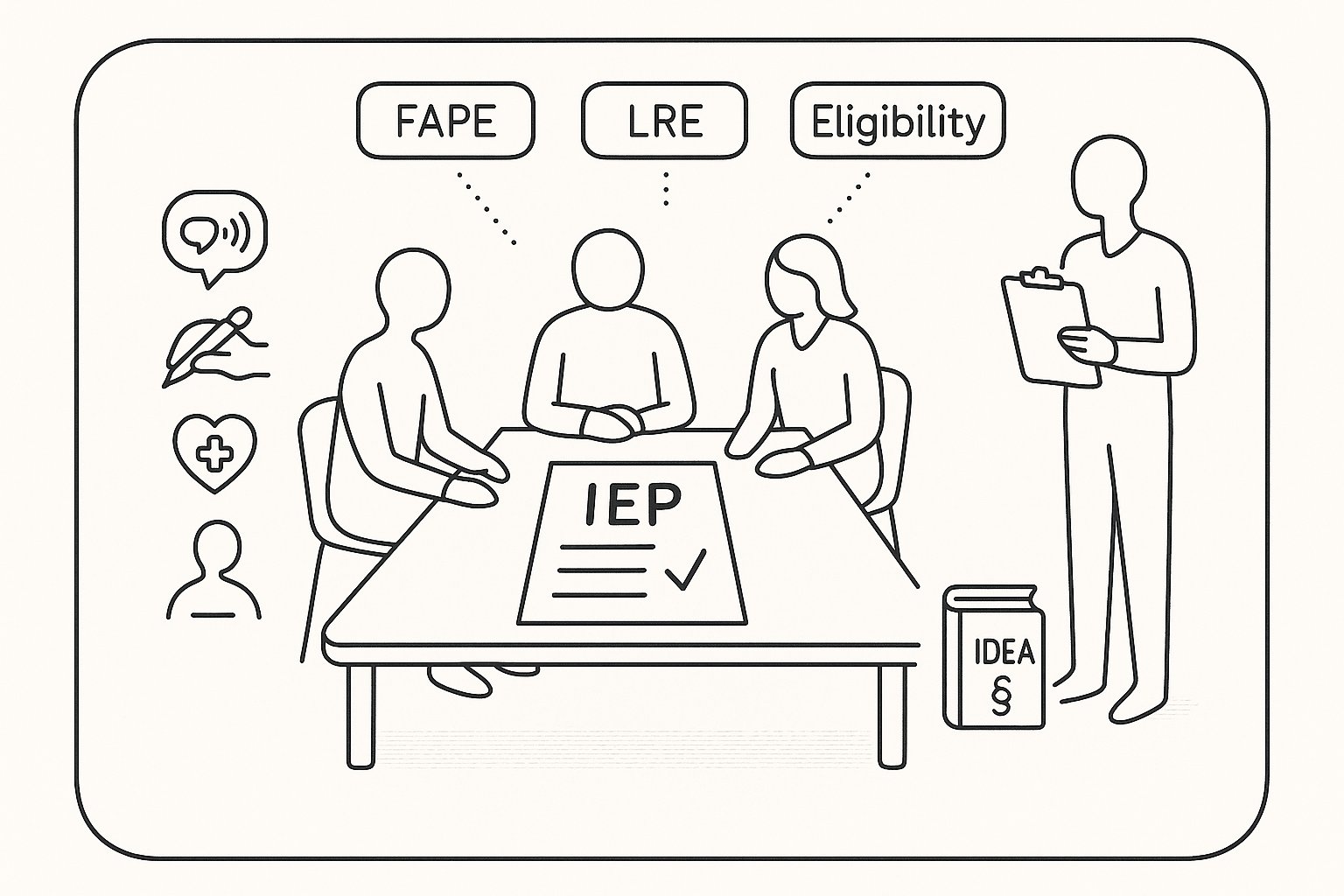
PPT stands for Planning and Placement Team. It’s the committee many states use to develop, review, or revise a student’s Individualized Education Program (IEP) or to decide eligibility for special education services. The purpose is straightforward: align educational supports with a student’s unique needs so they can access the general curriculum to the maximum extent appropriate.
Legally, the PPT operates within the framework of the Individuals with Disabilities Education Act (IDEA) and relevant state education code. IDEA requires schools to provide a Free Appropriate Public Education (FAPE) in the least restrictive environment (LRE). The PPT is the body that applies those federal and state requirements to an individual child’s situation.
Key terms to know:
- IEP: Individualized Education Program, a written plan describing services, goals, accommodations, and placement.
- FAPE: Free Appropriate Public Education, the standard schools must meet.
- LRE: Least Restrictive Environment, the setting that allows the child to learn with peers as much as possible.
- Related services: Additional supports such as speech therapy, occupational therapy, or counseling.
Different states and districts may use slightly different language (e.g., “IEP team” instead of PPT), but the core functions are the same: evaluate needs, document a plan, and set placement. Since legal obligations sit behind PPT decisions, families sometimes consult an attorney or advocate when disputes arise. At Chelle Law we often advise healthcare professionals about contract and administrative matters: similarly, families may need legal support to navigate procedural protections tied to PPT decisions.
Who Attends PPT Meetings And When They’re Required
A PPT meeting must include certain participants to be valid. IDEA specifies core team members, though state rules add detail. Typically, attendees include:
- The child’s parent(s) or guardian(s). Their presence is essential: schools must make good-faith efforts to involve them.
- At least one regular education teacher (if the child is or may be in regular classes).
- At least one special education teacher or provider.
- A representative of the school district who is qualified to provide or supervise special education and knows about available resources and placement options.
- Someone who can interpret evaluation results (often a school psychologist or diagnostician).
- The child, when appropriate, particularly at transition planning age (usually 14–16 and older).
Additional participants may include related services providers (speech, OT), evaluators, interpreters, and advocates or attorneys if families choose representation.
When are PPT meetings required? Examples include:
- Initial eligibility determination after evaluation.
- Annual IEP review (at least once a year).
- Triennial reevaluation to determine continued eligibility (every three years unless waived).
- When parents or school personnel request a review or when significant changes in placement or services are considered.
Schools must provide notice and invite participants in writing. If a required member cannot attend, the team can proceed only under specific conditions (e.g., written input from the absent member or agreement of parent and district). Being aware of attendance rules helps ensure decisions are properly made and defensible.
Typical PPT Agenda And Step‑By‑Step Meeting Process
PPT meetings vary, but most follow a predictable flow. Knowing the agenda reduces anxiety and keeps discussion focused. A typical agenda includes:
- Introductions and purpose of the meeting, the team states whether the meeting is for initial eligibility, annual review, or placement review.
- Review of evaluation data and current performance, assessment reports, progress monitoring, medical/therapy notes, and teacher observations are summarized. We recommend parents bring recent reports from outside clinicians if relevant.
- Discussion of needs and prioritized goals, the team identifies functional areas (academic, social, communication, behavior, motor) that require attention.
- Development or revision of measurable annual goals, goals should be specific, measurable, and tied to services and progress indicators.
- Determination of services and supports, frequency, duration, and location of special education and related services are specified.
- Placement decision, the team chooses the educational setting that meets needs in the LRE.
- Progress monitoring and reporting methods, how often progress will be measured and how parents will be informed.
- Parent questions and consent/signatures, parents review and may consent to the plan or request changes.
Step‑by‑step tips for the meeting: come with documentation, ask for clarifying data when recommendations seem vague, request time to review proposed IEP language rather than signing immediately, and take notes or request a copy of the meeting minutes. If disagreement arises, teams often use problem-solving before moving to formal dispute resolution: we’ll cover parent rights next.
Parents’ Rights, How To Prepare, And Questions To Ask
Parents have specific procedural rights under IDEA that protect participation and ensure transparency. Core rights include receiving prior written notice for proposed changes, access to school records, independent educational evaluations (IEE) at public expense under certain conditions, and pursuing mediation or due process if disputes escalate.
How to prepare:
- Review the current IEP and recent evaluations ahead of time.
- Make a concise list of priorities: academic goals, therapies, behavioral supports, accommodations, and concerns about placement.
- Gather medical or therapy reports, progress data, and work samples that show strengths and areas of need.
- Bring a support person, another parent, advocate, or attorney, if you want assistance with questions or note-taking.
Essential questions to ask during the PPT:
- What specific data supports this eligibility or recommendation?
- How will progress be measured and how often will we get updates?
- Why is this placement the LRE for my child? Have less restrictive options been considered?
- What are the exact frequencies and durations for services, and who will provide them?
- How will school staff be trained on accommodations or behavior plans?
If we’re unsure about the team’s proposals, we can ask for time to review the written IEP before signing and request amendments by addendum later. When procedural rights are threatened, for example, if the school fails to invite required members, we should document communications and consider formal remedies (mediation or due process). Legal counsel can clarify rights and represent families when warranted.
Common Outcomes, Decision‑Making, And Next Steps After A PPT
After a PPT meeting, the team reaches one or more of these common outcomes:
- The student is found eligible for special education and an IEP is developed or revised.
- The student is determined not eligible, with recommendations for general education supports or referrals for external services.
- The team agrees on placement and services: parents consent and services begin.
- The team is unable to reach agreement: next steps are documented and follow‑up meetings scheduled.
Decision‑making generally follows consensus, but districts may carry out the IEP when they have met procedural obligations and parents do not consent. If parents disagree with eligibility, placement, or services, they can request an IEE at public expense, mediation, or a due process hearing. Many disputes are resolved through communication, written amendments, or facilitated meetings.
Practical next steps we recommend:
- Obtain a finalized copy of the IEP and a summary of meeting notes.
- Confirm start dates, providers, and service locations with the case manager.
- Set reminders for progress report dates and the next annual review.
- If you’ve agreed to specific evaluations or trials (e.g., behavior intervention plan), document who is responsible and timelines for review.
From a legal perspective, proper documentation matters. If outcomes aren’t implemented, preserve emails and notes that show the team’s decisions. In persistent disputes, families sometimes engage attorneys to pursue enforcement or settlement: conversely, districts should document adherence to procedural requirements to reduce liability exposure.
Conclusion
A PPT in special education is where legal requirements, clinical data, and educational judgment meet to create a plan for a child’s learning. By understanding the team’s purpose, who attends, the standard agenda, parental rights, and typical outcomes, we’re better equipped to participate effectively. Prepare documentation, ask focused questions, and keep records of decisions, those practical steps often make the difference between a functional plan and ongoing conflict. If the legal or procedural issues become complex, seeking advice from an experienced attorney can protect a child’s access to appropriate services.
Frequently Asked Questions about PPT in Special Education
What is a PPT in special education and why is it important?
A PPT, or Planning and Placement Team, is a committee that develops, reviews, or revises a student’s Individualized Education Program (IEP). Its purpose is to align educational supports with the student’s unique needs to ensure access to the general curriculum in the least restrictive environment.
Who must attend a PPT meeting?
Required attendees include the child’s parents or guardians, at least one regular education teacher, a special education teacher or provider, a qualified school district representative, and an evaluator who can interpret assessment results. The child may attend, especially during transition planning.
When are PPT meetings typically held?
PPT meetings are held for initial eligibility determinations, annual IEP reviews, triennial reevaluations, or when parents or school staff request reviews or consider significant changes in placement or services.
How can parents prepare effectively for a PPT meeting?
Parents should review the current IEP and evaluations, list priorities for goals and supports, gather relevant medical or therapy reports, and consider bringing a support person or advocate to help ask questions and take notes.
What are the common outcomes after a PPT meeting?
Outcomes may include determining eligibility for special education, developing or revising an IEP, agreeing on placement and services, or documenting disagreements with plans for follow-up meetings or dispute resolution.
Can parents request an independent educational evaluation (IEE)?
Yes, under IDEA, if parents disagree with the school’s evaluation, they can request an independent educational evaluation at public expense, which can help in advocating for appropriate services and supports.